
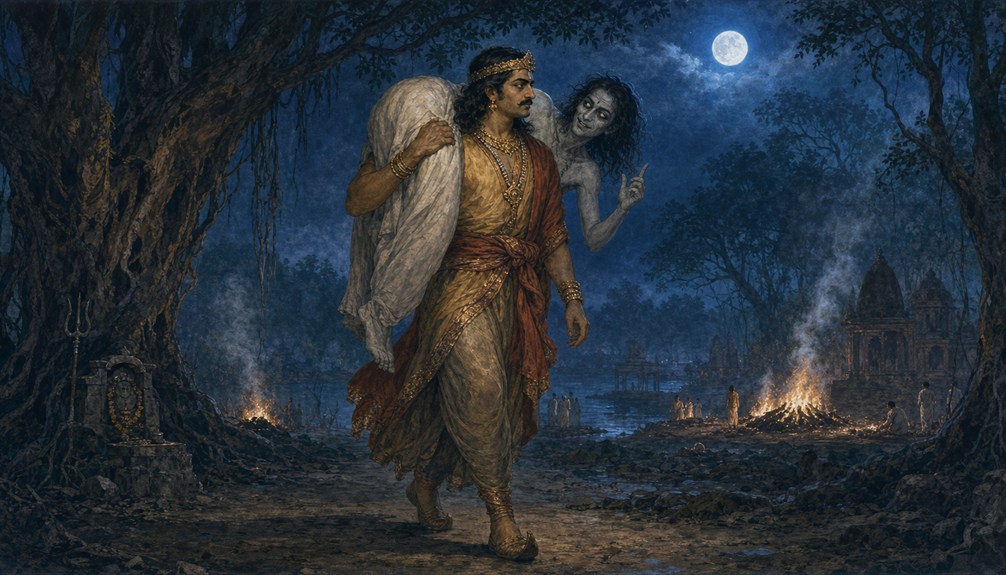
A vetala is a spirit in South Asian literature that inhabits or animates a corpse. It is not a direct equivalent of the European vampire, and blood-drinking is not its defining feature.
Vetala in the surviving tradition
The best-known cycle is the Vetala Panchavimshati, or Twenty-Five Tales of the Vetala. King Vikramaditya repeatedly takes a corpse from a tree while the vetala inside tells a riddle-like story. If the king knows the answer and remains silent, his head will burst; if he answers, the vetala escapes and returns to the tree. The repetition tests judgment and self-control.
Texts, objects, and evidence
Versions exist in Sanskrit and in many South Asian languages, with changing frame stories and tale order. The collection became known in English through colonial translations that sometimes used words such as vampire. That choice suggests a European undead creature but obscures the vetala’s speech, intelligence, corpse possession, and role as storyteller.
Key points
- Corpse animation: The vetala occupies a dead body rather than necessarily returning as its former personality.
- Knowledge: Stories grant it insight into hidden matters and human motives.
- Cremation grounds: The setting links the figure with death, danger, and ascetic or magical practice.
- Translation: Vampire-like can be a comparison, but it should never replace the original term.
How to read the material
The tale cycle is literature with many recensions, not a field guide to a living creature. Modern film and games add powers that the older frame story does not require.