
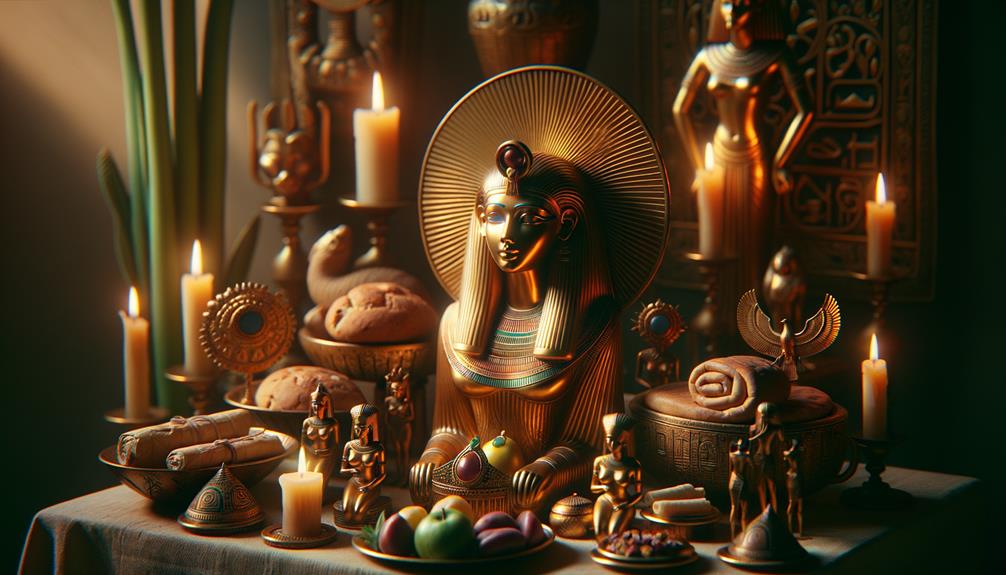
Bastet is an ancient Egyptian goddess whose character and imagery changed over time. She was associated with protection, the household, music, perfume, fertility, and royal power. Her familiar cat-headed form became especially common in later periods.
Bastet in the surviving tradition
Earlier Egyptian images can show Bastet as a lioness or lion-headed woman, placing her among powerful solar and protective goddesses. Over time, the domestic cat became her dominant animal form. This shift did not turn her into a harmless pet goddess. Cat imagery could express maternal care and controlled aggression at once.
Texts, objects, and evidence
Bastet’s main cult center was Per-Bastet, called Bubastis by Greek writers, in the eastern Nile Delta. Herodotus describes a major festival there, though his account reflects an outsider’s perspective. Bronze cat figures and mummified cats were dedicated in large numbers during the first millennium BCE. Their production belongs to temple economy and votive practice, not modern pet memorial custom.
Key points
- Symbols: Cats, lionesses, the sistrum, an aegis, and small baskets appear with Bastet.
- Sekhmet: Texts can connect Bastet with the fierce lioness Sekhmet, but the two are not always interchangeable.
- Family: Parentage and children vary. Claims that Bastet is always the mother of Anubis are not supported across Egyptian tradition.
- Home protection: Modern devotional use may draw on her protective character, but ancient evidence does not provide a universal rule about keeping an image at home.
How to read the material
Egyptian deities gained titles and relationships in local temples over long periods. A good summary keeps those changes visible instead of forcing one permanent family tree or personality.