
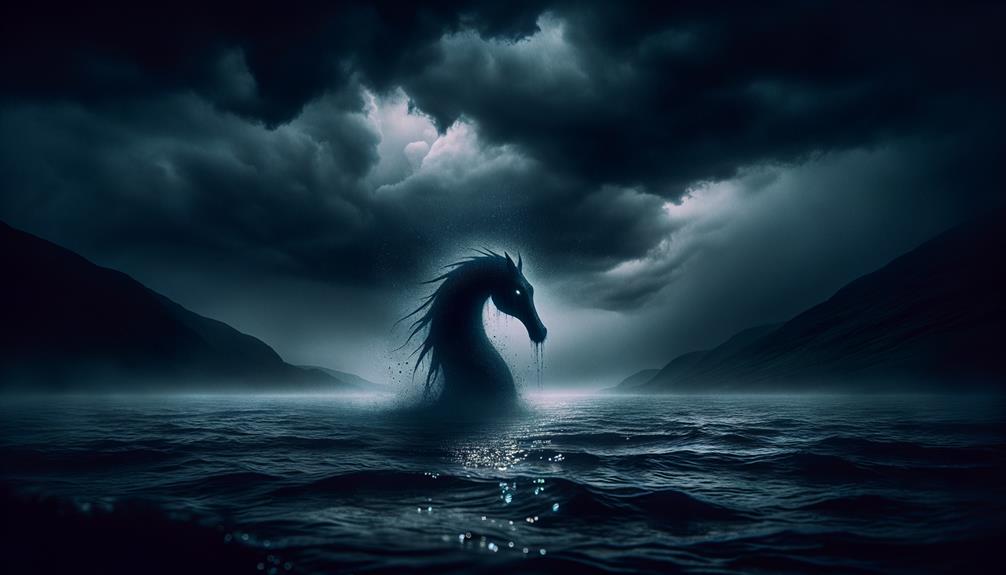
The kelpie is a Scottish water spirit, often described as a horse that lures riders or travelers into lochs and rivers. The name and stories vary, and later writers frequently merge the kelpie with other Highland and island water beings.
Kelpie in the surviving tradition
A common tale shows a fine horse waiting near water. Anyone who mounts finds that the skin grips them, after which the creature plunges into the water. Some stories allow a victim to escape by cutting away trapped fingers. Others say a bridle can control the kelpie, turning danger into forced labor until the creature regains freedom.
Texts, objects, and evidence
Collectors such as John Francis Campbell and John Gregorson Campbell recorded Gaelic water-horse traditions under names including each-uisge. The each-uisge is often distinguished as a more dangerous sea-loch creature, while kelpie may be tied to rivers and streams. English retellings regularly blur the two. The Kelpies sculptures near Falkirk are modern public art inspired by working horses and canal history, not ancient cult statues.
Key points
- Form: Horse form is standard, though some tales give the being a human appearance.
- Water safety: Stories warn against unfamiliar animals and dangerous shorelines, but that practical reading is an interpretation rather than a proven origin.
- Control: A magical bridle can reverse the power relationship for a time.
- No spirit animal system: Traditional accounts do not define the kelpie as a personal spirit guide with standardized meanings.
How to read the material
Scottish folklore includes kelpies, water horses, selkies, mermaids, and the nuckelavee. Similar settings do not make them interchangeable.