
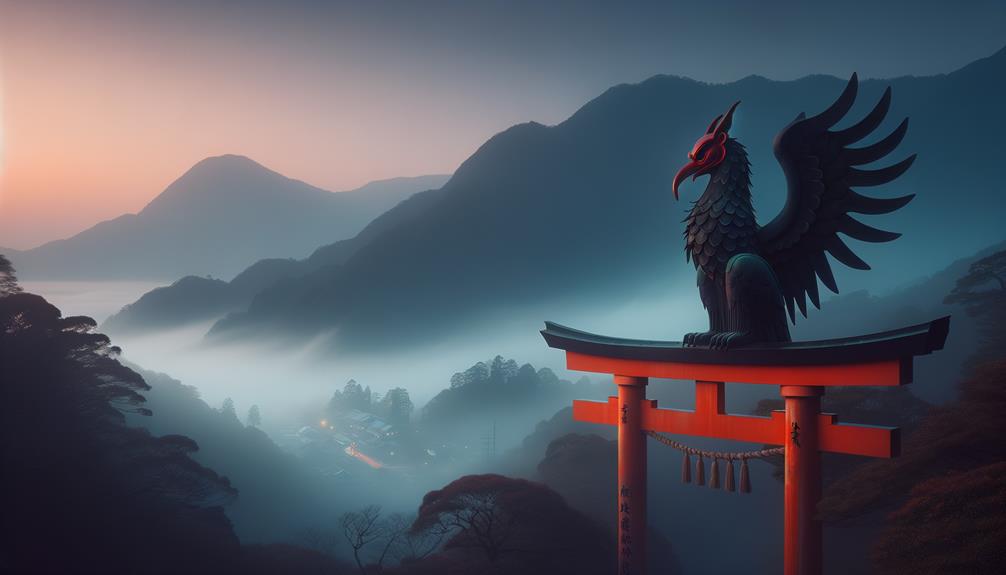
Tengu are Japanese mountain beings shaped by Buddhist, ascetic, literary, and local traditions. They were once strongly associated with arrogance, deception, and obstacles to Buddhist practice, but later stories also make them guardians and teachers of martial skill.
Tengu in the surviving tradition
Early tengu imagery drew on the birdlike Chinese tiangou and often showed beaks, wings, or raptor features. Medieval Japanese texts placed tengu in mountains and connected them with priests whose pride led to a fallen condition. Over time, long-nosed human forms became common, especially for powerful daitengu, while smaller karasu-tengu retained more birdlike features.
Texts, objects, and evidence
Tengu are linked with sacred mountains and with Shugendō, a tradition of mountain ascetic practice drawing on Buddhism, kami worship, and local ritual. Stories connect famous warriors with tengu teachers, including the young Minamoto no Yoshitsune at Mount Kurama. Such tales express the mountain as a source of dangerous knowledge; they are not training records.
Key points
- Appearance: Beaks, wings, red faces, long noses, feather fans, and mountain clothing appear in different periods.
- Status: Calling every tengu a demon or every tengu a kami loses their changing religious position.
- Wind: The feather fan can command wind in stories and art.
- Mountain cults: Named tengu may guard particular peaks and become part of temple-shrine traditions.
How to read the material
Tengu lore developed across centuries. Early Buddhist cautionary tales, early modern prints, local worship, and modern media should be kept distinct.