
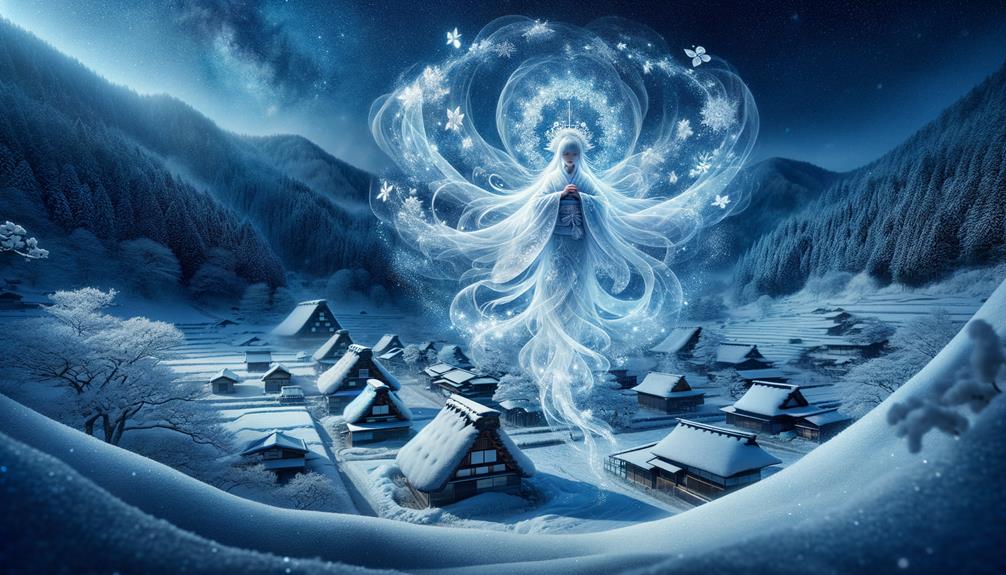
Yuki-onna, meaning snow woman, is a Japanese supernatural figure associated with winter weather. Regional stories give her different names, origins, and behavior. She is not a single national goddess of ice.
Yuki-onna in the surviving tradition
Some tales describe a pale woman who appears during snowstorms and kills travelers by freezing them or taking their breath. Others make her a lost traveler, the spirit of a woman who died in snow, or a being who marries a human. The variation reflects local storytelling rather than one official myth.
Texts, objects, and evidence
The most internationally known version appears in Lafcadio Hearn’s Kwaidan. A snow woman kills an older woodcutter, spares the young Minokichi on condition that he never speak of her, and later lives with him as his wife. When he breaks the promise, she reveals herself and leaves, sparing him for the sake of their children. Hearn said the story came from a farmer in the Musashi area.
Key points
- Appearance: White clothing, long hair, and an almost transparent body are common later features.
- Breath: Freezing breath belongs to some stories, but modern power lists expand it far beyond the texts.
- Marriage tale: The broken taboo links Yuki-onna with a wider folktale pattern of supernatural spouses.
- Status: She is usually treated as a yōkai or ghostly being, not a Shinto sun or snow deity with a standard cult.
How to read the material
Hearn’s literary version is important but should be named as one recorded tale. Local accounts can be gentler, harsher, or unrelated to marriage.