
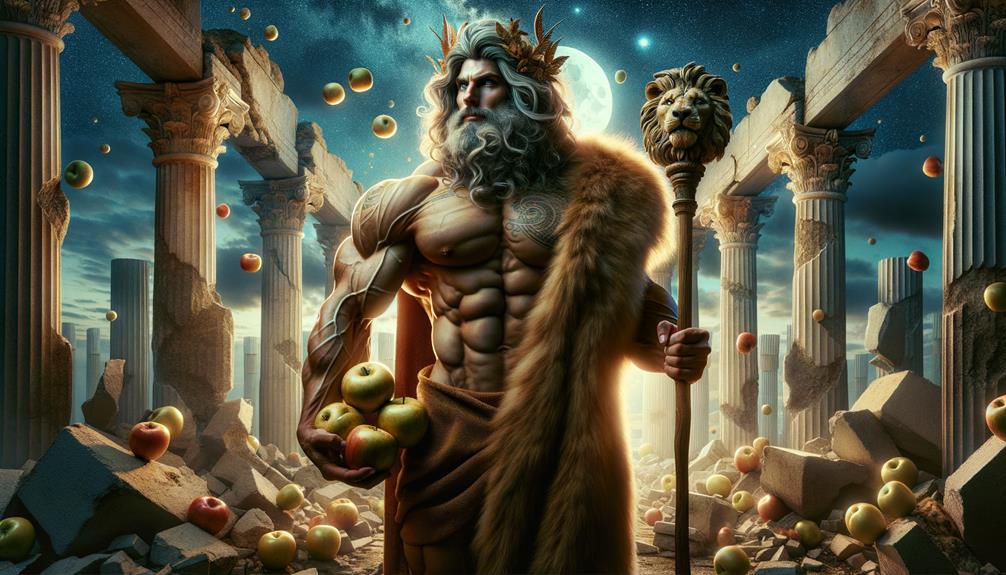
Heracles is the Greek hero called Hercules in Roman tradition. He is famous for extraordinary strength, the Twelve Labors, repeated suffering, and eventual admission among the gods. Calling him the strongest hero is a modern ranking, not an ancient official title.
Heracles in the surviving tradition
Heracles is a son of Zeus and the mortal Alcmene. Hera’s hostility shapes his life from infancy. In the best-known later account, Hera causes a madness in which he kills members of his family. To atone, he serves King Eurystheus and performs a series of tasks that becomes the Twelve Labors, though early art and texts do not always use the same list.
Texts, objects, and evidence
The labors include the Nemean lion, Lernaean Hydra, Ceryneian hind, Erymanthian boar, Augean stables, Stymphalian birds, Cretan bull, mares of Diomedes, belt of Hippolyta, cattle of Geryon, apples of the Hesperides, and Cerberus. Additional adventures occur during and beyond them. Greek tragedy also explores his family, madness, friendship, and painful death.
Key points
- Greek and Roman names: Herakles is Greek; Hercules is the Latin form and dominates later Western art.
- Weapons: A club and lion skin are common attributes, but the hero also uses a bow.
- Death: The poisoned garment given through Deianeira causes agony. The mortal part dies on a pyre, while the hero is received among the gods in later tradition.
- Marriage: Among the gods he marries Hebe, daughter of Hera, bringing a form of reconciliation.
How to read the material
Heracles is not a model of invulnerability or simple virtue. Ancient authors use him to examine strength, rage, servitude, endurance, and the cost of heroic violence.