
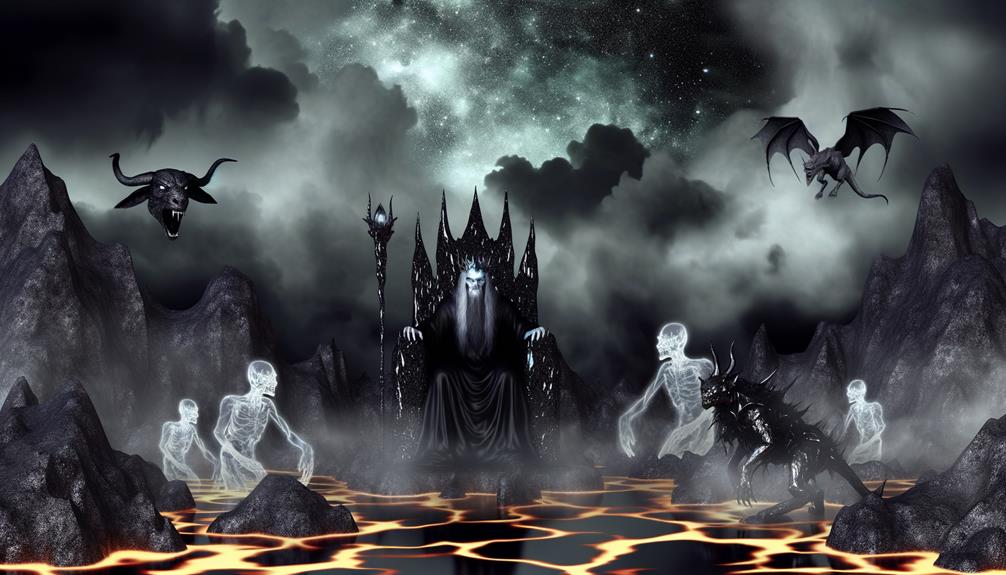
Hades rules the dead in ancient Greek tradition, and his name can also refer to the underworld. That place is not identical to later Christian hell: most dead people go there, while special rewards and punishments belong to particular figures and later developments.
Hades and the Greek underworld in the surviving tradition
Epic poetry places the house of Hades beneath the earth and across boundaries that living people should not cross. In the Odyssey, Odysseus performs a ritual that lets shades approach and speak. They retain identity but lack ordinary embodied life. The scene emphasizes the distance between living and dead rather than a universal court of moral judgment.
Texts, objects, and evidence
Different texts add regions and judges. Tartarus is a deep place of divine imprisonment in Hesiod, not simply another name for the whole underworld. Elysium and the Isles of the Blessed offer favored afterlives in selected poems. Mystery cult, philosophy, comedy, and Roman literature develop other maps. No single diagram fits all ancient authors.
Key points
- Persephone: She shares authority with Hades and receives her own titles and cult.
- Cerberus: The hound guards the boundary and prevents the dead from leaving.
- Rivers: Styx, Acheron, Cocytus, Phlegethon, and Lethe appear in different combinations across texts.
- Charon: The ferryman is prominent in later archaic and classical evidence but not a universal feature of every early account.
How to read the material
Modern games and novels merge Greek, Roman, Christian, and Renaissance images. Ancient evidence should be cited by author and period.