
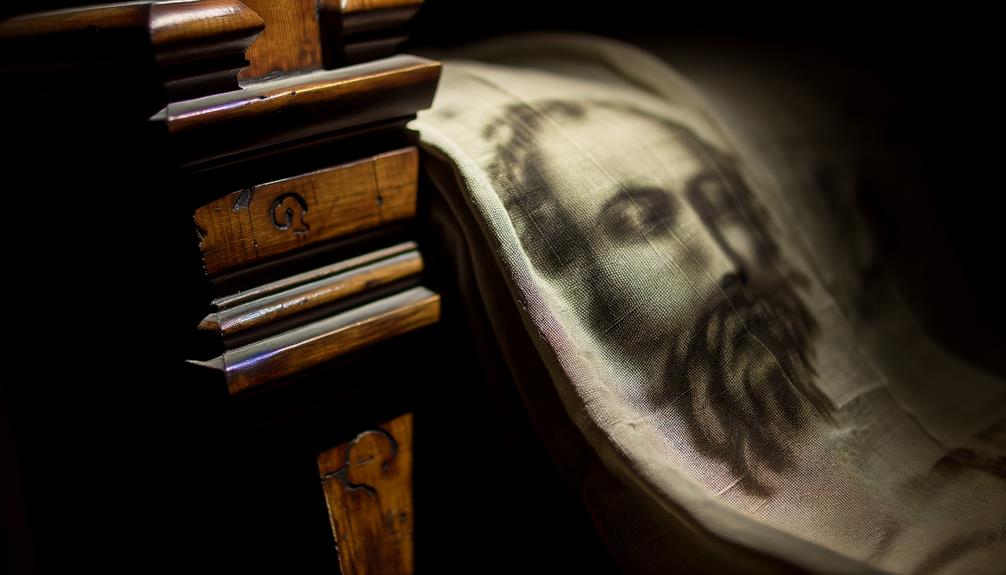
The Turin Shroud is a linen cloth marked by the image of a wounded man. Christian tradition associates it with the burial of Jesus, while historical and scientific study places firm limits on what can be claimed about its age and identity.
History that can be documented
The cloth appears securely in records at Lirey, France, in the fourteenth century. It later belonged to the House of Savoy, survived a damaging fire at Chambéry in 1532, and reached Turin in 1578. Suggested links to earlier cloths are debated and do not form a continuous documented provenance.
The shroud has been displayed as a devotional object rather than a routine museum artifact. Church custodians permit limited testing because sampling damages the linen and because earlier handling, fire, water, repair, and public display may have contaminated parts of it.
Scientific findings
Radiocarbon laboratories tested a sample in 1988 and reported a medieval date range of 1260 to 1390 CE. Objections concerning repair material and sample location have been raised, but an accepted replacement date based on new direct sampling has not been established.
Other studies address pigments, blood claims, pollen, textile structure, and image formation. Results from these different fields should not be combined as if they all prove the same conclusion. The safest account distinguishes devotion, documented history, and disputed scientific interpretation.