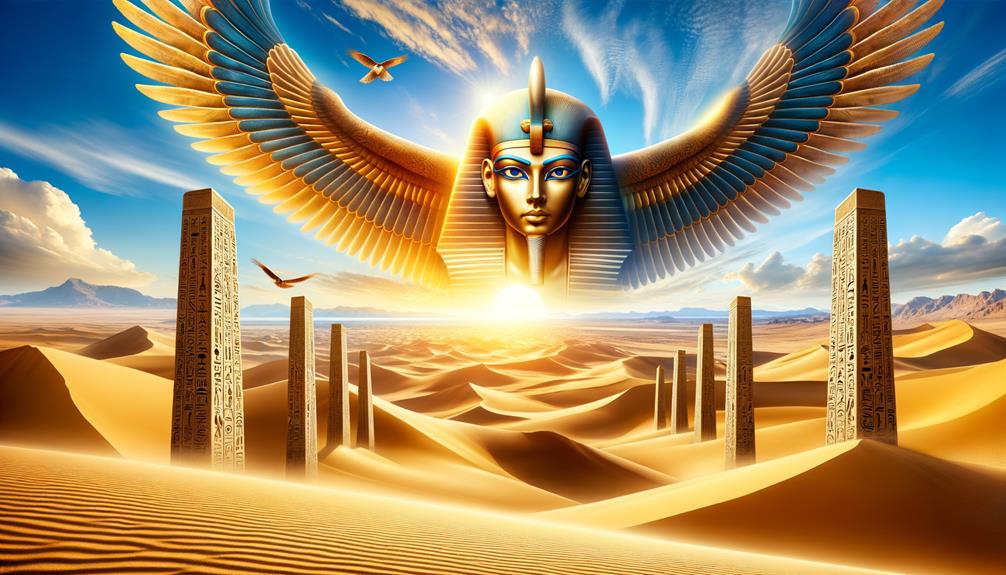
Horus is not one unchanging character but a group of closely related Egyptian falcon deities and royal forms. Over time, traditions connected the sky god, the living king, the child of Isis and Osiris, and solar theology. The name and iconography span many centuries and local cults.
Falcon and king
Horus can appear as a falcon or a falcon-headed man, and early royal ideology links the reigning king with the Horus name. Horus the Elder and Horus of Behdet have their own contexts. Later texts do not simply replace those forms with the child Horus.
The conflict with Seth
In the Osiris cycle, Isis raises Horus after Seth kills Osiris. Horus contests Seth for rule, and their conflict includes trials, trickery, injury, and reconciliation in different texts. The restored Eye of Horus becomes a sign of healing, completeness, royal power, and offering.
Horus and the sun
Horus’s eyes can be identified with sun and moon, and Re-Horakhty joins Ra with Horus of the horizons. Such combinations are normal in Egyptian theology. They express relationships among divine powers rather than proving that Egyptians believed every named form had one fixed family biography.