
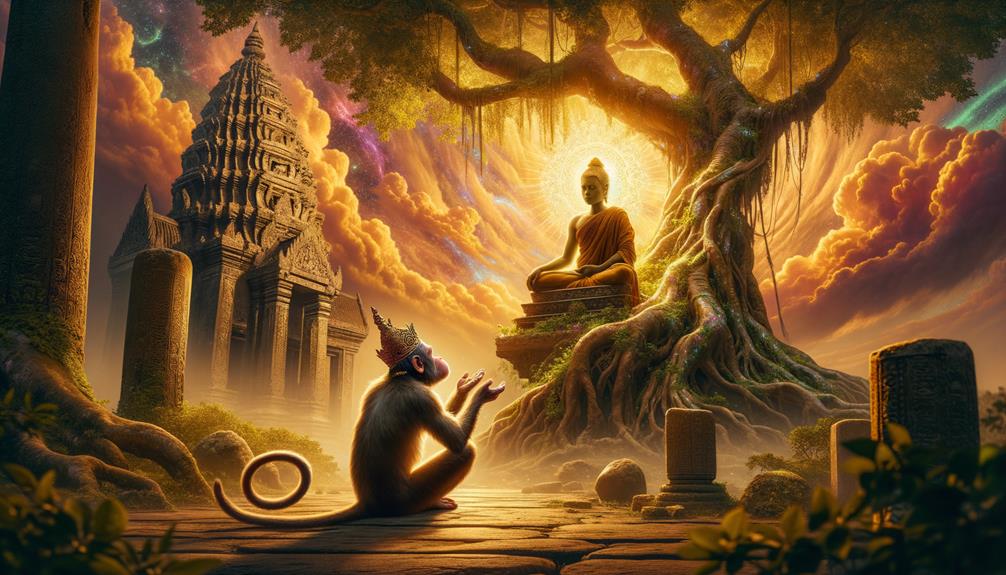
Sun Wukong’s movement from defiant Monkey King to Buddhist pilgrim is the central arc of Journey to the West. It is not a single conversion scene. The novel gradually redirects his immense strength, cleverness, and appetite for freedom through service to the monk Xuanzang. At the journey’s end, Sun Wukong receives the title commonly translated as “Victorious Fighting Buddha,” but that reward only makes sense after the discipline of the road.
From rebellion to confinement
Before the pilgrimage, Sun Wukong masters transformation, acquires the compliant golden-hooped staff, removes his name from the registers of death, and rebels against heaven. His demand for the title “Great Sage Equal to Heaven” is comic, audacious, and politically disruptive. Celestial forces fail to contain him until the Buddha traps him beneath Five Elements Mountain.
The confinement is not yet discipleship. It creates the condition for a different life: release will require accepting a task and a master rather than simply proving that no authority can restrain him.
Guanyin, Xuanzang, and the headband
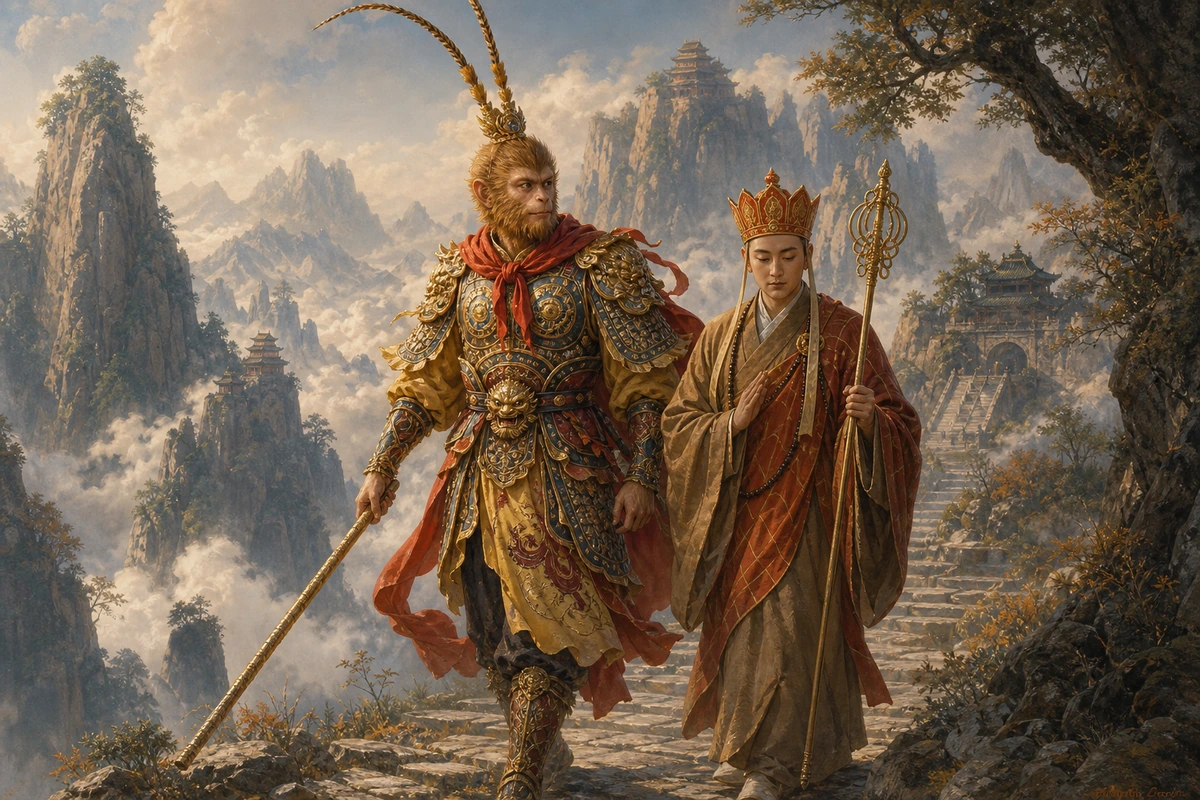
Guanyin organizes the pilgrimage and recruits protectors for Xuanzang’s journey to obtain Buddhist scriptures. Sun Wukong agrees to serve the monk in exchange for freedom. The magical headband and its tightening spell become a painful sign of their difficult relationship. Xuanzang fears Wukong’s violence; Wukong is often the first to recognize demons hidden behind attractive appearances.
Their conflict prevents a simple moral reading. Wukong must learn restraint, but the monk must also learn discernment. Zhu Bajie, Sha Wujing, and the dragon horse add their own flaws and strengths, turning the pilgrimage into collective practice rather than a solitary heroic quest.
History and fiction
The fictional Xuanzang draws on a real seventh-century Buddhist monk who traveled to India and returned to Tang China with scriptures. Sun Wukong is not recorded as his historical companion. Journey to the West developed from centuries of pilgrimage stories, performance, religious imagination, and vernacular literature before reaching its best-known sixteenth-century form.
That layered background explains why the novel cannot be reduced to one religious allegory. It combines Buddhist pilgrimage, Daoist immortals and alchemy, popular gods, satire of bureaucracy, comic adventure, and moral testing.
The Victorious Fighting Buddha
After the travelers complete their trials and deliver the scriptures, Sun Wukong is granted the title Douzhanshengfo, often rendered “Victorious Fighting Buddha” or “Buddha Victorious in Strife.” The title does not erase his warrior energy. It recognizes power that has been transformed by purpose.
Calling him simply “Buddha’s disciple” therefore misses an important sequence. Xuanzang is his immediate master on the road; Guanyin makes the journey possible; and buddhahood is the final recognition. Sun Wukong remains unmistakably himself, but his freedom is no longer measured only by rebellion.