
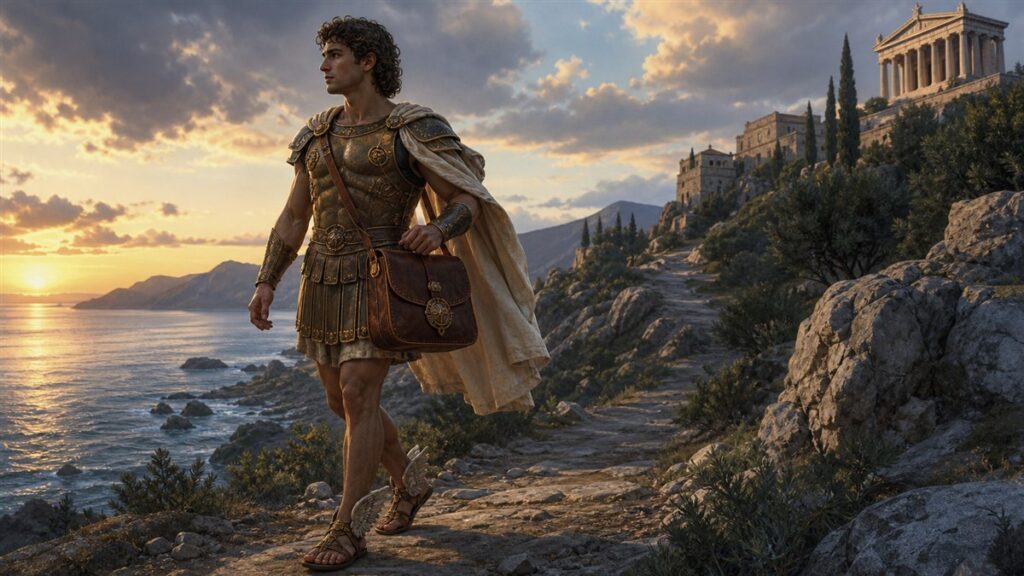
Accuracy note: The kibisis is the bag used by Perseus to carry Medusa's head in Greek myth. Ancient sources do not consistently make it a magical object in its own right.
This retelling strips away superfluous wording, focusing on the core narrative and posing thought-provoking queries. Contemporary Canadian journalists would likely employ a more grounded, conversational style while retaining evocative imagery befitting mythological tales. Archaic phrasings are updated, and unnecessary embellishments removed to allow the story’s inherent intrigue to shine through.
Origin of the Kibisis

Perseus begined on an epic quest, receiving a magical knapsack called the kibisis from wise nymphs. This enchanted bag wasn’t ordinary; it symbolized the gods’ favor, marking the start of Perseus’ legendary adventure in Greek mythology.
In Greek myths, the kibisis contained supplies for Perseus, enabling him to withstand hardships. Its true power lay in rendering the wearer invisible, a significant advantage against Medusa. The nymphs’ gifts weren’t mere artifacts; they represented hope and the promise of triumph on his heroic journey.
Role in Perseus’ Quest
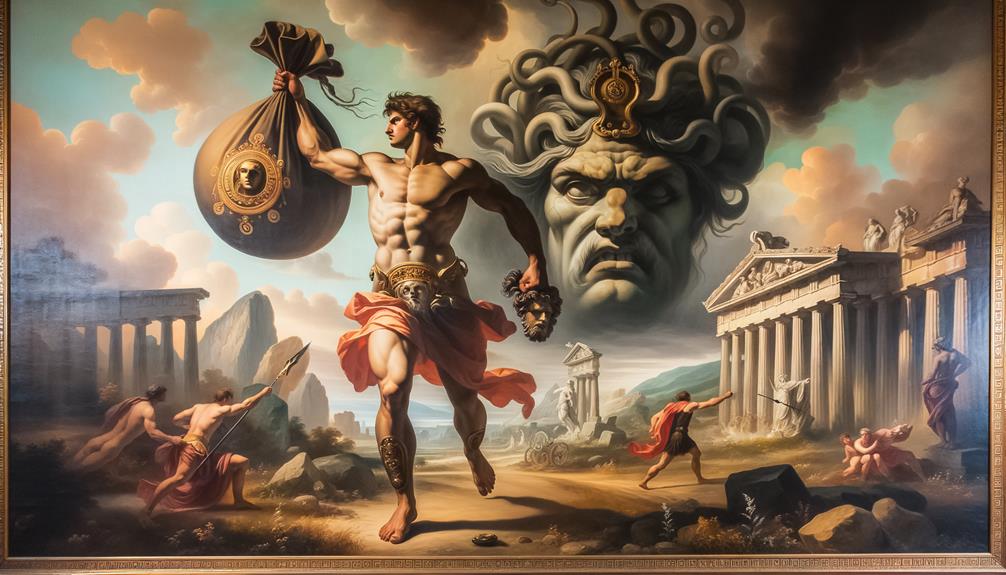
Perseus’ mythical adventure centered around the kibisis, a magical sack that not only carried Medusa’s head but also symbolized the divine assistance vital for his success. The nymphs gifted him this sacred knapsack, transforming it into a cornerstone of his quest. Along with the kibisis, they granted Perseus winged sandals to swiftly traverse great distances. Each enchanted item played a crucial role in his triumph.
| Magical Item | Role in Perseus’ Quest |
|---|---|
| Kibisis | Contained Medusa’s head, represented divine favor |
| Winged Sandals | Enabled swift travel and evasion |
| Cap of Invisibility | Allowed stealth and surprise attacks |
| Sword | Necessary for slaying Medusa |
| Mirror Shield | Safely viewed Medusa’s petrifying gaze |
As Perseus begined on his journey, the kibisis securely housed Medusa’s head, a task fraught with danger. Its magic contained the petrifying gaze, preventing accidental casualties. Alongside other sacred relics, the kibisis proved indispensable for the mission’s completion. These divine gifts, including the kibisis, transcended mere tools; they empowered Perseus to confront and overcome supernatural challenges. The kibisis, with its vital function, became a symbol of heroism and divine intervention in Perseus’ epic tale.
Magical Properties

In Greek mythology, the kibisis, a seemingly ordinary knapsack, wielded remarkable capabilities that were instrumental in Perseus’ legendary quest. This bag was no run-of-the-mill accessory but a mystical item bestowed upon the hero.
The kibisis could carry more than just supplies and provisions; it had the incredible power to contain Medusa’s severed head, a feat beyond its physical limitations. Paired with the cap of Hades, granting invisibility, and winged sandals for flight, the kibisis formed a powerful trio of divine assistance. Its unique ability allowed Perseus to observe others without being seen, a critical advantage against mythical foes.
Remarkably, the enchanted nature of the kibisis enabled it to safely contain Medusa’s head, whose gaze turned onlookers to stone, protecting Perseus and his companions. This fusion of magical traits and practical utility made the kibisis indispensable on his heroic journey.
Numerous artworks immortalize Perseus clutching his magical knapsack, underscoring its significance in Greek mythology. The kibisis stands as a symbol of divine intervention and heroism, its extraordinary capabilities forever etched in mythological lore.
Depictions in Art
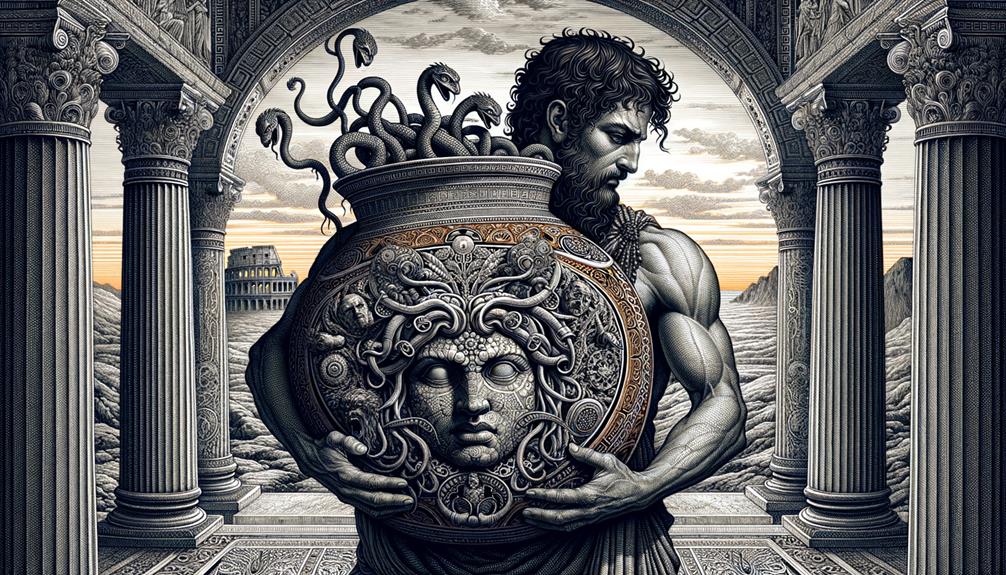
As Perseus’ adventure unfolded, art throughout history captured the kibisis’ vital role in the mythic tale. Artists immortalized Perseus’ heroic quests, often featuring the magical sack enabling his triumphs. The kibisis wasn’t merely a bag; it symbolized divine assistance and resourcefulness.
Edward Burne-Jones, a Pre-Raphaelite master, depicted Perseus and the kibisis in striking paintings. His works breathe life into the myth, with Perseus carrying the sack, ready to contain Medusa’s severed head. Ancient Corinthian vases also illustrate these pivotal moments, cementing the kibisis’ significance in Greek lore.
| Art Form | Artist/Origin | Description |
|---|---|---|
| Paintings | Edward Burne-Jones | Vivid scenes of Perseus’ adventures |
| Sculptures | Ancient Greek | Marble carvings with kibisis details |
| Vases | Corinthian | Perseus utilizing the magical sack |
| Artifacts | Various ancient | Diverse kibisis representations |
These artistic renditions solidify the kibisis as an enduring symbol of Perseus’ mythological journey and his reliance on heavenly gifts.
Influence on Modern Culture

Through diverse artistic expressions, the kibisis extends beyond its ancient narrative. Its presence fuels the contemporary imagination, inspiring tales of personal growth, conquering adversity, and the perseverance required on life’s journey. As artists infuse their works with this mythic element, they forge an enduring connection between the past and the present, celebrating humanity’s shared desire for triumph and divine intervention.
In the tradition of modern storytelling, the kibisis stands as a powerful emblem, inviting audiences to begin on their quests. It symbolizes the belief that, like Perseus, one can overcome seemingly insurmountable challenges with courage and the assistance of higher forces. This longstanding artifact’s resonance across cultures and artistic mediums solidifies its position as an archetypal representation of the hero’s journey, inspiring generations to seek greatness.
Sources and related reading
- Gae Bolg Celtic Spear on MythologyVault
- Egil Skallagrimsson's Cursed Bones on MythologyVault
- The Metropolitan Museum of Art: medieval art resource