
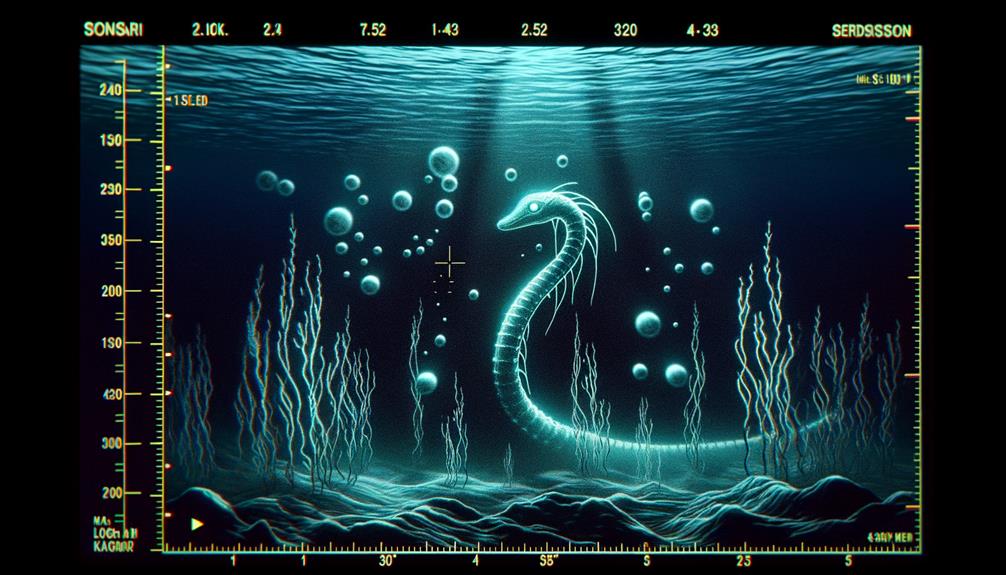
The Loch Ness Monster, usually called Nessie, is a reported animal said to inhabit Loch Ness in the Scottish Highlands. Stories about strange beings in Scottish water are old, but the familiar long-necked monster became an international phenomenon after newspaper reports in 1933. No physical evidence has established an unknown large species in the loch.
Saint Columba and the River Ness
A seventh-century biography of Saint Columba by Adomnan tells of an encounter with a water beast. The event is set in the River Ness, not in Loch Ness itself. Columba orders the creature to retreat after it approaches a swimmer.
The episode is often presented as the first Nessie sighting. It is better read in its hagiographic setting: a saint’s command demonstrates holy power. The text does not describe the modern long-necked animal, and it does not provide continuous evidence of one species living in the area for fourteen centuries.
The 1933 surge in attention
Reports in 1933 brought Loch Ness to national and international newspapers. A sighting attributed to Aldie Mackay was among the accounts that helped start the modern story. Once the press gave the creature a recognizable identity, further sightings, expeditions, photographs, and tourist interest followed.
Witnesses have described humps, wakes, long necks, large dark bodies, and objects moving across the water. These reports do not all describe the same shape. Boats, swimming deer, seals, birds, logs, waves, and mirages can account for some observations, while others remain unresolved because the available information is limited.
The surgeon’s photograph
The best-known Nessie image was published in 1934 and became known as the “surgeon’s photograph.” It appears to show a small head and long neck above the water. The cropped image made the object seem larger than it was.
The photograph was later exposed as a hoax involving a model mounted on a toy submarine. Its fame still shaped the standard Nessie silhouette. It cannot be used as evidence for an animal.
Sonar, cameras, and ambiguous signals
Searches have used boats, sonar, underwater cameras, surface watches, and remotely operated equipment. Sonar can detect moving targets, but a contact without a clear image, repeatable track, or biological sample is difficult to identify. Fish schools, debris, bottom features, and equipment limits can produce ambiguous results.
Repeated searches have not recovered a carcass, bone, tissue sample, or verified photograph of a large unknown vertebrate. A breeding population would also leave ecological and genetic traces.
The environmental DNA survey
In 2019, a research team led by the University of Otago analyzed environmental DNA from water samples around Loch Ness. Organisms release DNA through skin, scales, waste, and other material, allowing a survey to detect many species without seeing them directly.
The study found no evidence supporting a giant reptile, sturgeon, catfish, or unknown shark. Eel DNA was abundant at nearly every sampled location. The results led the researchers to say that a very large eel remained one possible source of some sightings, though the study did not find or prove the existence of an enormous eel.
What the evidence supports
Loch Ness contains large fish, eels, changing light, boat traffic, deep dark water, and weather capable of producing unfamiliar shapes. It also has a powerful modern legend that influences how ambiguous events are interpreted.
Nessie remains important to Highland tourism, popular art, and debates about evidence. The current scientific record does not confirm a monster or surviving plesiosaur. Unexplained sightings remain reports, not proof of a species.
Sources
- University of Otago, first environmental DNA study of Loch Ness
- National Museums Scotland, monster reports and the surgeon’s photograph
- Nature, contemporary 1934 assessment of the Loch Ness claims
- National Geographic, history of the modern Nessie legend