
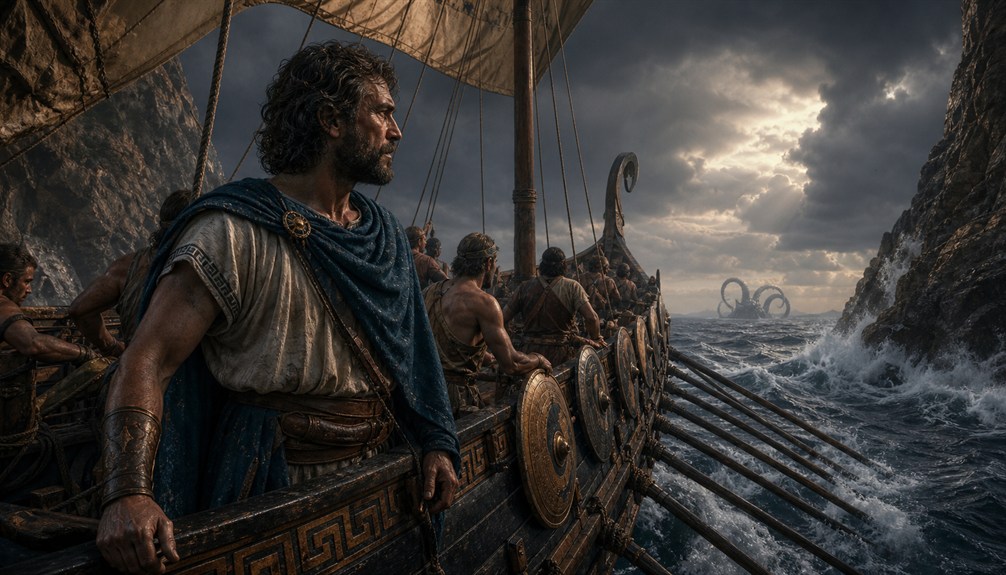
Odysseus is the king of Ithaca and the central traveler of Homer’s Odyssey. He is known for endurance, persuasive speech, disguise, planning, and deception. These qualities can save lives or cause harm, and the poem does not reduce him to a flawless hero.
Odysseus in the surviving tradition
After the Trojan War, Odysseus spends ten years trying to return home. He encounters the Cyclops Polyphemus, Circe, the dead, the Sirens, Scylla and Charybdis, and Calypso. His crew perish after repeated failures of judgment, including eating the cattle of Helios. Athena supports him, while Poseidon opposes him because he blinded Polyphemus.
Texts, objects, and evidence
On Ithaca, Penelope delays remarriage while suitors consume the household’s wealth. Odysseus returns in disguise, tests servants and family, strings his bow, and kills the suitors with Telemachus and loyal retainers. Recognition scenes with Eurycleia, Penelope, and Laertes establish identity through scars, memory, and private knowledge.
Key points
- Name: Greek tradition uses Odysseus, while Roman writers popularized the form Ulysses.
- The Cyclops: Odysseus escapes through a false name and a plan, then endangers the crew by revealing his identity in pride.
- Penelope: Her weaving trick and careful testing make her an intellectual counterpart rather than a passive prize.
- Other texts: The Iliad, later epics, tragedy, and Roman literature give Odysseus different moral emphasis.
How to read the material
The Odyssey is oral-derived epic poetry, not a ship log. Geography, chronology, and monster encounters serve the poem’s themes of homecoming, hospitality, identity, and mortality.