
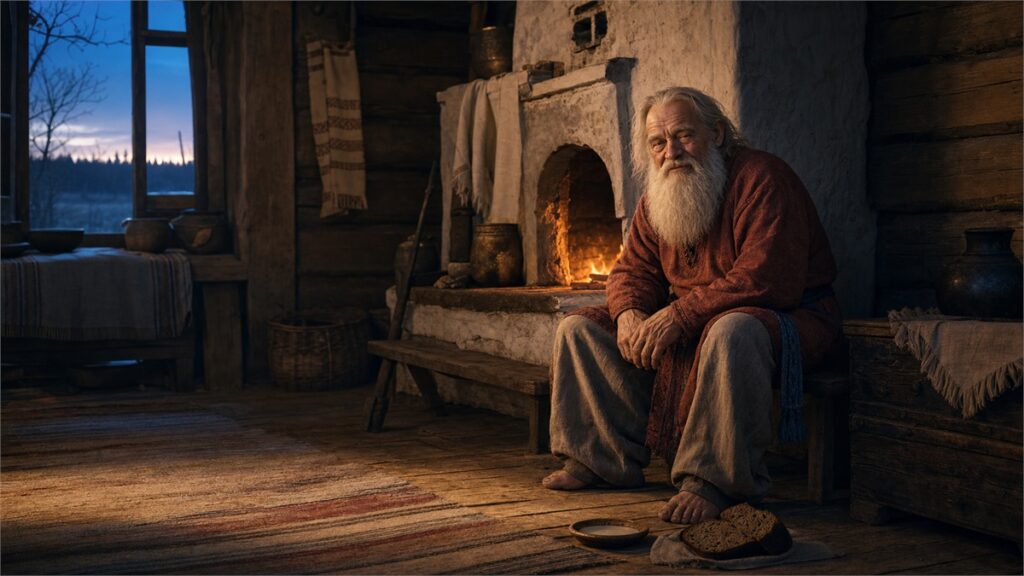
The domovoi is a household spirit in East Slavic folklore. It is linked with the home, family continuity, livestock, and domestic order. Stories can make it protective, irritable, or dangerous when neglected.
The domovoi in the surviving tradition
The spirit is often imagined as an old, hairy man, sometimes resembling the male head of the household. It may live near the stove, threshold, stable, or under the floor. Noises, moved objects, or disturbed animals can be interpreted as its activity. Helpful behavior depends on good order and respectful treatment.
Texts, objects, and evidence
Folklore collections describe households leaving small offerings or inviting the domovoi to move when a family changes homes. Christian belief did not simply erase the spirit; stories could place it beside household icons while still treating it as a non-Christian presence. Collectors sometimes called it a demon, a translation colored by religious assumptions.
Key points
- Household focus: The domovoi belongs to a specific family and dwelling more than to wild landscape.
- Warnings: Touch, sound, or appearance can announce danger in stories.
- Livestock: The spirit may favor animals of a certain color and trouble others.
- Regional forms: Names, gender, and behavior differ across Russian, Ukrainian, Belarusian, and neighboring traditions.
How to read the material
House-spirit traditions should not be turned into instructions for diagnosing unexplained events. They are part of recorded belief and narrative history.