
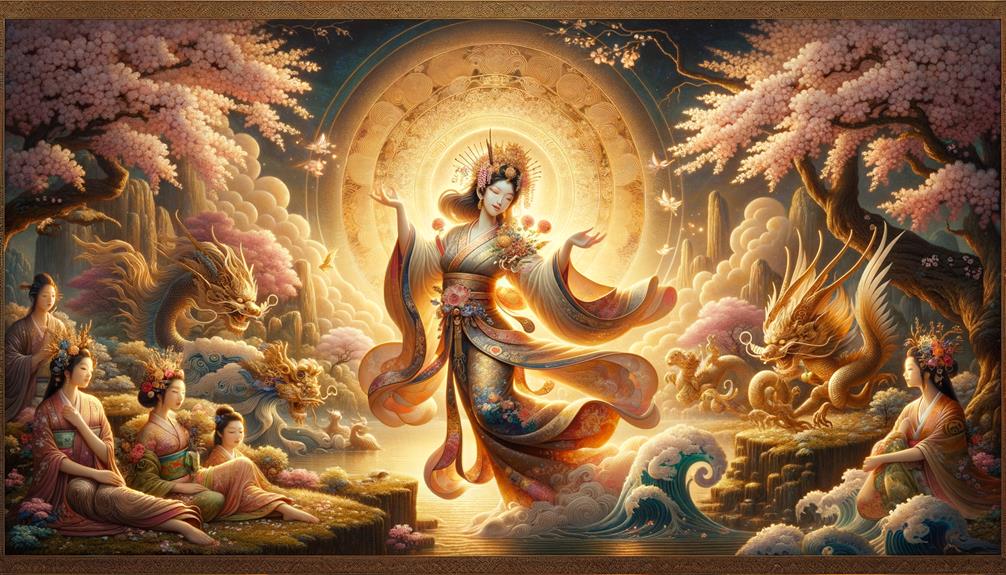
Accuracy note: Ame-no-Uzume is associated with the episode that draws Amaterasu from the rock cave. Her performance, laughter, and later role in Ninigi's descent are preserved with differences between early texts.
Mythological Origins
Amenouzume stood before the cave where Amaterasu hid and performed an enchanting dance that became the sacred Shinto ritual kagura. With rhythmic movements and laughter, she captivated the other gods, evoking wonder and anticipation. This divine act wasn’t mere entertainment; it symbolized hope, drawing Amaterasu out and restoring light.
Amaterasu and the Cave
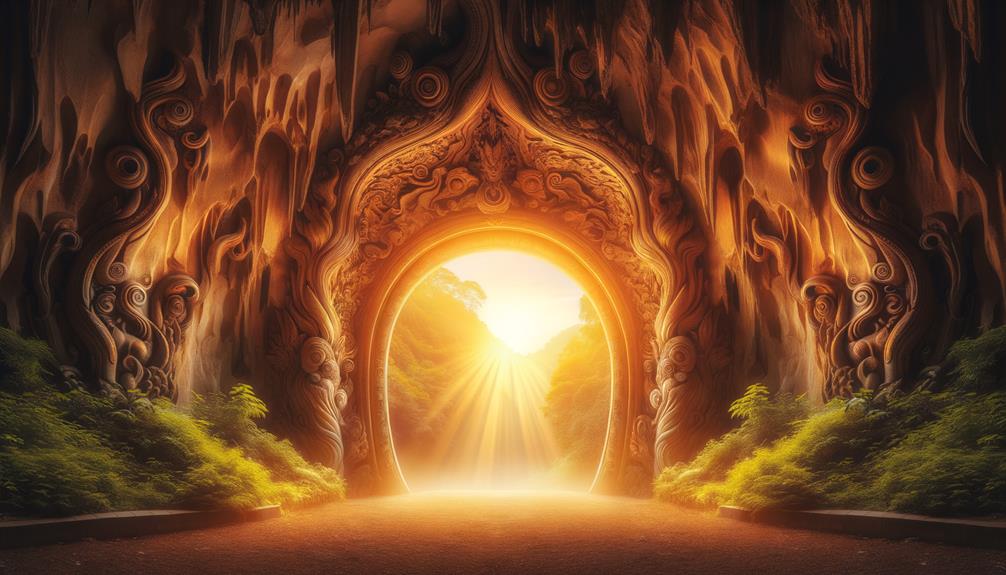
Amaterasu’s retreat into the Heavenly Rock Cave shrouded the world in gloom, prompting a celestial effort to restore illumination and equilibrium. Susanoo’s reckless actions – wrecking rice paddies and slaying a maiden – drove Amaterasu to seek refuge in the cave, casting the earth into obscurity. Her brilliant light’s absence bred pandemonium, and the deities assembled to find a resolution.
Ame-no-Uzume, embodying the archetypal jester, stepped forward and performed a memorable dance at the cave’s mouth. Her antics, brimming with playful abandon, seized the gathered gods’ attention and evoked joyous laughter. This mirthful atmosphere piqued Amaterasu’s curiosity, coaxing her out of seclusion.
As Amaterasu peered from the cave’s entrance, the laughter and radiance of the gods’ mirrors reflected upon her, reminding her of her pivotal role. Ame-no-Uzume’s dance, believed to have laid the foundation for Kagura – a sacred ritual dance – was instrumental in luring Amaterasu out, restoring light to the world and harmony to the heavens.
This narrative of Amaterasu and Ame-no-Uzume echoes universal themes of light versus darkness and order versus disarray, underscoring the transformative power of joy and community in overcoming despair.
Uzume and Sarutahiko
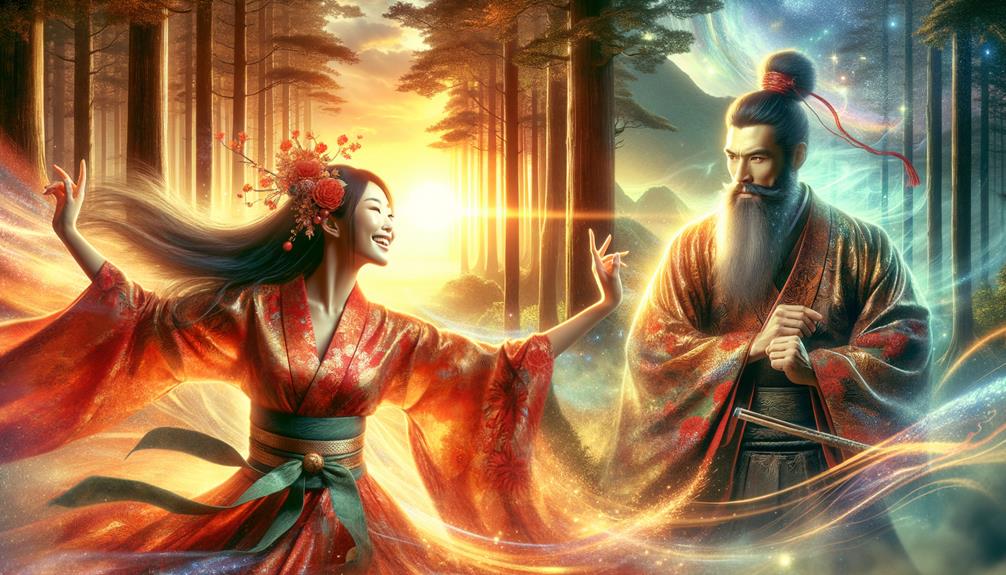
Uzume, the cheerful goddess, bumped into Sarutahiko, Heaven’s intimidating bridge guard. Their encounter was pivotal, convincing Sarutahiko to let Ninigi descend to Earth – a legendary Japanese myth moment.
Their tale symbolizes longstanding themes:
- Love Blossoms: Uzume and Sarutahiko fell for each other, birthing the Sarume clan.
- Transformation Prevails: Uzume’s wit melted Sarutahiko’s stern exterior, depicting how empathy bridges divides.
- Sacrifices Entwine Fate: Uzume cut a sea cucumber’s mouth with her dagger, an act signifying sacrifice’s role in destiny.
At first, Sarutahiko resisted Uzume’s flirtatious charms balancing masculine and feminine energies. But together they crossed Heaven’s bridge, their story lighting the way for future generations to embody love, transformation, and sacrifice’s eternal truths.
Cultural Influence
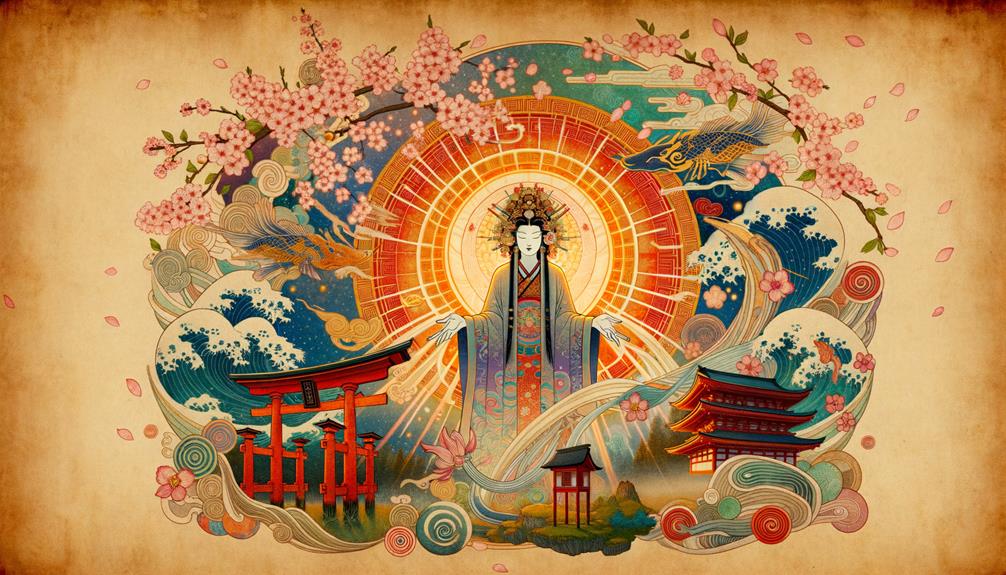
With her joyous spirit, Ame-no-Uzume dances through Japanese history, leaving an unforgettable mark on the nation’s cultural identity. As the patron goddess of dancers and performers, her influence appears in various art forms like kagura and noh theater. These traditional Shinto performances echo her tale of creativity and celebration, highlighting the transformative power she represents.
In the mythical story of luring Amaterasu from her cave, Ame-no-Uzume’s dance and laughter restored light to the world. This creative act shows her symbolic role in Shinto beliefs as a figure of renewal and artistic expression. Celebrations honoring new beginnings invoke her spirit of exuberance and innovation to spread communal joy.
Artistic Legacy
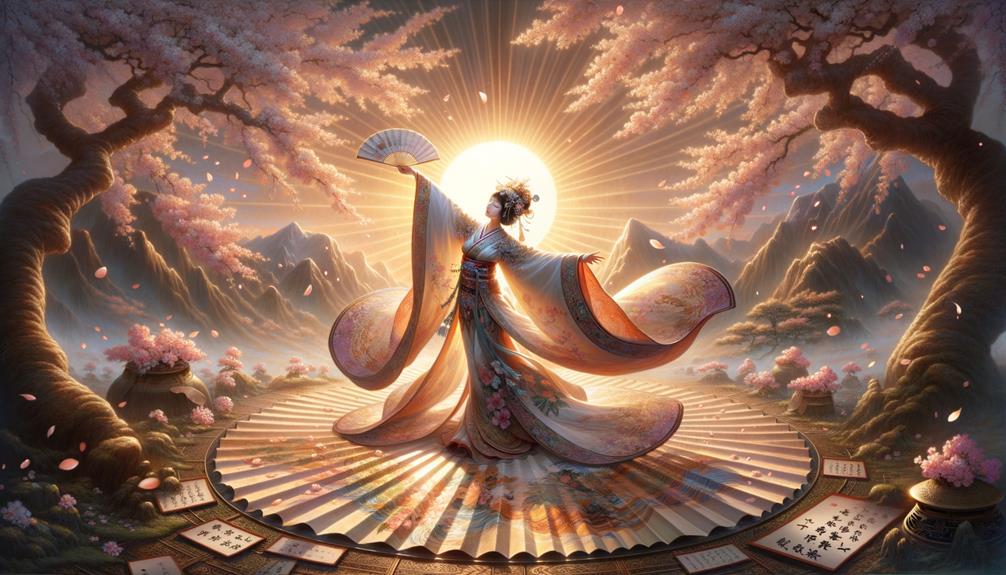
Ame-no-Uzume’s boundless energy and creativity permeate Japanese culture, her artistic legacy embodying the longstanding power of joyous expression and renewal. Her contributions transcend time, leaving an indelible mark on various art forms, especially traditional Japanese performances like kagura and noh theater.
Ame-no-Uzume brought dance and music into Shinto ceremonies, infusing a spirit of joy and celebration still resonating today. Her rich performance before the Sun Goddess Amaterasu, coaxing her out of hiding, showcases art’s transformative power. This mythic act shows several universal themes:
Joy’s Release: Her dance symbolizes positive energy’s release, illuminating how joy dispels darkness.
Inventive Spirit: Ame-no-Uzume inspires artists and performers to imbue their work with similar vitality.
Revitalization: Her actions encapsulate rebirth, where art brings new beginnings and revitalizes the spirit.
Modern Depictions
Contemporary Art Representations
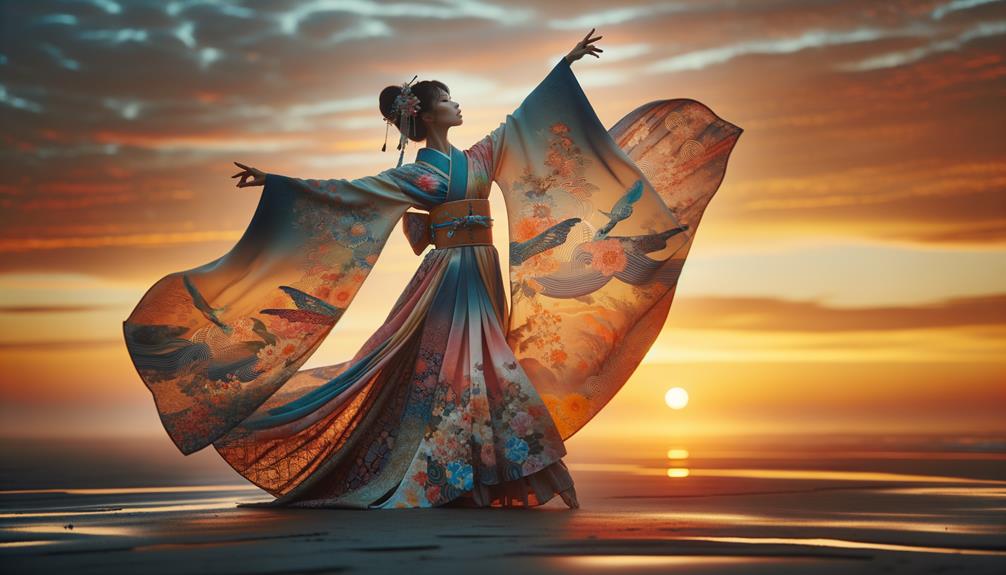
Contemporary artists interpret Ame-no-Uzume, the Goddess of Dawn and joy, with dynamic, vivid portrayals. Through rich colors and energetic poses, they capture her boundless spirit, interweaving her story into modern creativity. These works celebrate her connection to dance and the uplifting power she symbolizes.
Ame-no-Uzume is frequently depicted with flowing garments and a radiant smile, exemplifying the light she brings. Her joyful expression mirrors her role as a figure of renewal. Across art forms like anime and video games, her image remains one of exuberance and divine playfulness.
- Dance and Performance: Artworks highlight her influence on traditional kagura performances, portraying her as a muse of movement and rhythm.
- Playful and Mischievous: Modern takes capture her celebratory, transformative spirit with playful touches.
- Flowing Garments: Flowing robes symbolize her ethereal nature and connection to dawn.
Through these depictions, Ame-no-Uzume’s mythic essence continues inspiring, bridging ancient tales with contemporary creativity.
Film and Media Portrayals
Present-day films and television take a rich approach to Ame-no-Uzume, the Shinto goddess of dawn and joy. Her uplifting mythological tale translates well to modern audiences. The Persona and Megami Tensei video game series skillfully capture her spirit with lively colors and energetic visuals, highlighting her connection to creativity and performance arts.
On screen, her depictions often emphasize her role as a muse for artistic expression and celebration. These modern interpretations keep the ancient folklore alive by connecting its universal themes of renewal and revelry to contemporary viewers. Ame-no-Uzume’s enduring presence shows her significance as a deity associated with the arts and as a symbol of jubilation.
Literature and Comics Adaptations
Ame-no-Uzume’s mythic dance captivates modern storytelling across manga, anime, and literature. Her appearances in franchises like Megami Tensei and Persona showcase her persuasive prowess, while literary works explore universal themes like joy, creativity, and art’s transformative influence. Contemporary depictions vividly portray Ame-no-Uzume coaxing Amaterasu from seclusion, resonating with the hero’s journey motif and symbolizing light overcoming darkness.
- Manga and anime showcase her mythic dance’s allure
- Video games like Megami Tensei explore her pivotal role
- Literature examines into longstanding concepts of joy and creative expression
Sources and related reading
- Ninigi Amaterasus Grandson on MythologyVault
- Ryujin Dragon Sea God on MythologyVault
- Kokugakuin University: Encyclopedia of Shinto