
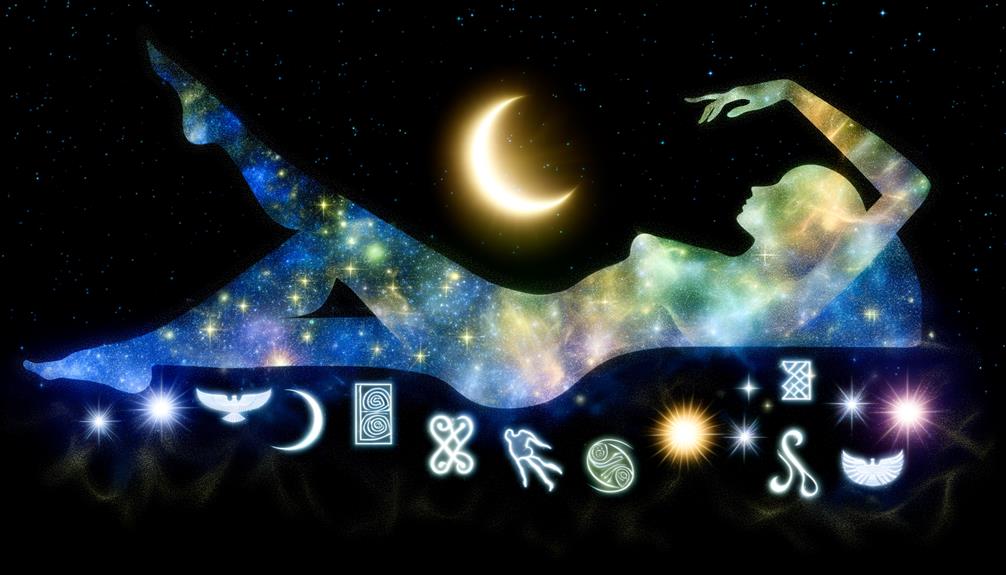
Nut is the ancient Egyptian sky goddess, commonly shown as a woman arched over the earth with stars across her body. Her imagery frames the daily journey of the sun and the hope of rebirth after death.
Nut in the surviving tradition
Heliopolitan genealogy makes Nut the daughter of Shu and Tefnut, sister and partner of Geb, and mother of Osiris, Isis, Seth, and Nephthys. Shu separates Nut from Geb, creating space between sky and earth. The family structure belongs to one major creation tradition among several Egyptian cosmogonies.
Texts, objects, and evidence
Funerary texts and coffins place Nut around the dead as a protective mother. The sun enters her mouth in the west, travels through her body at night, and is born again in the east. This is sacred cosmology expressed through image and text, not an early scientific claim about astronomy.
Key points
- Body: Hands and feet touch the horizons while the torso spans the world.
- Stars: Stars can travel across her body and disappear into it.
- Sycamore: Nut may also appear in tree form offering water and food to the dead.
- Calendar story: A later tale says Thoth wins extra days so Nut can give birth despite Ra’s prohibition. The episode explains the five epagomenal days.
How to read the material
Nut is not only a decorative ceiling figure. She protects, encloses, births, and renews gods, sun, stars, and the dead.