Asclepius was the Greek god of healing and the center of one of the ancient Mediterranean’s most influential therapeutic cults. Myth makes him a physician so capable that he crosses the boundary between life and death. Archaeology shows something equally important: patients traveled to sanctuaries called Asclepieia for purification, ritual sleep, divine dreams, offerings, exercise, and practical care.
Birth and training
Asclepius is usually the son of Apollo and a mortal woman named Coronis. In a widely told version, Apollo learns that Coronis has taken a mortal lover and she dies before giving birth. He rescues the unborn child from her funeral pyre and entrusts him to the centaur Chiron, who teaches him medicine.
Local traditions changed his mother, birthplace, and early life. Such differences often reflect competition among Greek communities that claimed a special relationship with the healer. They should not be forced into one seamless biography.
Healing the dead
Asclepius eventually learns to restore dead people to life. Sources disagree about whom he revives and how he acquires the knowledge. Zeus kills him with a thunderbolt because the resurrection of mortals disrupts the order separating humans from gods. Apollo then retaliates against the Cyclopes who made Zeus’s weapon.
The story defines the dangerous outer limit of healing: skill that defeats every death threatens the structure of the cosmos. Later tradition nevertheless places Asclepius among the gods, where worshippers approach him as a benevolent physician.
Epidaurus and the Asclepieia
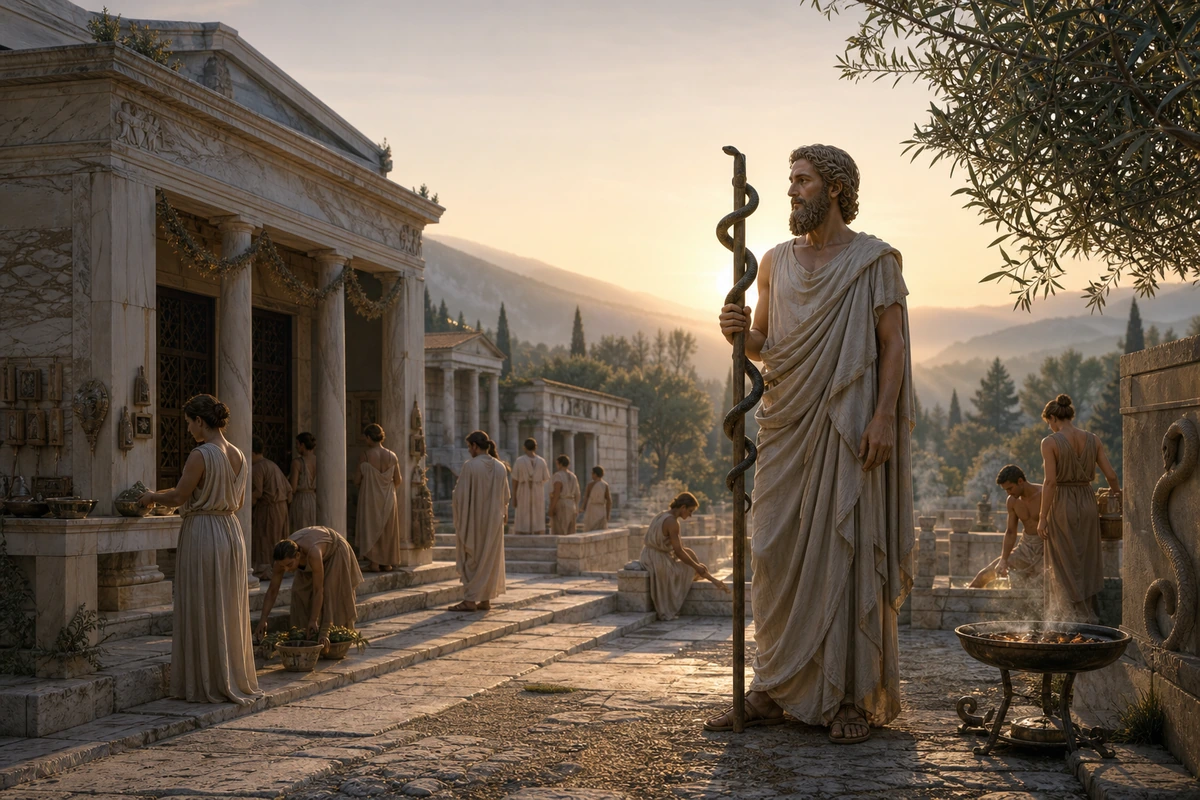
The sanctuary at Epidaurus developed into the most famous center of Asclepius’s cult. Its major fourth-century BCE buildings included a temple, tholos, theatre, baths, athletic areas, lodging, and the enkoimeterion or sleeping hall. Other important Asclepieia operated at Athens, Cos, Pergamum, and throughout the Greek and Roman worlds.
Visitors prepared through washing, sacrifice, and offerings before sleeping in a sacred space. In the practice called incubation, they hoped the god would appear in a dream, heal them directly, or prescribe a remedy. Snakes and dogs could act as sacred agents in healing narratives.
What the healing inscriptions tell us
Stone inscriptions from Epidaurus collect accounts of cures: blindness reversed, pregnancies achieved, wounds repaired, and objects removed from bodies. These iamata are invaluable evidence for what the sanctuary claimed and what worshippers expected. They are not neutral clinical records in the modern sense; they were displayed within the cult and promoted its divine efficacy.
Religious and empirical care were not mutually exclusive categories for ancient patients. Diet, bathing, exercise, surgery, drugs, prayer, sacrifice, and dreams could belong to the same search for health.
The staff and serpent
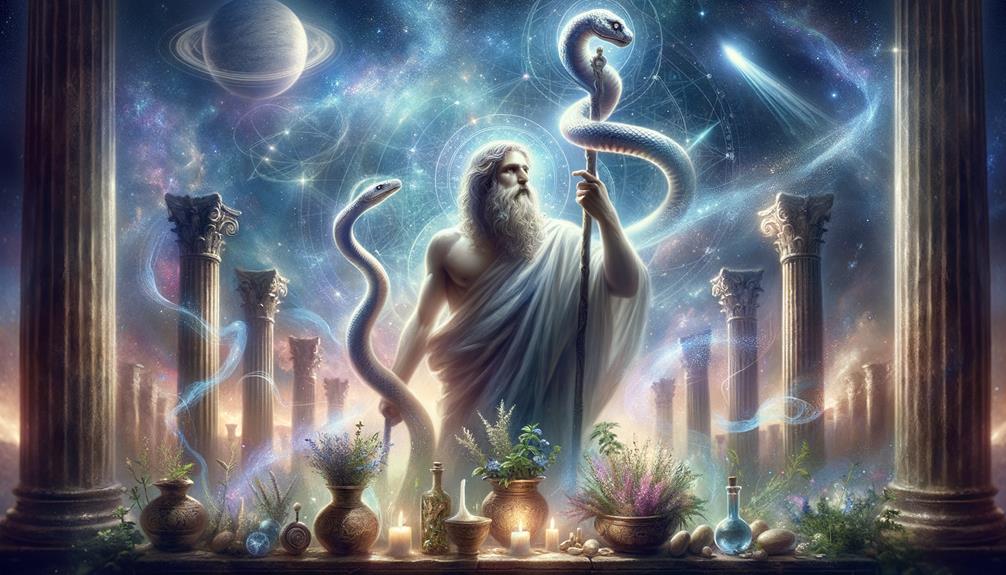
Asclepius is commonly shown as a mature bearded man leaning on a staff with one serpent wound around it. The serpent may evoke renewal, the earth, sacred presence, and the animals kept at healing sites. Ancient evidence does not reduce it to one explanation.
The staff of Asclepius has one serpent. The caduceus carried by Hermes normally has two serpents and a different mythic history. Their modern confusion is common, especially in medical branding, but the ancient attributes are distinct.
From Greece to Rome
Romans worshipped the god as Aesculapius. Tradition connected his arrival at Rome with an epidemic and a sacred snake that selected Tiber Island for the new cult. The sanctuary there extended a healing network that remained active for centuries.