
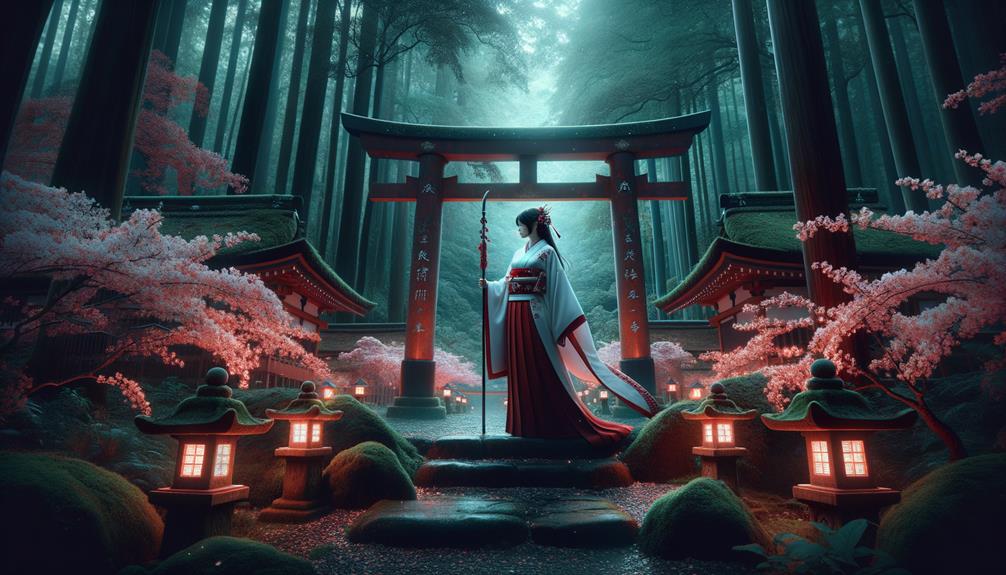
Accuracy note: Hironari is not attested in standard Japanese mythological or Shinto sources. The following should be read as a modern creative interpretation rather than established folklore. A shrine-maiden heroine named Hironari is not clearly attested in the standard early Japanese mythological sources. This page should therefore treat the identification as uncertain and avoid presenting a modern or conflated character as an established kami.
Once upon a time, a young maiden named Hironari was chosen by divine forces to serve at a sacred shrine. Her journey began with intensive training from elder priestesses, mastering sacred rituals and spiritual arts. Donning white and red robes that symbolized purity and fierce protection against darkness, Hironari confronted malevolent entities and cleansed the land. Just as she thought her trials ended, a greater challenge emerged.
Origins and Background

In ancient Japan’s mystical Heian era, certain young women were recognized for their remarkable spiritual abilities and purity. Guided by seasoned priestesses, these girls undertook rigorous training to become shrine maidens – guardians straddling the earthly and supernatural worlds.
Envision a humble village girl suddenly immersed in rituals and ceremonies, her life forever altered. Under her mentors’ watchful eyes, she mastered the complex arts of spiritual mediation. This important transformation saw her evolve from an ordinary existence to one steeped in divine purpose, epitomizing grace and dedication through disciplined practice.
Her journey was fraught with challenges – malevolent forces relentlessly disrupting the delicate equilibrium she strived to maintain. Yet each obstacle only tempered her resilience, cementing her status as a symbol of hope against supernatural adversity.
The shrine maiden’s tale is one of perseverance amidst trials, vividly illustrating the human capacity for growth and courage when guided by ancient wisdom and virtues like fortitude and purity.
Sacred Duties
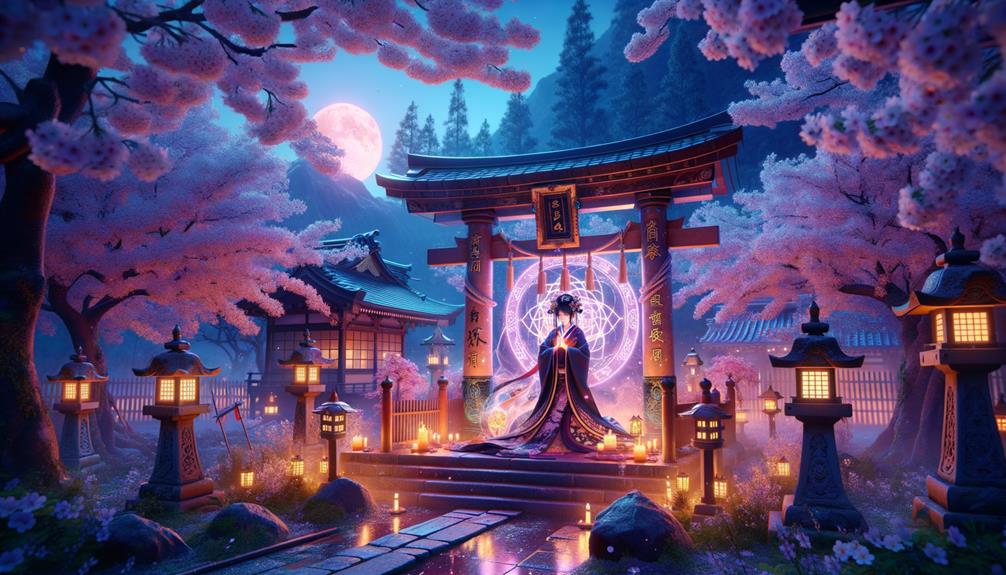
Rituals and Ceremonies
Spiritual Guidance Role
| Duty | Symbolism | Impact |
|---|---|---|
| Maintaining Cleanliness | Purity | Harmonious Environment |
| Offering Prayers | Divine Connection | Spiritual Nourishment |
| Performing Rituals | Cultural Heritage | Community Cohesion |
| Seasonal Festival Dances | Tradition | Honoring Beliefs |
| Sacred Chants | Reverence | Fostering Sacredness |
Community Healing Practices
Maintaining the shrine’s cleanliness isn’t a mere chore – it’s a sacred act that creates an environment of tranquility and reverence. This harmonious space allows healing to commence.
Spiritual Powers
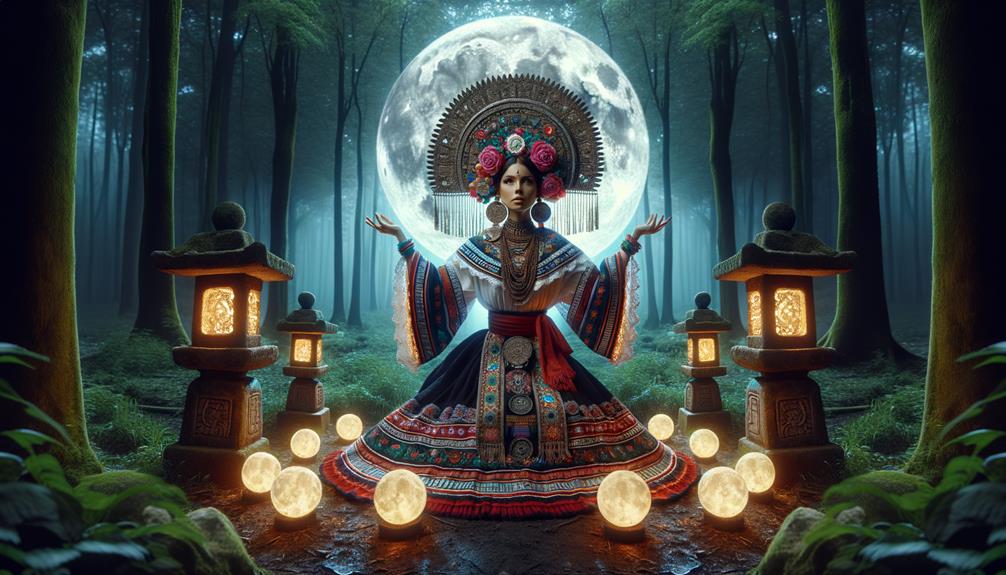
With reverence for her ancestral wisdom, Hironari taps into spiritual energies, navigating the worlds of the living and the divine. Her odyssey casts her as the enduring heroine, embodying the shrine maiden who stands at the threshold of worlds. Hironari’s gifts emerge not through serendipity but through arduous training and unwavering commitment. Each ritual, prayer, and dance fortifies her bond with the spiritual sphere.
Hironari’s abilities allow her to purify spaces, dispel malicious entities, and receive divine counsel. These acts preserve harmony and equilibrium within her community. Through sacred techniques, she channels energies that safeguard and heal, ensuring her people remain under the benevolent watch of the gods. She becomes a resolute guardian, shielding against unseen threats lurking in the shadows.
Her journey extends beyond mere mastery of these powers; it demands comprehending the delicate equilibrium between the physical and spiritual worlds. As a shrine maiden heroine, Hironari serves as the conduit, the bond that upholds the harmonious coexistence of both spheres.
Symbolic Attire
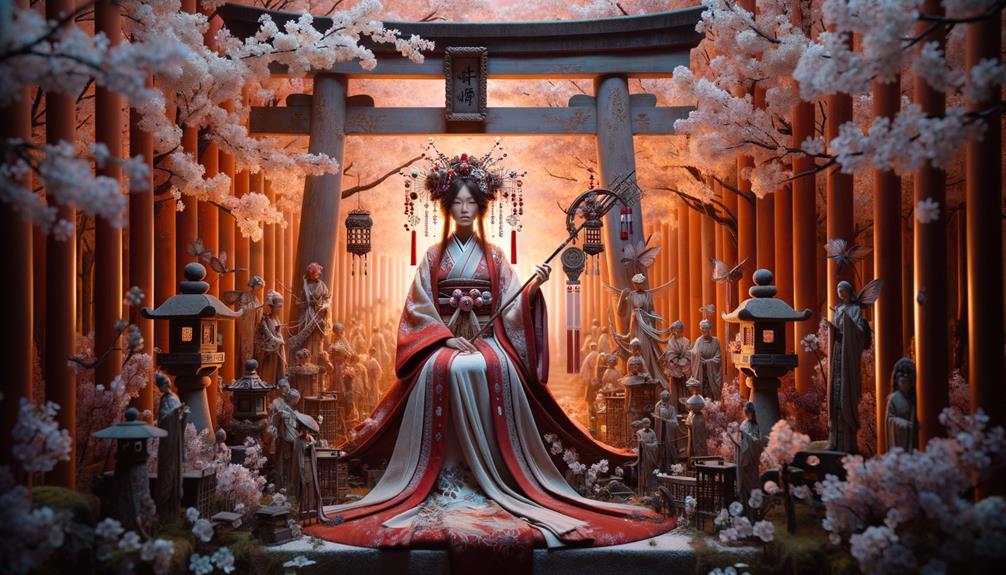
Traditional Garb Significance
In the heart of the shrine, the maiden dons white and red attire, transforming herself into a living symbol of purity and divine connection, prepared to begin her sacred duties. These robes aren’t just cloth; they signify her role as an intermediary between humans and spirits.
The white fabric represents purity and cleanliness, essential qualities for a maiden serving as a bridge to the divine world. In contrast, the red acts as a shield against malevolent forces. This duality in her attire reveals her dual purpose: to bring spiritual energy to the community while protecting it from harm.
Her accessories, hair ribbons and bells, carry symbolic weight. The ribbons signify her connection to the sacred, while the bells purify the surrounding space, warding off evil forces. These elements aren’t mere decorations but integral parts of her hallowed duty.
This attire has been passed down for generations, imbued with cultural and spiritual significance. Clothed in tradition, she steps into her role, ready to fulfill her destiny as a spiritual guide for her people.
Color Palette Meaning
The shrine maiden’s stark white and vivid red ensemble serves dual purposes, upholding purity while warding off malice. White symbolizes spiritual cleanliness, as if shielding her from worldly contamination. She exudes an aura of sanctity, connecting to the divine world.
Red, fiery and bold, personifies vigor and fortitude to combat evil forces. This hue extends beyond mere decoration; it’s a lifeblood pulsing through her, a formidable defense mechanism.
Together, these contrasting yet complementary shades form a symbiotic balance. White represents heavenly purity while red embodies earthly tenacity. Her sashed hair further roots her in the spiritual dimension as an envoy between worlds. This carefully curated palette isn’t just tradition, it manifests her sacred calling.
Notable Legends
The legends of the Hironari Shrine Maiden Heroine originate from Japanese folklore, depicting a brave young woman armed with a sacred blade and potent spells. Her tale begins as sinister spirits threaten her peaceful village, prompting her to begin on a dangerous quest.
Embodying purity and selflessness, the heroine answers the call. Her divine blade symbolizes spiritual fortitude and divine safeguarding. Along the way, various trials challenge her resolve, yet she remains dedicated, battling malevolent forces.
Following the archetypal hero’s journey, she faces near-defeat but rises through sheer willpower and her spells’ might. In the climax, she triumphs over the ultimate evil, not merely through combat prowess but important spiritual connection and inner purity.
Generations find inspiration in the Hironari Shrine Maiden Heroine’s tale, celebrating heroism, sacrifice, and good’s triumph over wickedness.
Cultural Impact
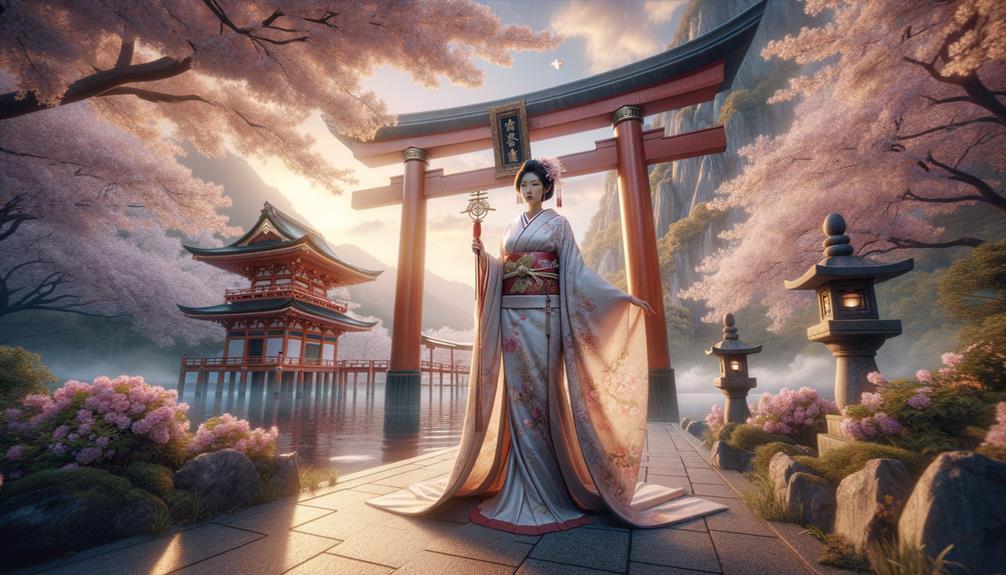
Her journey mirrors the hero’s tale, symbolizing the call to adventure – a bridge between the ordinary and the mystical. This connection to Shinto traditions highlights society’s enduring fascination with the mystical world, where spiritual battles and sacred duties intertwine. Her narrative often follows the monomyth structure, with trials and transformations echoing longstanding themes of growth and self-discovery.
| Medium | Example | Impact |
|---|---|---|
| Anime | ‘Inari, Konkon, Koi Iroha’ | Depicts spiritual and emotional maturation. |
| Manga | ‘Noragami’ | Explores divine alliances and human interactions. |
| Video Games | ‘Okami’ | Embodies the balance between nature and civilization. |
Sources and related reading
- Amenouzume Dawn Goddess Tales on MythologyVault
- Konohanasakuyahime Volcano Goddess on MythologyVault
- Kokugakuin University: Encyclopedia of Shinto