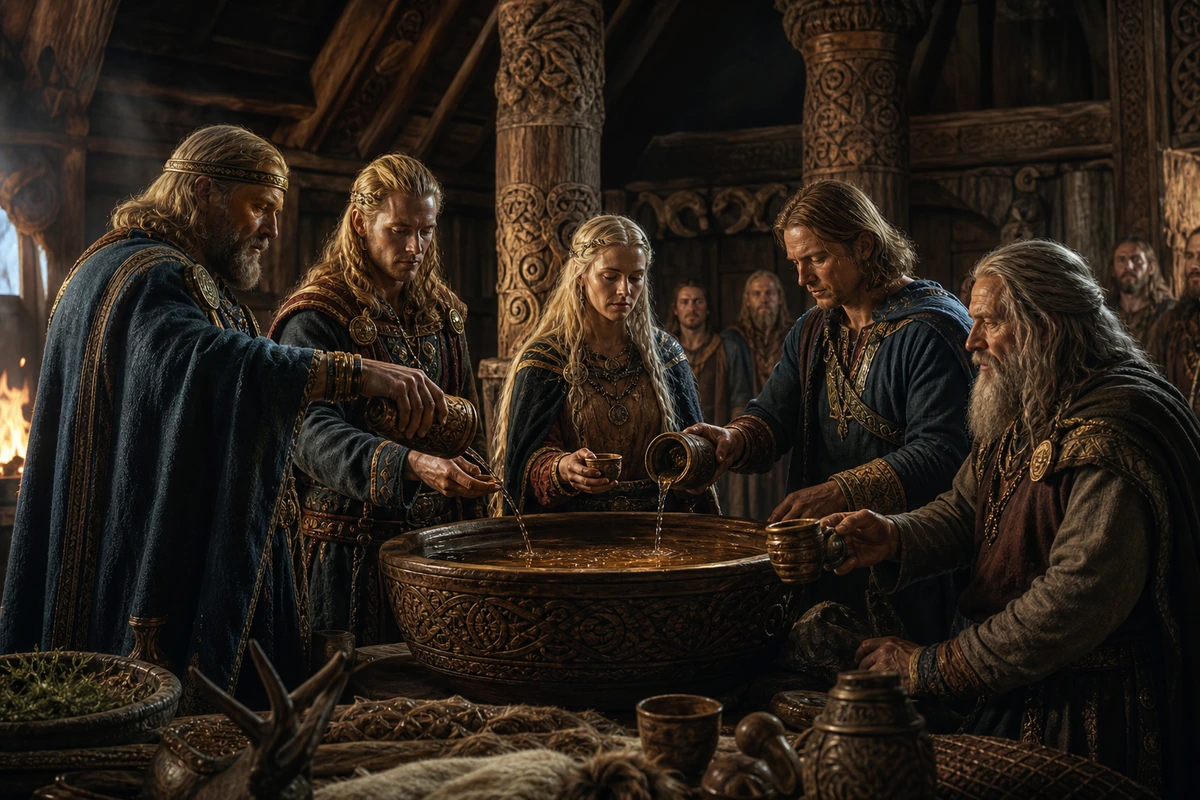

forgotten divine conflict between vanir and aesir

Vanir Aesir War Forgotten Divine Conflict

Accuracy note: The Æsir-Vanir war survives in brief, sometimes difficult passages in Eddic and skaldic sources. The truce, hostage exchange, and creation of Kvasir are better attested than any continuous battle narrative.

Seeds of Divine Discord

Youtube video

The Aesir-Vanir War

Treachery and mistrust lie at the heart of the Vanir-Aesir conflict, where the mysterious figure of Gullveig ignites the cosmic powder keg between Norse mythology’s divine families. Much like the goddess Eris would later do, she sowed the seeds of devastating conflict between divine powers.

Battle Tactics and Magical Warfare

Force Tactics Outcome
Aesir Direct Force Vanaheim Damage
Vanir Seidr Magic Asgard Walls Fall
Freyja Regeneration Survived 3 Deaths
Odin Preserved Knowledge Saved Mímir
Both Stalemate Peace Treaty

Notable Warriors and Leaders

heroic figures command conquer inspire

The leaders and warriors who played pivotal roles in the Aesir-Vanir War possessed distinct powers and personalities that shaped the conflict. Odin’s spear-throw that ignited the battle and Freya’s mastery of seidr magic represented the opposing forces of martial prowess and mystical might. Hoenir’s dependency on Mimir’s counsel demonstrated the interdependence of leadership and wisdom, while the creation of Kvasir from divine saliva embodied the unity born from conflict. The resolution ultimately came through exchanging divine hostages between the two tribes.

  1. Odin and Freya symbolized the clash between martial prowess and magical mastery
  2. Hoenir and Mimir represented the interdependence of leadership and wisdom
  3. Kvasir emerged as the embodiment of unity born from conflict

These divine warriors and leaders were more than just combatants – they represented how opposing forces can merge to create something greater.

Cost of Celestial Combat

The Aesir-Vanir War‘s toll was immense, even for the immortal participants. Numerous divine lives were snuffed out, gone beyond even the hope of resurrection. The raw power unleashed by both sides swiftly drained their celestial resources. Artifacts and divine weapons that could never be replaced were lost in the battles. Extensive use of magic, especially by the Vanir, left lasting scars across the domains. These cosmic wounds in the fabric of creation would forever remain open, refusing to fully heal.

Divine Lives Lost Forever

In tallying the monumental cost of divine lives lost in the cataclysmic conflict between the Vanir and Aesir, the number of permanent casualties was surprisingly low; yet, each loss carried immense symbolic weight that would resonate through the ages. Mímir’s tragic end at the hands of the Vanir stands out – though Odin preserved his wisdom through necromancy, the decapitation of the revered figure marked a pivotal turning point in divine relations. Gullveig, actually Freyja in disguise, miraculously endured three deaths only to transcend mortality each time, embodying the resilient and eternal nature of primordial magic.

  1. Mímir’s brutal beheading represents the fatal price of misunderstanding between cultures, imparting a harsh lesson that wisdom sometimes demands the ultimate sacrifice
  2. Kvasir’s creation from the gods’ saliva and his subsequent murder illustrates how even the pursuit of peace can give rise to both boundless wisdom and treachery
  3. Gullveig’s repeated "deaths" demonstrate the indestructible nature of transformative power

The blood of these fallen gods would forever alter the course of divine history. Their legacies continue to echo through the worlds, serving as powerful reminders of the far-reaching consequences of the war that reshaped the very fabric of the cosmos.

Gods’ Resources Depleted Rapidly

This divine warfare took a significant toll beyond mere physical destruction. The lengths the gods went to, such as Odin preserving Mímir’s head and the creation of Kvasir, showed just how desperate they had become. When immortals are driven to share resources and exchange hostages, it truly shows the impact of such conflicts. Ultimately, it was the harsh reality of their waning power that necessitated the unification of the gods.

Magic’s Toll on worlds

  1. The material planes suffered greatly from the aftermath of divine crossfire. Magical energies left entire landscapes scorched and natural laws shattered.
  2. Each exchange of divine force led to a destabilization of the cosmic balance. Rifts formed between domains, threatening the fabric of all existence.
  3. As the war raged on, magical resources depleted across worlds. This weakening of the very foundations that held the worlds together was a devastating toll.

This conflict serves as a stark reminder that even gods must face the consequences of unbridled power and the unrestrained use of their magical abilities.

Path Toward Godly Unity

seeking divine inspired unity

First, the Aesir and Vanir engaged in an exchange of hostages – a bold act that began to forge trust between former enemies. Njord, Freyr, and Freyja left their home with the Vanir to live among the Aesir. This gesture signaled a willingness to set aside differences for the greater good.

From this foundation, the united gods created Kvasir, a being born from their combined saliva – a tangible symbol of the wisdom that arises when diverse perspectives come together in harmony. Kvasir’s creation epitomized the power of collaboration and the new possibilities that emerge from unity.

Finally, the Aesir and Vanir merged their divine powers and came to share the worlds between them. Mimir and Honir, sent by the Vanir, ruled alongside the Aesir. This integration replaced competition with cooperation, striking a balance that restored the natural order.

Legacy Among Norse Tribes

The Anseir-Vanir unification had a important impact on Nordic tribal culture. The combination of their belief systems created a shared spiritual framework, healing old wounds and establishing common rituals that honored both the strength of the Anseir and the wisdom of the Vanir. These shared practices endured for generations, forever changing Nordic society. What started as a divine conflict led to a more balanced approach to power and governance, as warriors came to embrace both battle prowess and spiritual insight.

Cultural Beliefs Merge Peacefully

Key takeaways from this mythological reconciliation:

  1. Genuine harmony requires compromise and sacrifice from both parties, as evidenced by the tribes’ exchange of their most revered deities.
  2. The combination of different strengths, such as the Aesir’s military prowess and the Vanir’s magical abilities, results in a wisdom greater than the sum of its parts.
  3. Cultural exchange allows beliefs to evolve and expand, rather than being destroyed or forgotten.

Ultimately, the myth of the Aesir and Vanir demonstrates that unity does not require the loss of individual identity. Instead, it showcases the strength that comes from diverse groups finding common ground and working together towards a shared goal.

Sacred Rituals Unite Tribes

Rituals and sacred bonds brought the Aesir and Vanir tribes closer together, transforming them from enemies into united spiritual communities. Through shared practices in ritual circles and seasonal sacrifices, the tribes created powerful holy spaces where they could honor the gods together. Ceremonial feasts and sacred offerings at these sites dissolved the old battle lines between them.

The exchange of hostages between the tribes, including notable figures like Freya, Freyr, Njord, Hoenir, and Mimir, served as living symbols of their connection. Most powerfully, they created Kvasir from their combined spit, representing the merger of their spiritual essence.

The tribes found unity through blót rituals at sacred groves and ceremonial sites. They would gather under the branches of the world tree Yggdrasil to make offerings and share in divine communion, forging lasting bonds between the Aesir and Vanir.

Warrior Traditions Transform Society

The transformative influence of warrior culture on Norse society during and after the Aesir-Vanir War cannot be overstated. As these skilled fighters transcended their role as mere combatants, they became the architects of a new cultural identity – one that wove together the values of honor, bravery, and loyalty.

This shift is evident in several key areas:

  1. The path of the warrior offered karls a means to rise above their birth station, their valor and achievements laying the foundation for social mobility.
  2. The emergence of shieldmaidens presented a challenge to traditional gender roles, embodying a spirit of liberation and redefining the parameters of what it meant to be a woman in Norse society.
  3. The fusion of Aesir and Vanir warriors following the war resulted in a new paradigm of power – one that balanced martial prowess with wisdom in both leadership and daily life.

Sources and related reading

Scroll to Top