
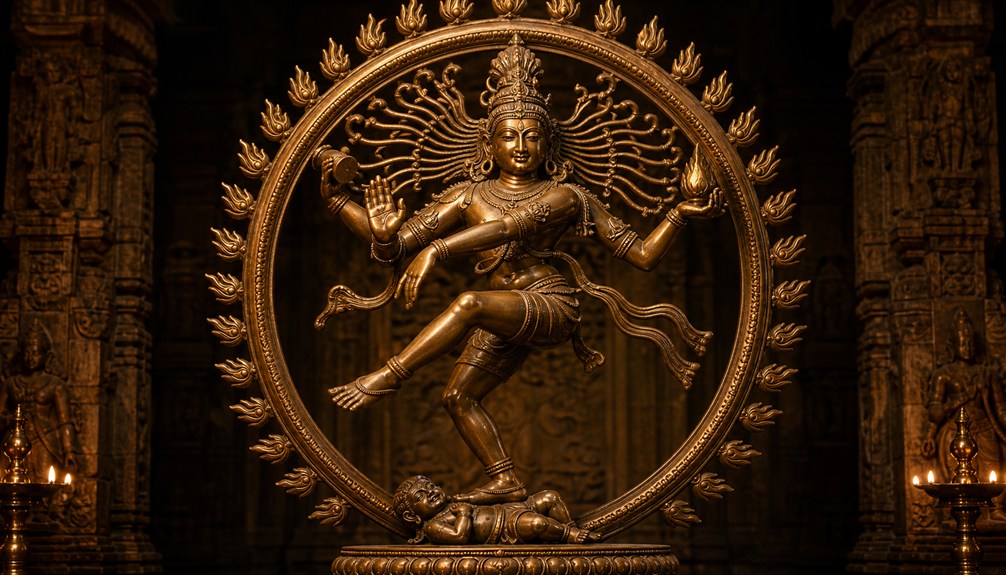
Nataraja, meaning Lord of Dance, is a major form of Shiva in Hindu art and worship. The best-known bronze type developed in southern India under the Cholas, although dancing forms of Shiva are older.
Shiva as Nataraja in the surviving tradition
The image places Shiva inside a ring of flame. One upper hand holds a damaru, the small drum associated with the sound of creation. Another holds fire, linked with dissolution. A lower hand makes the abhaya gesture that offers reassurance. The raised foot offers release, while the other foot presses down the small figure Apasmara, a personification of ignorance or forgetfulness.
Texts, objects, and evidence
The pose is not a decorative dance frozen in metal. It presents several theological ideas at once: the cosmos comes into being, is sustained, and passes away; ignorance is overcome; and divine grace offers a path toward liberation. Flying locks of hair convey motion, yet the face is controlled and calm. Temple bronzes were sacred images that could be carried in procession so worshippers could see the deity.
Key points
- Drum and fire: Creation and destruction are held in balance.
- Gesture: The lowered hand points toward the raised foot, directing attention to refuge and release.
- Apasmara: The figure underfoot represents the ignorance that blocks spiritual understanding.
- Chola setting: Bronze casting reached exceptional technical and artistic refinement in Tamil regions under Chola rule. The images belong to a living religious tradition, not only to art history.
How to read the material
Shiva has many forms and cannot be reduced to a single role such as destroyer. Nataraja joins fierce power, disciplined stillness, protection, and renewal in one icon.