
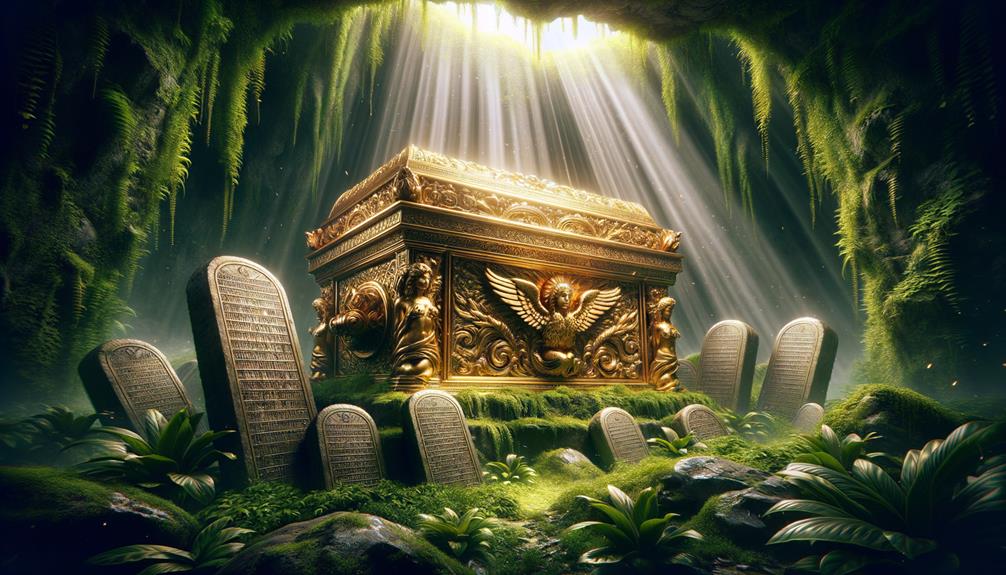
Accuracy note: The Ark of the Covenant is described in biblical texts as a sacred chest associated with the tablets of the covenant. Its fate after antiquity is unknown, and later location claims remain unverified.
The Ark of the Covenant, a sacred chest crafted by Bezalel, extends beyond its physical form. More than a historical relic, it represents humanity’s important connection to the divine. Imagine this ancient vessel, a symbol of laws and divine protection, guiding the Israelites through the wilderness, instilling hope when faith wavered. Its spiritual legacy extends beyond its journey, continuing to inspire a search for meaning and divine presence.
While the Ark’s historical significance intrigues, its true power comes from the longstanding spiritual connection it represents. This revered object’s influence endures, prompting reflection on values and beliefs. Its mystique captivates, showing that even amid life’s uncertainties, symbols can unite and elevate human experience.
Construction and Design

The Ark of the Covenant‘s construction from Exodus showcases complex design and symbolism. Bezalel, blessed with divine expertise, meticulously followed God’s blueprint, utilizing acacia wood and gold – materials representing purity and permanence, reflecting the Ark’s sacred nature.
Measuring two and a half cubits long, one and a half wide, and one and a half high, the Ark’s exterior and interior glistened with pure gold overlay, underscoring its divine significance. Rings and poles allowed transportation without direct contact, preserving holiness.
Atop the Ark rested the mercy seat, adorned with outstretched golden cherubim wings, symbolizing God’s protective presence among the Israelites. Every construction detail reinforced the Ark’s monumental role in the covenant between God and His people.
Symbolism and Meaning
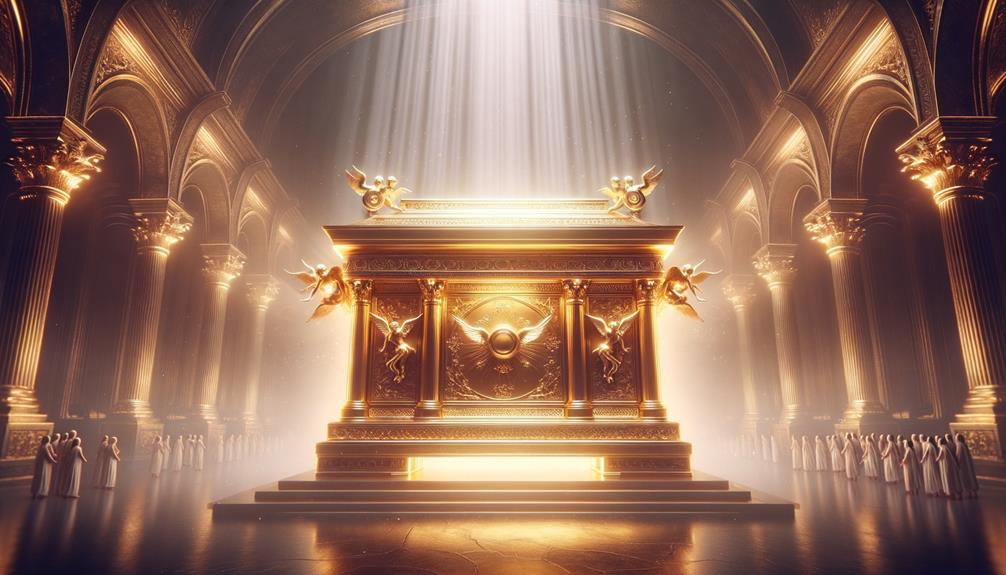
Unpacking the Ark of the Covenant reveals a tradition of powerful symbols spanning generations. More than just a sacred object, it embodied God’s covenant with the Israelites and His enduring presence among them. Crafted from acacia wood and adorned with gold, the Ark represented divine guidance, protection, and affirmation.
central to, the Ark housed the Ten Commandments tablets, manna, and Aaron’s rod, items importantly symbolic. The tablets laid out God’s laws and moral code for the Israelites. The manna illustrated God’s provision, while Aaron’s rod signified divine authority and miracles.
The design elements amplified the Ark’s significance further. The mercy seat with flanking golden cherubim served as God’s throne from where favor and judgment were bestowed. There, the Israelites encountered God’s presence through worship and sought His counsel.
Through rich symbolism, the Ark of the Covenant transcended being just a relic. It became a wellspring of hope, a example to divine love, and a cornerstone of the Israelites’ spiritual journey.
Historical Events
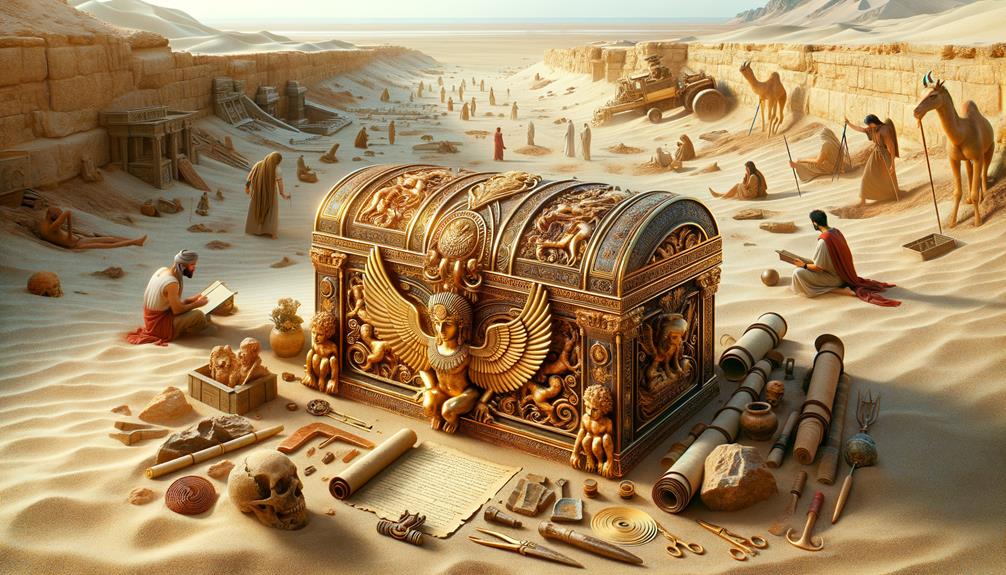
The Ark of the Covenant played a pivotal role in ancient Israel’s riveting history. At the Battle of Jericho, its presence marked God’s favor, enabling the Israelites’ incredible triumph. This event solidified the Ark’s mythical aura as a symbol of divine backing.
When the Philistines seized the Ark, misfortune befell them, underscoring its sacred power. Recognizing this, they ultimately returned the Ark to the Israelites with offerings, acknowledging its holiness.
King David’s retrieval of the Ark from Kiriath Jearim sparked wild celebrations. His joyous procession, brimming with dance and revelry, brought the Ark to Jerusalem, cementing his status as a unifying hero.
Solomon’s Temple became the Ark’s home, housing the original Ten Commandments tablets. This solidified its centrality in Israelite worship, embodying the covenant between God and His people. Through these remarkable events, the Ark of the Covenant remained an indomitable emblem of God’s presence, importantly shaping the Israelites’ faith and identity.
Religious Significance
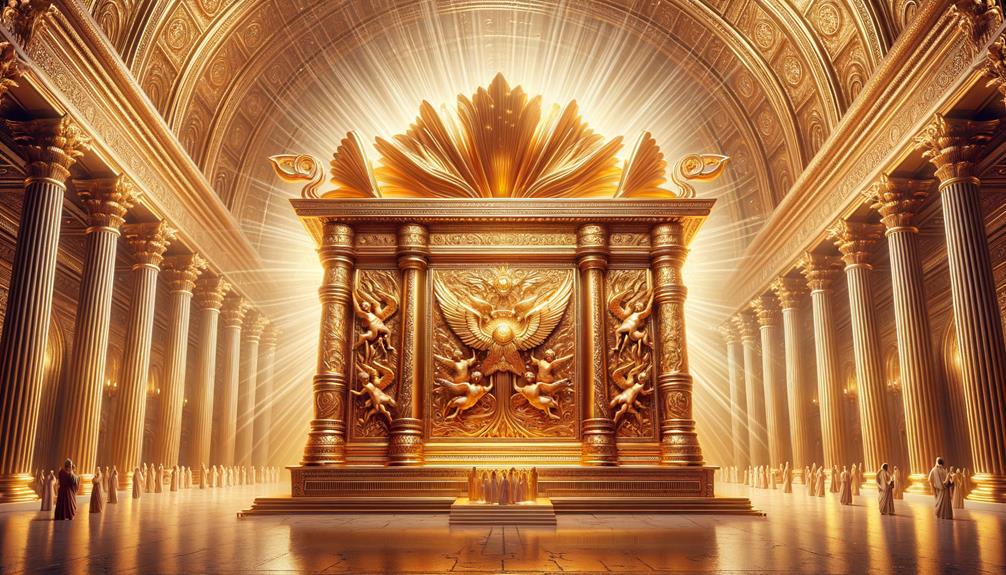
The Ark of the Covenant bears enormous spiritual weight for the Jewish and Christian faiths. For Jews, it represents God’s promises and guidance during the Israelites’ nomadic journey. Christians see it as a precursor to Jesus establishing a new covenant. Beyond religion, the Ark kindles curiosity about its unknown fate and potential archeological rediscovery.
At its core, the Ark symbolizes a important connection between humanity and the divine. Its legacy interweaves spiritual beliefs with real-world history and human experiences. While the physical Ark has vanished, its important impact on faith traditions echoes through generations, inspiring wonder and reverence in those who encounter its story.
Modern Perspectives

The Ark of the Covenant continues to fascinate people across the globe, its narrative rooted in Jewish tradition and the Old example. This sacred chest housed stone tablets with divine commandments, residing in Jerusalem’s First Temple built by King Solomon. After the Babylonian destruction of the First Temple, the Ark vanished, sparking numerous theories on its whereabouts.
Groups like the Ethiopian Orthodox Tewahedo Church and Southern Africa’s Lemba people claim ancestral connections to the Ark, reflecting humanity’s important spiritual yearning. Popular culture amplifies its mystique through films like ‘Raiders of the Lost Ark‘ and novels about the Knights Templar.
From Jerusalem to rumored resting places in Europe, the quest for the Ark mirrors an ongoing search for divine understanding, echoing ancient heroes’ journeys. Its allure extends beyond religious lore, symbolizing humanity’s universal desire for connection with the sacred.
Sources and related reading
- Cloak of Prophet Muhammad on MythologyVault
- Holy Grail Arthurian Legend on MythologyVault
- The Metropolitan Museum of Art: medieval art resource