
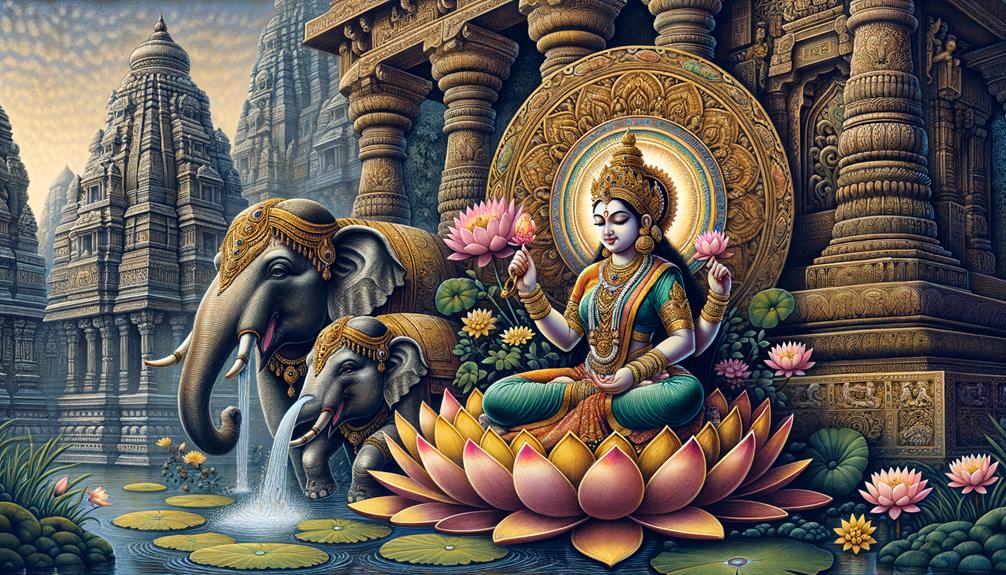
Lakshmi is a Hindu goddess of prosperity, good fortune, beauty, well-being, and auspicious order. Wealth in her tradition is broader than money and can include fertility, sovereignty, nourishment, and household flourishing.
Lakshmi in the surviving tradition
A prominent account in the Sanskrit epics and Puranas describes Lakshmi emerging during the churning of the ocean of milk and choosing Vishnu. Other texts and regional traditions give different origins. Her close relationship with Vishnu is expressed through paired images and through traditions in which she accompanies his avatars, often identified with Sita beside Rama and Rukmini beside Krishna.
Texts, objects, and evidence
Common images show Lakshmi seated or standing on a lotus, sometimes with elephants pouring water above her. The lotus suggests purity and generative abundance, while elephants can evoke royal authority and life-giving rain. Hands may offer blessing and release coins or grain. Iconographic details vary across period and region, and not every image includes all these elements.
Key points
- Sri: The name Sri can refer to auspicious splendor and is closely identified with Lakshmi.
- Festivals: Lakshmi is honored during Diwali in many communities, but domestic and temple practices differ.
- Ashtalakshmi: Eight forms of Lakshmi organize types of prosperity in a later devotional framework. Lists and names are not identical everywhere.
- Ethical setting: Hindu teachings do not reduce prosperity to a magical technique. Generosity, right conduct, work, and devotion shape how abundance is understood.
How to read the material
Instructions that promise guaranteed money through a ritual are not reliable history or theology. A careful account distinguishes scripture, temple iconography, regional observance, and recent popular advice.