
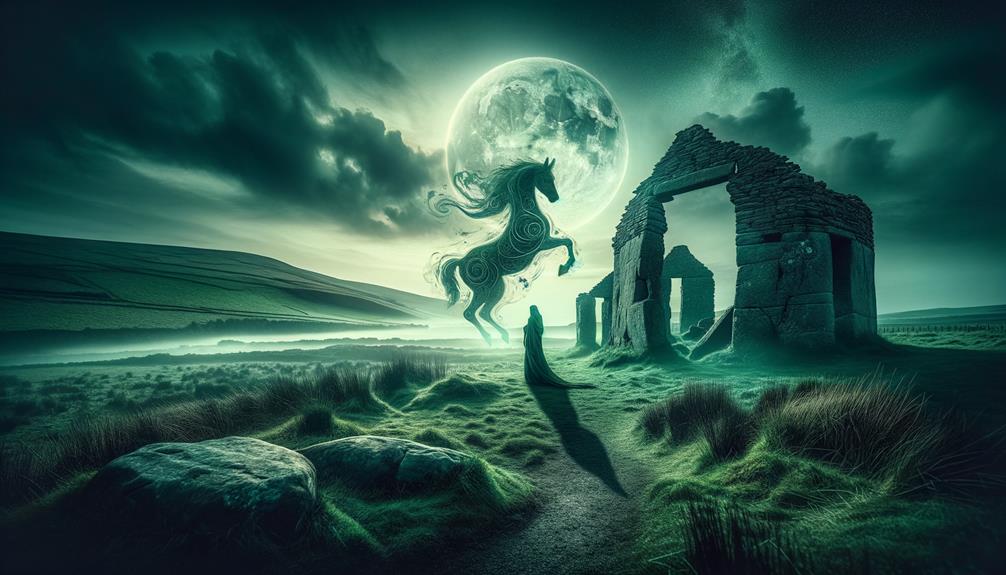
The púca is a shape-changing being in Irish folklore, with related forms in other Gaelic and Celtic-language traditions. English spellings include pooka and phouka. Stories make it troublesome, helpful, frightening, or all three.
The púca in the surviving tradition
The púca often appears as a dark horse and carries a rider on a wild nighttime journey. Other shapes include goat, dog, bull, eagle, or human. Some tales end with a warning or prank, while others show the being giving advice, helping with work, or demanding a share of the harvest.
Texts, objects, and evidence
Nineteenth-century collections by writers and folklorists such as Douglas Hyde and W. B. Yeats preserve named stories including The Piper and the Púca. These printed versions are valuable but selective. They record local tales after long contact between Irish-language tradition, Christianity, English print culture, and antiquarian interest.
Key points
- Samhain: Some accounts connect the púca with the end of harvest and with November.
- Berries: A custom says that fruit left after Samhain has been spoiled by the púca, marking the end of safe gathering.
- Speech: The being may speak clearly and offer prophecy or warning, so it is not merely an animal monster.
- Regional variation: Welsh pwca and Cornish bucca are related names, but their stories should not be treated as exact copies.
How to read the material
A fixed list of powers gives a false sense of uniformity. The creature’s uncertainty and local character are central to the tradition.