
Beowulf is the hero of an Old English epic preserved in a single medieval manuscript. The poem is set in Scandinavia, not England, and combines a pre-Christian heroic past with a Christian narrator’s moral language.
Beowulf in the surviving tradition
Beowulf, a Geat, crosses the sea to help the Danish king Hrothgar. The monster Grendel has attacked Heorot, the king’s hall. Beowulf fights without a weapon and tears off Grendel’s arm. Grendel’s mother later attacks in revenge; Beowulf enters her underwater dwelling and kills her with a giant sword.
Texts, objects, and evidence
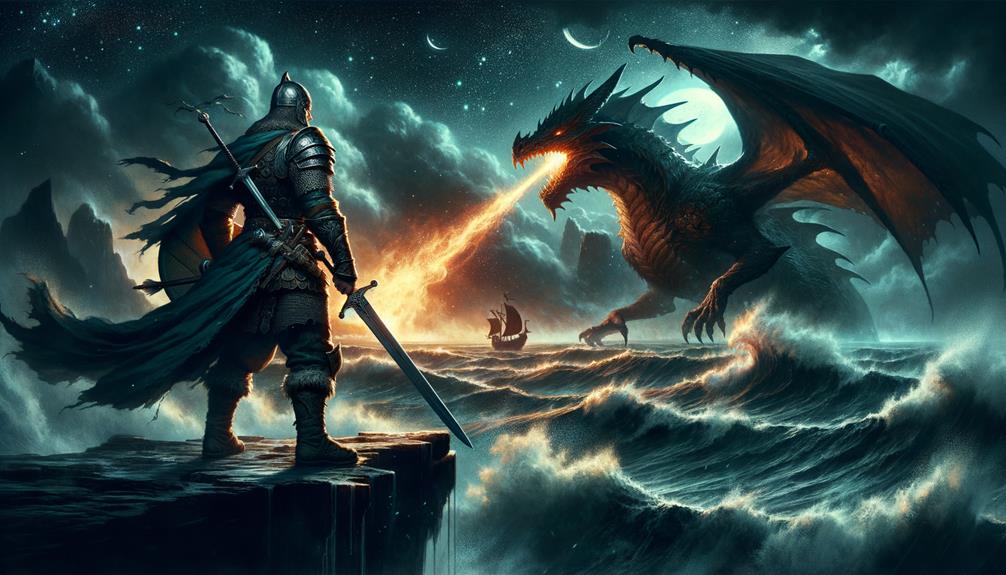
After returning home, Beowulf eventually becomes king of the Geats. Decades later a dragon attacks after a cup is stolen from its hoard. The elderly king fights with a small group, but only Wiglaf remains beside him. They kill the dragon, and Beowulf dies from his wounds. The poem ends with funeral rites and fear for the Geats’ future.
Key points
- Manuscript: The poem survives in the Nowell Codex, damaged in the 1731 Cotton Library fire.
- Date: The manuscript was copied around the year 1000, while the poem’s composition date remains debated.
- Heroic values: Gift-giving, loyalty, fame, feud, and the bond between lord and retainer shape the action.
- Monsters and history: Named peoples and dynasties connect with early medieval history, but the monster fights are poetic narrative, not chronicle.
How to read the material
Beowulf’s courage is real within the poem, yet the ending questions the sustainability of glory and kingship. A short list of heroic traits misses that tension.