
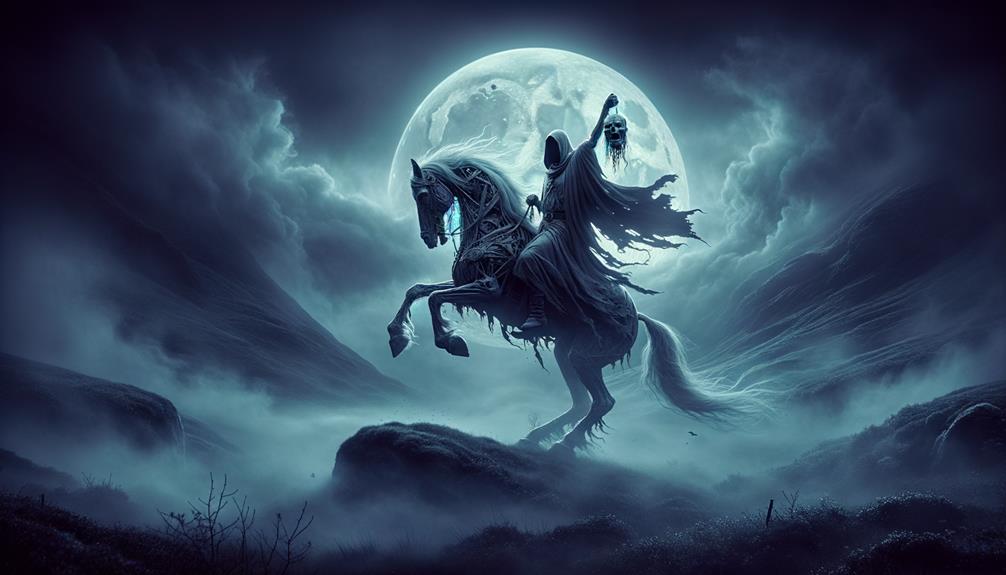
The dullahan is a headless supernatural rider in Irish folklore. Modern summaries often give it a single set of rules, but the surviving tradition includes variation in vehicle, appearance, actions, and name.
The dullahan in the surviving tradition
The figure may ride a black horse or drive a coach and carry its own head. Stories describe the head as having keen sight and an unsettling expression. The rider’s arrival can announce a death, and a shouted name may mark the person who will die. Some later versions add a whip made from a human spine.
Texts, objects, and evidence
Folklore collectors recorded headless riders and death coaches in Ireland, while the English-language label dullahan became widely used in print. Similar European motifs include the Wild Hunt and headless coachmen, but resemblance does not prove one origin. Washington Irving’s Headless Horseman is a separate American literary figure with European influences.
Key points
- Death omen: The rider often foretells death rather than personally killing every witness.
- Gold: Some modern retellings say gold frightens the dullahan. The motif appears in later collections but should not be treated as a universal ancient rule.
- Crom Dubh claims: Direct identification with an ancient god is speculative and lacks firm early evidence.
- Local names: Death coach traditions can use names such as cóiste bodhar. Language and region matter.
How to read the material
The dullahan is best presented through recorded tales, not as a creature with game statistics or a reconstructed prehistoric cult.