
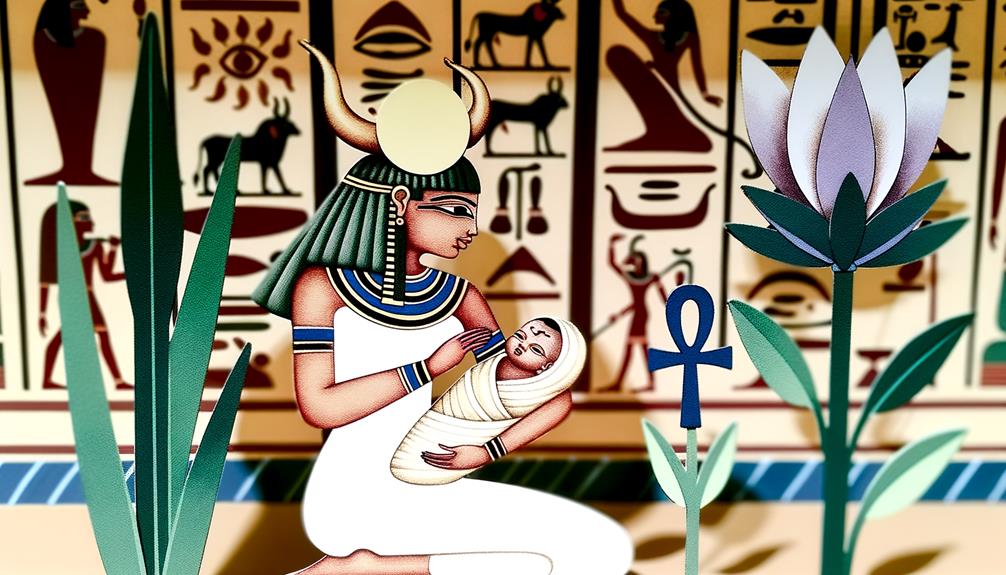
Hathor is an ancient Egyptian goddess of music, dance, joy, sexuality, motherhood, the sky, foreign lands, and care for the dead. Her many roles make motherhood goddess an incomplete title.
Hathor in the surviving tradition
Hathor may appear as a cow, a woman with cow horns and sun disk, or a woman with cow ears. She can be the daughter, mother, or eye of the sun god depending on the text. The Eye of Ra stories give her a fierce form that can merge with lioness goddesses, showing that affection and destructive protection coexist.
Texts, objects, and evidence
Her major temple at Dendera preserves late pharaonic and Roman-period reliefs. The sistrum, a shaken musical instrument, is strongly associated with her and with joyful ritual. Hathor is also Lady of the West, receiving the dead as they enter the necropolis, and Mistress of Turquoise in mining regions of Sinai.
Key points
- Family: Relationships with Horus, Ra, Ihy, and other gods vary by place and period.
- Seven Hathors: Groups of Hathors can announce fate at birth in later tales.
- Foreign connections: Egyptians linked Hathor with Byblos, Nubia, desert routes, and imported goods.
- Isis: In later art Isis can adopt Hathor’s horns and disk. Similar imagery does not erase their distinct histories.
How to read the material
Hathor’s identity joins body, music, landscape, kingship, trade, birth, and death. A single family role cannot organize all the evidence.