
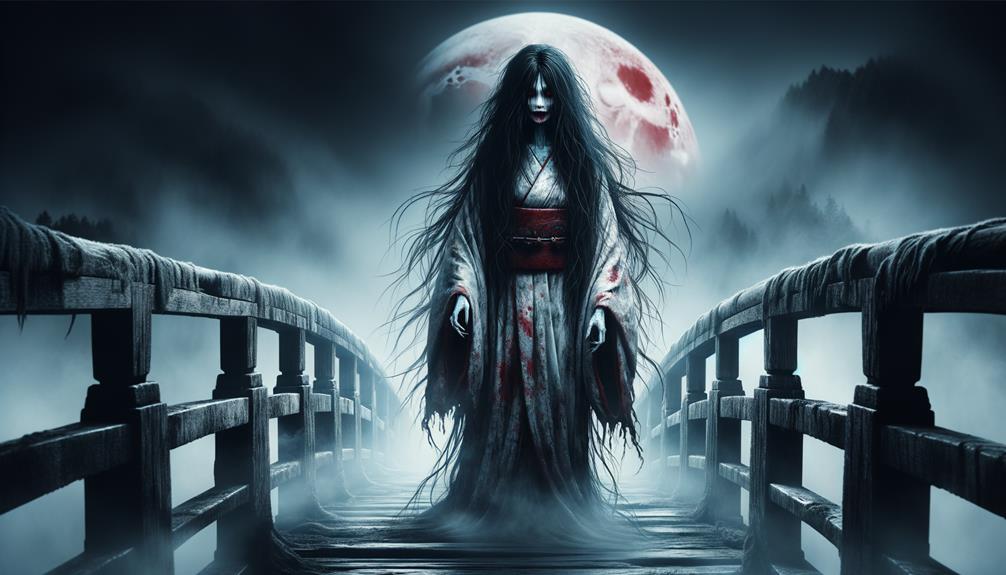
Onryō are vengeful spirits in Japanese religious history, literature, theater, and folklore. The term is associated with dead people whose anger or mistreatment is believed to bring calamity to the living.
Onryō in the surviving tradition
Early court traditions linked epidemics, storms, political disorder, and sudden death with powerful spirits. Ritual, memorialization, promotion in rank, and enshrinement could pacify them. Sugawara no Michizane, exiled and later honored at Tenjin shrines, is a major example of a feared spirit transformed into a revered kami of learning.
Texts, objects, and evidence
Classical and medieval literature gives vengeful dead many forms. Noh and kabuki drama developed female ghost roles whose resentment remains attached to betrayal or jealousy. Modern J-horror emphasizes pale faces, long black hair, and curses transmitted through technology. That screen image is historically recent even when it draws on older theatrical signs.
Key points
- Meaning: On means grudge or resentment, while ryō refers to spirit.
- Goryō: The related term often refers to august or honored spirits whose anger requires public rites.
- Appearance: Older sources do not require one white-dress, long-hair costume.
- Power: Calamity is understood within religious and narrative frameworks, not as a set of measurable supernatural abilities.
How to read the material
Onryō should not be treated as a species with fixed rules. The concept links memory, injustice, ritual responsibility, and the dangerous power of the dead.