
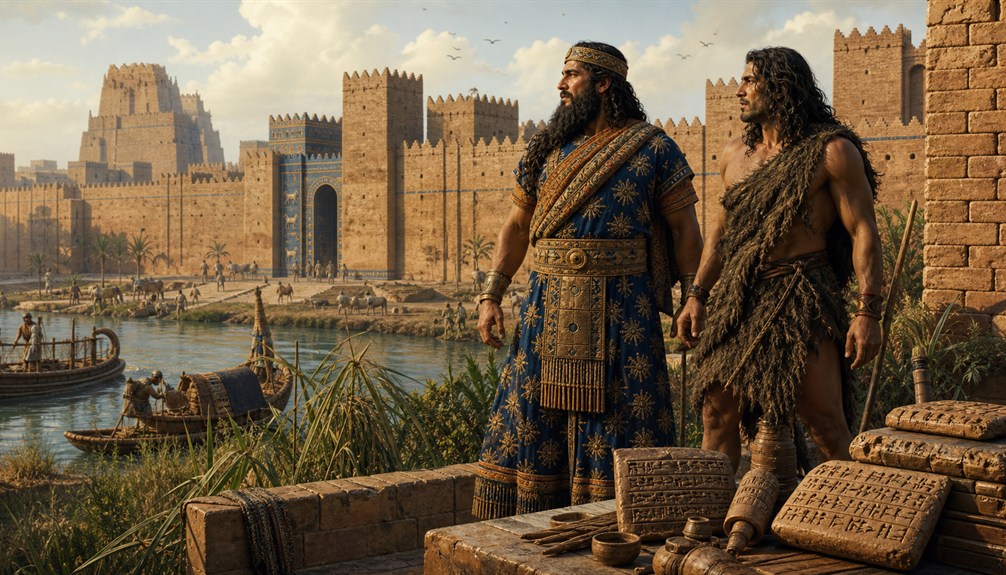
Gilgamesh is the hero of several Sumerian poems and a later Akkadian epic. A ruler named Gilgamesh may have belonged to the early history of Uruk, but the surviving stories are literary works copied and reshaped over many centuries.
Gilgamesh in the surviving tradition
The Standard Babylonian Epic begins with Gilgamesh as a powerful king whose people suffer under his rule. The gods create Enkidu as a counterweight. After fighting, the two become companions. They defeat Humbaba in the Cedar Forest and kill the Bull of Heaven, acts that bring fame but also divine punishment.
Texts, objects, and evidence
Enkidu’s death drives Gilgamesh to seek escape from mortality. He reaches Utnapishtim, survivor of a great flood, who shows that human beings cannot gain his exceptional immortality. Gilgamesh briefly obtains a plant of rejuvenation, but a snake steals it. He returns to Uruk with knowledge of limits and with the city walls as his enduring work.
Key points
- Languages and versions: Sumerian tales, Old Babylonian tablets, and the later Standard Babylonian edition are related but not identical.
- Kingship: The epic moves from abusive strength toward responsibility and memory.
- Flood: The flood account resembles other ancient Near Eastern traditions, but direct one-to-one borrowing claims require textual history.
- Historical caution: The Sumerian King List names Gilgamesh, yet this does not verify the epic adventures.
How to read the material
The epic is not simply the biography of a demigod. Its themes include friendship, grief, fame, civilization, kingship, and the acceptance of death.