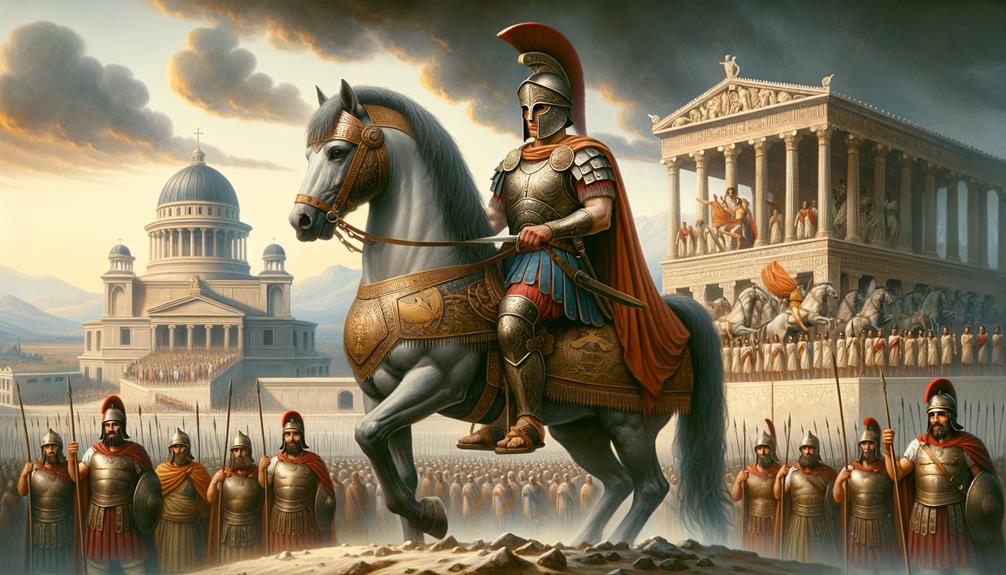
Alexander III of Macedon, known as Alexander the Great, ruled from 336 to 323 BCE. He destroyed the Achaemenid Persian Empire and created a new imperial network from the eastern Mediterranean to parts of Central and South Asia.
Alexander the Great in the surviving tradition
Alexander was the son of Philip II and Olympias. Philip’s army and diplomacy made Macedon dominant in Greece. After Philip’s assassination, Alexander secured the throne, crushed revolt, crossed into Asia, and defeated a coalition of Persian satraps at the Granicus, Issus, and Gaugamela. Babylon, Susa, Persepolis, and other imperial centers came under his control.
Texts, objects, and evidence
The army continued through Bactria and Sogdiana and into the Punjab, where Alexander defeated King Porus at the Hydaspes. The troops refused to march farther at the Hyphasis. The return included a costly journey through the Gedrosian desert. Alexander died at Babylon at age thirty-two, and his generals soon divided the empire.
Key points
- Sources: The main surviving narratives were written centuries later and draw on earlier lost accounts.
- Persepolis: The palace complex was burned during the campaign. Ancient authors debate whether the act was planned revenge or drunken impulse.
- Cultural policy: Alexander adopted some Persian court practices and promoted elite intermarriage, but resistance and Macedonian resentment remained.
- Legacy: Successor kingdoms spread Greek language and institutions while mixing with older cultures. Hellenistic does not mean simple cultural replacement.
How to read the material
Alexander was a brilliant commander and an imperial conqueror. Admiration for strategy should not erase massacre, enslavement, mutiny, or the agency of conquered peoples.