
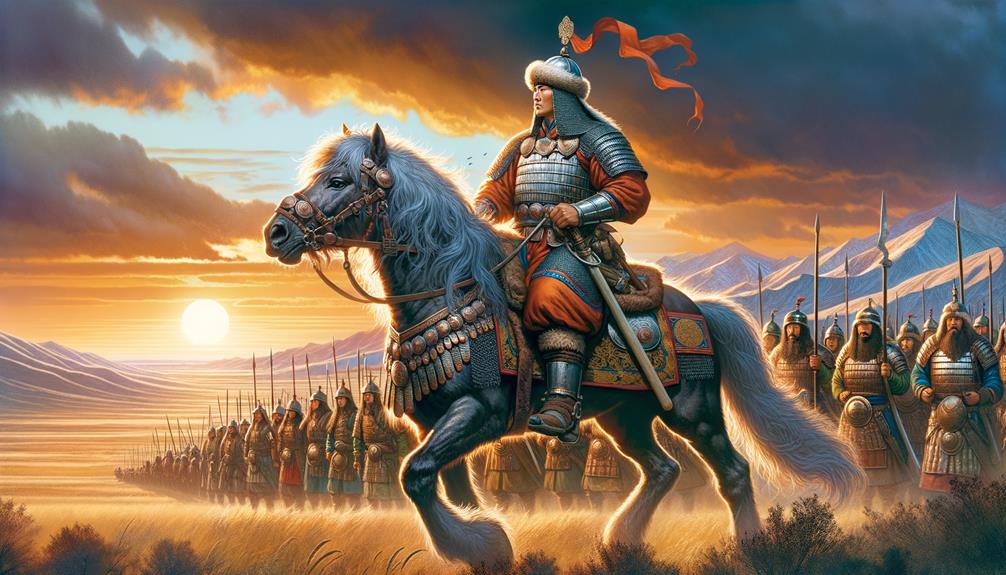
Chinggis Khan, widely known as Genghis Khan, founded the Mongol Empire and united many Mongol groups under his rule. His campaigns transformed Eurasia through conquest, trade, migration, and immense violence.
Chinggis Khan in the surviving tradition
Born Temüjin, probably in the 1160s, he grew up amid unstable alliances after the death of his father Yesügei. He built a following through kinship, personal loyalty, marriage alliances, and military success. In 1206 an assembly proclaimed him Chinggis Khan. The precise meaning and origin of the title remain debated.
Texts, objects, and evidence
Mongol armies used disciplined decimal organization, mounted archery, intelligence, rapid communication, and the incorporation of defeated peoples. Campaigns destroyed states in northern China and Central Asia. The Khwarazmian war brought city sieges, mass killing, deportation, and forced labor. Exact population-loss figures in popular summaries are often speculative.
Key points
- Law: Later sources speak of a Great Yasa, but no complete law code from his lifetime survives.
- Religion: Chinggis Khan followed Mongol religious traditions and also used specialists from several faiths. Later Mongol rule often protected multiple religious communities.
- Administration: Conquest depended on scribes, tax systems, engineers, and officials drawn from many peoples, not only cavalry.
- Death: He died in 1227 during the campaign against Western Xia. The cause and burial place remain uncertain.
How to read the material
Modern portrayals swing between monster and progressive hero. Both can hide the difference between documented policy, later dynastic memory, nationalist use, and legend.