
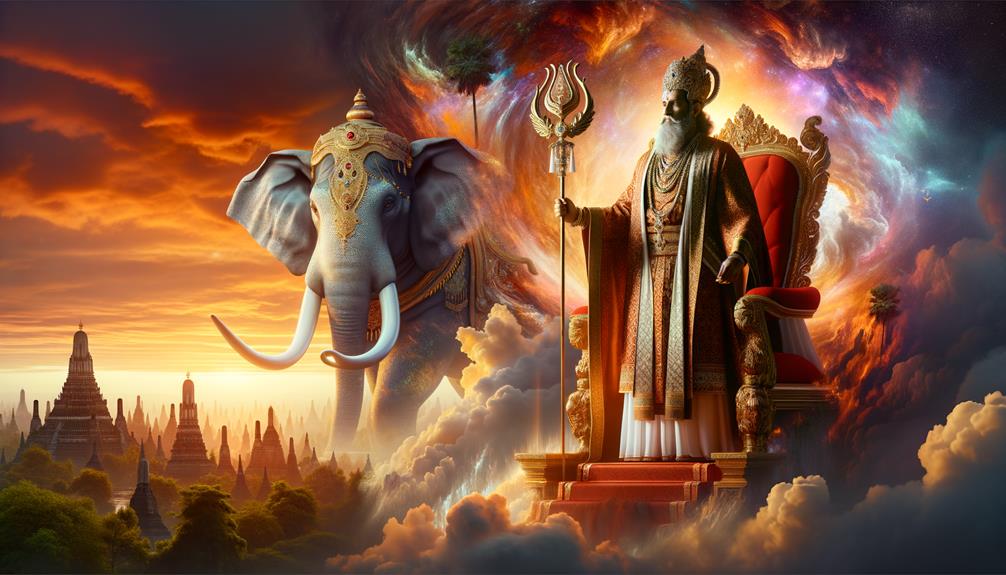
Indra is the most frequently praised deity in the Rigveda, where he is a warrior, rain-bringer, drinker of soma, and leader among the gods. Later Hindu, Buddhist, and Jain texts retain him but often give him a more limited and sometimes morally fallible role.
Indra in the surviving tradition
Rigvedic hymns celebrate Indra’s defeat of Vritra, who holds back the waters. Armed with the vajra, Indra breaks the obstruction and releases rivers and rain. The episode has many poetic forms and should not be reduced to a single literal weather report. Indra also protects worshippers, wins cattle, destroys forts, and receives soma in ritual praise.
Texts, objects, and evidence
Later Sanskrit epics and Puranas place Indra in Svarga with his capital Amaravati, his elephant Airavata, and his wife Shachi or Indrani. Stories often show him anxious about ascetics or heroes whose power threatens his position. These narratives change the confident Vedic champion into a king whose authority can be challenged.
Key points
- Vajra: The thunderbolt weapon is made for Indra in several accounts, often with the help of the artisan deity Tvastr or the sacrifice of the sage Dadhichi.
- Rain and kingship: Storm, victory, generosity, and royal authority overlap in his Vedic praise.
- Other religions: Buddhist traditions know him as Shakra and place him among powerful but non-supreme gods.
- Comparison: Similarities with Zeus or Thor can aid comparison, but Indra is not the same deity under another name.
How to read the material
Indra’s status changes across long textual history. Statements that he was replaced or defeated once and for all overlook the many genres and communities that continue to use his name.