
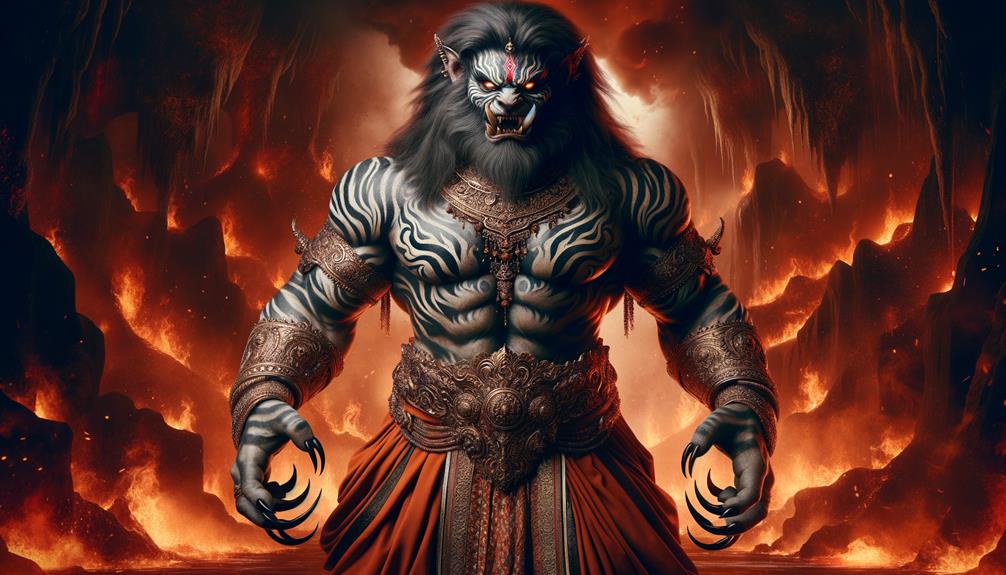
Rakshasa is a Sanskrit term for a class of powerful beings in Hindu, Buddhist, and Jain literature. English translations often use demon, but the category includes many forms and moral roles and does not map neatly onto the Christian devil.
Rakshasas in the surviving tradition
The Ramayana makes Ravana, king of Lanka, the best-known rakshasa. His abduction of Sita drives the central war, yet the poem also gives him royal power, learning, kinship, and devotion. His brother Vibhishana rejects Ravana’s conduct, joins Rama, and becomes king of Lanka. This contrast shows that rakshasa birth does not dictate one moral choice.
Texts, objects, and evidence
Rakshasas can change shape, fly, create illusions, and attack sacrificial rites in epic stories. Some are man-eaters; others marry humans or form political alliances. Bhima’s wife Hidimbi and their son Ghatotkacha in the Mahabharata belong to this wider range. Later art and regional theater give the category new appearances.
Key points
- Word history: Vedic uses and later epic uses are not identical. The term develops across centuries.
- Appearance: Fangs, claws, multiple heads, and large bodies are common artistic signs but not mandatory.
- Ravana: Calling Ravana the god of all rakshasas or a Hindu Satan misstates the epics.
- Religious diversity: Buddhist texts also include rakshasas as harmful beings, converts, or protectors.
How to read the material
Translations should preserve the Sanskrit term where possible and explain the context. Demon is a rough aid, not a full definition.