
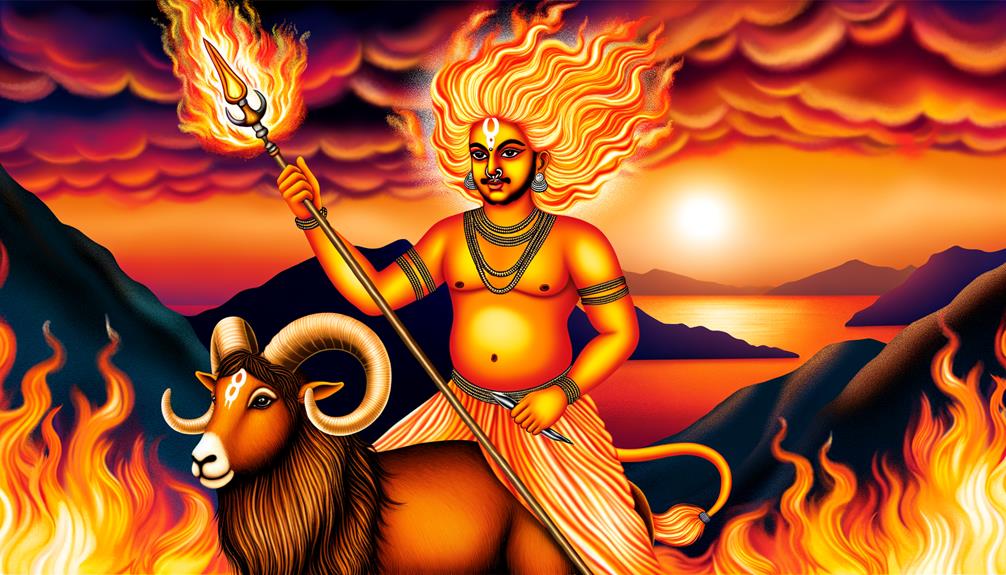
Agni is the Vedic god of fire and one of the most frequently addressed deities in the Rigveda. Fire carries offerings, witnesses ritual, transforms matter, warms the household, and links human worship with the gods.
Agni in the surviving tradition
Rigvedic hymns often begin by praising Agni as priest, messenger, and guest. The sacrificial fire consumes clarified butter, plants, and other offerings, making them available to the gods. Because each new fire can be kindled while Agni remains one divine presence, the hymns explore birth, renewal, and multiplicity.
Texts, objects, and evidence
Agni is present in domestic and public ritual and in life-cycle ceremonies. Hindu wedding rites commonly include fire as witness while the couple takes steps or circles it according to regional practice. Cremation fire transforms the body and assists the transition of the dead. The same deity therefore belongs to birth, marriage, worship, cooking, and death.
Key points
- Forms: Texts speak of fire on earth, lightning in the atmosphere, and the sun in the sky as connected forms.
- Vehicle: Later iconography can show Agni riding a ram, with two faces, multiple arms, or flames rising from the body.
- Parentage: Vedic poetry gives several births and parents because fire arises in different ways.
- Not only destruction: Agni purifies, feeds, communicates, protects, and renews as well as burns.
How to read the material
Fire god is accurate but too narrow if it suggests a mythic personality detached from ritual. Agni is an active sacred presence in living Hindu practice.