
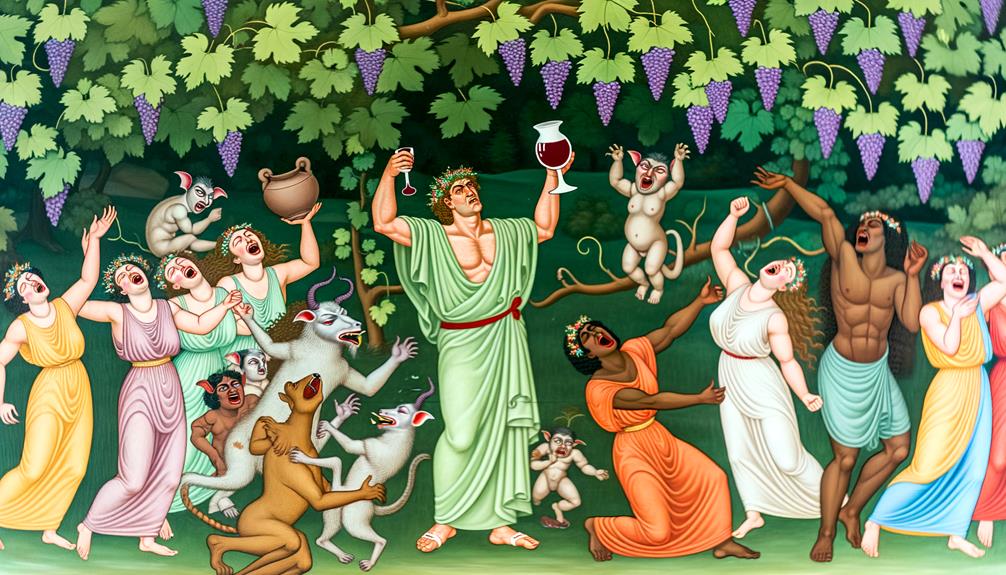
Dionysus is the Greek god of wine, altered consciousness, theater, ecstatic worship, vegetation, and unstable identity. His gifts can produce joy, community, danger, and loss of control.
Dionysus in the surviving tradition
A major birth story makes Dionysus the son of Zeus and the mortal Semele. Hera tricks Semele into asking Zeus to appear fully, and the sight destroys her. Zeus saves the unborn child and sews him into his thigh until birth. Other Orphic traditions tell of Dionysus Zagreus, dismemberment by Titans, and rebirth.
Texts, objects, and evidence
Euripides’ Bacchae shows Dionysus returning to Thebes, where King Pentheus denies his divinity. The god drives the women to Mount Cithaeron, traps Pentheus in voyeurism and disguise, and causes his mother Agave to kill him in frenzy. The play resists a simple moral: Pentheus is rigid and disrespectful, while Dionysus’s punishment is terrible.
Key points
- Wine: Greek wine was normally mixed with water. Dionysus governs both civilized sharing and dangerous excess.
- Theater: Athenian dramatic festivals honored Dionysus and linked civic competition with religious celebration.
- Followers: Maenads and satyrs form his mythic company, while actual worshippers should not be equated directly with every violent scene.
- Pirates: In a Homeric Hymn, captors fail to recognize him; vines cover the ship and the pirates leap into the sea as dolphins.
How to read the material
Party god is too narrow. Dionysus crosses boundaries of gender, age, status, city, wilderness, mortality, and divinity.