
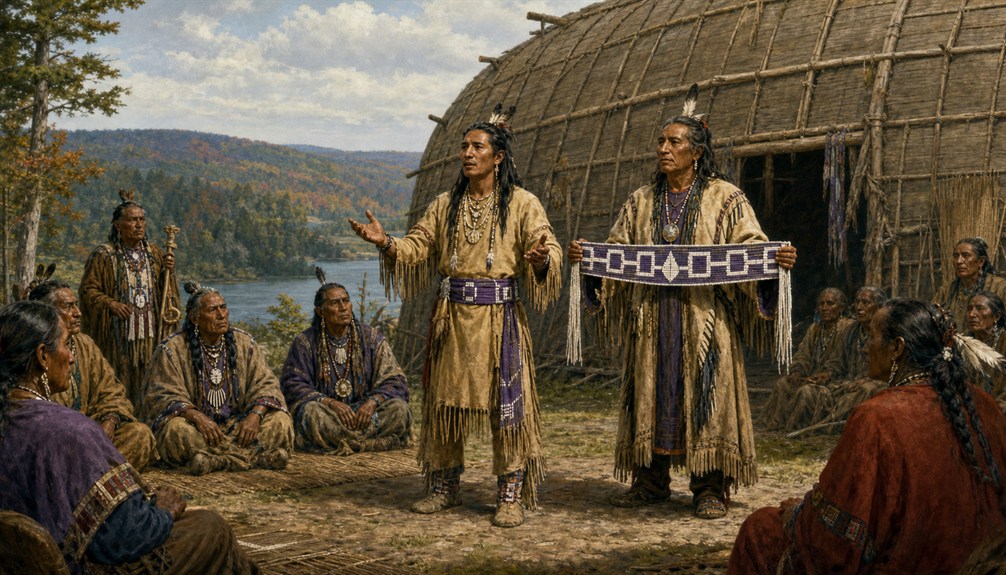
Hiawatha is a figure in Haudenosaunee oral tradition associated with the Peacemaker and the formation of the Haudenosaunee Confederacy. He should not be confused with the Ojibwe-inspired character in Henry Wadsworth Longfellow’s nineteenth-century poem.
Hiawatha in the surviving tradition
In Haudenosaunee tradition, Hiawatha suffers grief and is restored by the Peacemaker through words of condolence. He then helps carry the message of peace among nations that become the Mohawk, Oneida, Onondaga, Cayuga, and Seneca Confederacy. The Tuscarora joined later. Details belong to living oral and ceremonial traditions and are told in different ways.
Texts, objects, and evidence
The Great Law of Peace establishes political relationships, council procedure, clan responsibilities, and the use of wampum to preserve agreements. Scholars debate the date of confederacy formation, and proposed dates vary widely. A precise year should not be asserted without identifying the evidence and Haudenosaunee perspectives.
Key points
- Longfellow: The Song of Hiawatha borrows the name Hiawatha but builds its hero largely from Ojibwe Nanabozho material gathered through Henry Rowe Schoolcraft.
- Names: Haudenosaunee means People of the Longhouse. Iroquois is an outside term with a different history.
- Peacemaker: Hiawatha assists the Peacemaker; the two are not the same person.
- Living governance: The Confederacy is not only a legend from the past. Its councils and cultural authority continue.
How to read the material
The subject deserves Indigenous-led sources. Generic Native American labels and Longfellow’s fictional plot obscure the specific nations and political tradition involved.