
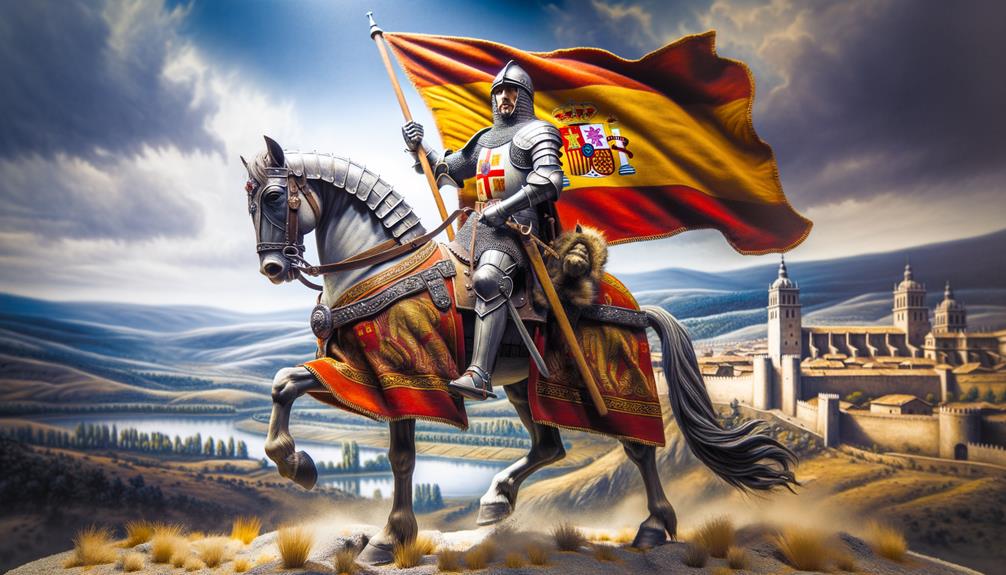
El Cid was Rodrigo Díaz de Vivar, an eleventh-century Castilian military leader whose career crossed the shifting politics of Christian and Muslim-ruled Iberia. Later legend turned him into a simple national champion, but the historical record is less tidy.
El Cid in the surviving tradition
Rodrigo served Sancho II of Castile and later Alfonso VI. After exile he fought as an independent commander, at times serving Muslim rulers of Zaragoza against both Christian and Muslim opponents. He captured Valencia in 1094 and ruled it until his death in 1099. His wife Jimena Díaz held the city for a short period afterward.
Texts, objects, and evidence
The title Cid derives from Arabic sayyid, lord, while Campeador means master of the battlefield. The Latin Historia Roderici is an early biography. The Castilian epic Cantar de mio Cid, composed later, reshapes exile, honor, family marriage, and reconciliation with the king. It is literature rooted in history, not a documentary transcript.
Key points
- Religion and politics: The frontier involved alliances across confessional lines. Reconquista summaries can hide that flexibility.
- Valencia: Rodrigo governed a diverse city and maintained existing administrative practices while building his own lordship.
- Babieca and Tizona: The horse and sword are central to legend, while object-identification claims require caution.
- Death ride: The story that his corpse was strapped to a horse to frighten enemies is later legend, not secure contemporary evidence.
How to read the material
El Cid’s historical career and literary afterlife should be kept in dialogue without turning either into propaganda.