
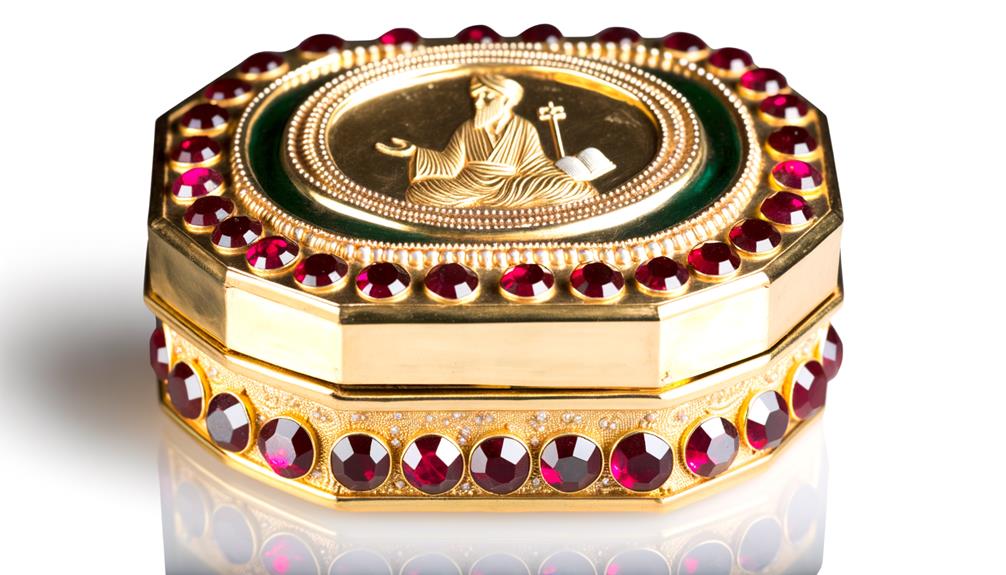
Reliquaries connected with Saint John the Baptist are found in several Christian traditions and locations. They contain remains or contact objects attributed to the saint, but there is no single universally accepted reliquary whose contents can be independently identified as John’s.
Why there are several claims
Christian scripture describes John’s execution by beheading, and later traditions developed around his head, hand, bones, and places associated with his ministry. Constantinople, Damascus, Rome, Amiens, Malta, and other centers have preserved competing or complementary claims.
Medieval relics often moved through gifts, warfare, pilgrimage, trade, and the transfer of church treasures. Written labels and local histories may record sincere belief without providing a complete chain back to the first century.
Reliquaries as historical objects
A reliquary is a container designed to protect and display sacred remains. Its material, imagery, inscriptions, and ceremonial use can often be studied more securely than the biological identity of its contents. Some take the form of an arm, hand, head, casket, or decorated box.
Articles about John’s relics should name the particular object and institution whenever possible. Treating separate claims as one artifact creates a false history and hides the local traditions that gave each reliquary meaning.