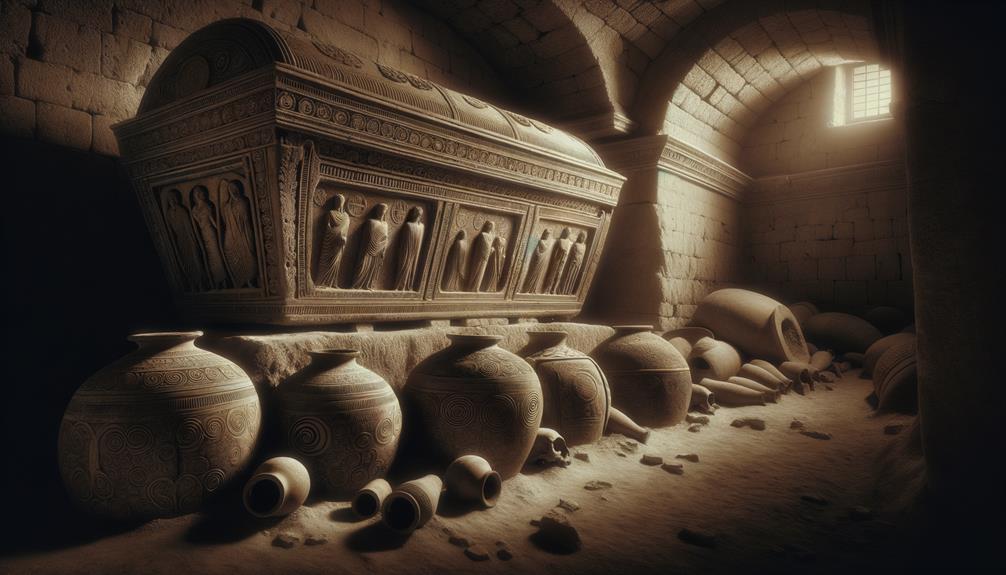
Etruscan sarcophagi and funerary urns provide evidence for burial practice, family identity, dress, dining, religion, and portraiture in ancient central Italy. They were made in terracotta, stone, and alabaster, and they vary greatly by period and region.
Reclining figures and banquets
Some famous lids show a man and woman reclining together as if at a banquet. The Sarcophagus of the Spouses from Cerveteri is a celebrated example, but it should not be used as a model for every Etruscan burial. Other containers show one deceased person, demons, journeys, battles, myths, or scenes of farewell.
The word sarcophagus can also be misleading when applied broadly. Some Etruscan containers held an entire body, while many smaller chests held cremated remains. The material and local burial custom help determine the function.
What can be read
Inscriptions often give personal names, family relationships, offices, or age. The Etruscan language can be read phonetically and many short inscriptions are understood, even though limited surviving vocabulary makes longer texts difficult.
Portrait-like faces became especially important in later funerary art, but they are not necessarily exact likenesses. They combine individual identity with artistic convention, age, status, and expectations about remembrance.