
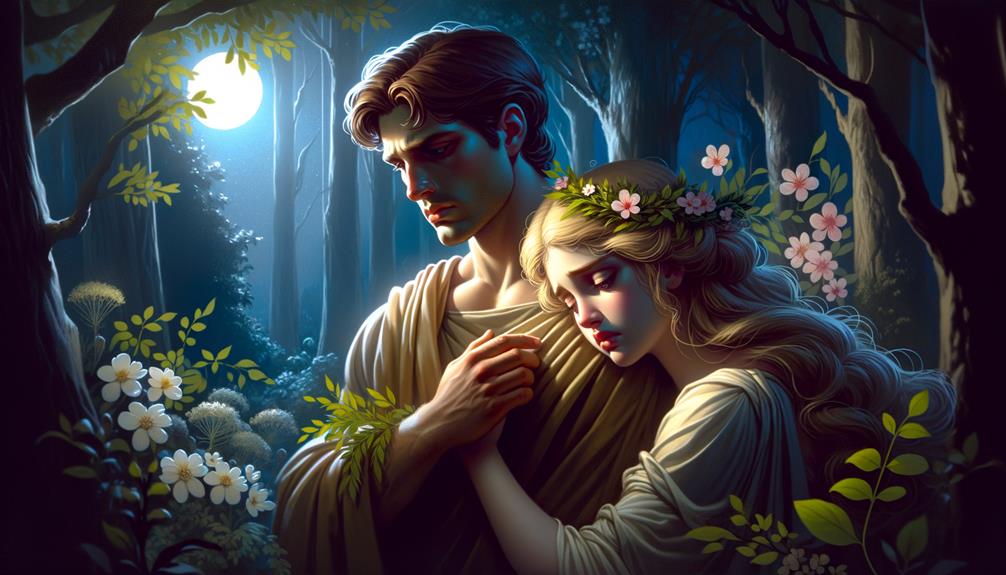
Accuracy note: The Adonis story survives in several Greek and Roman forms. His parentage, the circumstances of his death, and the arrangement between Aphrodite and Persephone change from one author to another.
Adonis’s journey starts with his strange birth from Myrrha, transformed into a myrrh tree. Under Aphrodite‘s care, his beauty caught even immortal hearts, sparking rivalry with Persephone. Zeus decided Adonis would alternate between the underworld and Aphrodite, mirroring nature’s cycles. A hunting trip turned tragic when a wild boar, set loose by the jealous Ares, killed Adonis. As Aphrodite wept over his blood, crimson anemones sprouted, symbols of eternal passion and grief. This myth weaves a tale of heroism, desire, death, and renewal, hinting at deeper narratives woven into their love story.
Origins of Adonis
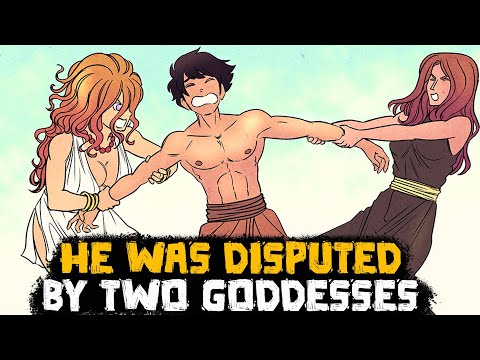
Adonis’s mythical roots are entangled in the forbidden intimacy between King Theias and his daughter Myrrha, who was tragically transformed into a myrrh tree as divine punishment. Myrrha’s cursed condition encased her unborn child within the tree’s bark until an arrow split it open, revealing the infant Adonis.
His arrival marked a bittersweet amalgam of sorrow and otherworldly beauty that entranced the goddess Aphrodite, causing her to neglect celestial duties while nurturing him. However, Adonis’s life was marred by conflicts between Aphrodite and Persephone over his affections, prompting Zeus’s intervention to establish a shared custody arrangement.
Adonis’s beginnings are a tradition of heartbreak, divine intervention, and tragic love, foreshadowing the calamitous romance that would shape his destiny.
Aphrodite’s Passion
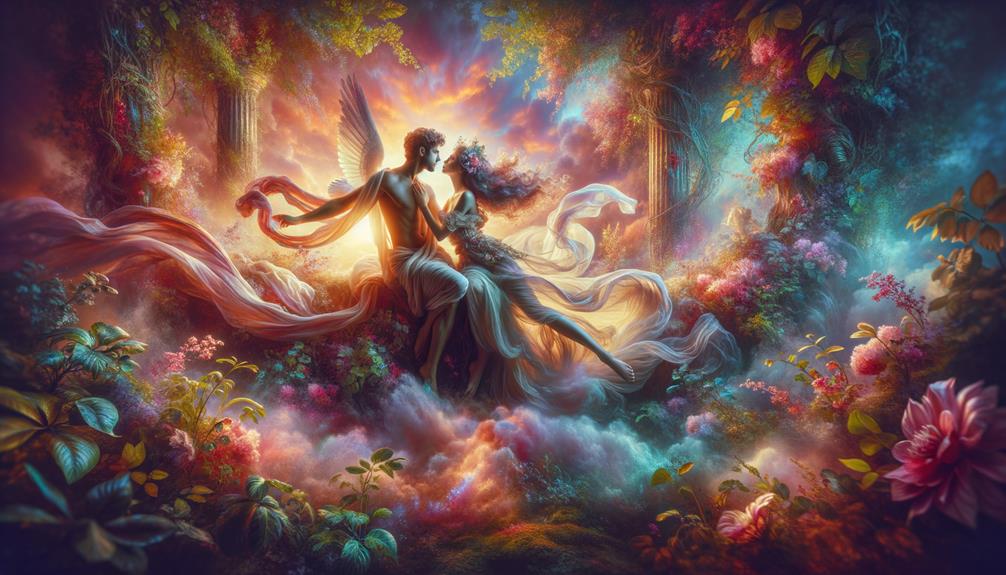
Adonis’s mortal allure ignited a fervent yearning within Aphrodite that overshadowed her celestial duties. This important attraction transcended mere infatuation, kindling an all-consuming love that challenged the goddess’s divine essence. Adonis’s unrivaled charm and stunning visage didn’t simply captivate her eyes but stoked an ardent fire within her soul.
Aphrodite’s burning desire for Adonis outweighed her sacred responsibilities. Temples stood unattended, supplications unheeded, and the delicate equilibrium of affection and desire across the mortal world teetered toward disarray. Her overwhelming emotions underscored love’s primordial power, capable of enthralling even a deity. Aphrodite’s feelings for Adonis weren’t fleeting but a manifestation of his true, incomparable beauty.
Tragically, this impassioned love foreshadowed heartbreak. The once unattainable goddess now embodied vulnerability itself. Aphrodite’s important affection for Adonis portended the sorrowful events to come, a poignant reminder that even the divine cannot escape love’s consumptive, transformative might.
Persephone’s Role

Life and death intertwined as Persephone, representing the duality of existence, welcomed Adonis into her shadowy underworld world. Aphrodite had sent the handsome youth to Persephone’s domain, where the goddess’s maternal instincts blossomed, forging a deep bond with Adonis. This attachment sparked a divine custody battle – Persephone refused to return him to Aphrodite, stirring tensions among the gods.
Zeus, the ruler of deities, intervened, decreeing Adonis would alternate between the two goddesses. This arrangement symbolized the cyclical nature of life. With Aphrodite, Adonis represented vitality and passion. His time in the underworld with Persephone highlighted mortality. The divine affection from both goddesses symbolized love’s power, while the shifts between worlds illustrated life’s constant changes.
Persephone’s guardianship of Adonis shows archetypal nurturing patterns and the inevitable intertwining of life and death. Her role adds depth, emphasizing how all things are interconnected.
The Fatal Hunt
As Adonis ventured on that fated hunting trip, a sense of dread lingered, recalling Aphrodite’s warning. His encounter with the raging boar, fueled by Ares’ jealousy, sealed his tragic demise and exposed mortality’s fragility. Aphrodite’s heartbreak unfolded as she desperately tried reviving him, her nectar and songs powerless against the inevitability of death.
Adonis’ Fateful Encounter
In a dense forest, fate’s stage was set when Adonis, consumed by his passion for hunting, confronted a wild boar – Ares in disguise, fueled by jealousy and vengeance. Ignoring Aphrodite’s pleas, Adonis, blinded by overconfidence, ventured deeper into the woods, determined to prove himself.
The clash symbolized a pivotal moment:
- Adonis’ disregard for caution and relentless desire for thrills.
- Aphrodite’s desperate attempts to protect her lover, pained by foresight.
- Ares’ envy driving the tragic outcome.
- Nature’s silent witness to the drama unfolding.
The boar’s tusk struck Adonis, sealing his fate. Despite Aphrodite’s frantic efforts and divine intervention, his blood birthed red anemones – an eternal reminder of their love and a cautionary tale against unchecked pride.
Aphrodite’s Heartbreak Unfolds
Through the shadowy forest, Aphrodite cradled Adonis’ lifeless body, her tears mixing with his spilled blood staining the earth. Despite the goddess’ desperate pleas, the reckless mortal’s love for the hunt’s thrill led to this tragic conclusion. A wild boar, driven by Ares’ jealousy, had delivered the fatal wound. As Adonis breathed his last, Aphrodite tried in vain to revive him with nectar and soothing songs.
| Emotion | Adonis | Aphrodite |
|---|---|---|
| Passion | Hunt’s thrill | Frantic warnings |
| Tragedy | Fatally wounded | Tears and blood |
| Heartbreak | Lifeless | important sorrow |
The rich forest grew somber as Aphrodite’s heartbreak unfolded. Adonis’ spirit drained away, leaving an eerie silence where excitement once thrived. The hunt he cherished became his undoing, showing mortal life’s fragility when divine caution is ignored.
Aphrodite’s overwhelming grief marked a pivotal moment in their doomed romance. Adonis’ demise served as a harsh reminder of fate’s cruel indifference and love’s enduring vulnerability. His death, symbolic of love’s impermanence, left an indelible mark on the goddess.
Symbols of Love

Following the myth of Adonis and Aphrodite, vivid symbols of devotion arise. The crimson rose, blooming from Adonis’s spilled blood, and the anemone, sprouting from Aphrodite’s teardrops, immortalize their tragic yet everlasting bond. These floral emblems, interwoven with heart-shaped tokens and other legendary motifs, craft an complex narrative celebrating the enduring power of their love.
Heart-shaped Artifacts
Heart-shaped artifacts go way back, symbolizing the deep bond lovers share. Think Greek myths and the epic romance between Aphrodite and Adonis – that desire transcended mere mortal affairs. Ancient stories reveal their connection was cosmic, entwined in the fabric of the universe.
These heart tokens, whether delicate jewelry or simple keepsakes, capture that longstanding narrative. The shape remains relevant globally as the emblem of emotions laid bare. Here’s why these artifacts matter:
- Embodying affection: Echoing Aphrodite and Adonis’ link, the heart shape celebrates important closeness.
- Honoring traditions: Exchanging hearts upholds ancient rituals venerating eternal love.
- Crafting complexity: complex designs mirror the depth of the relationship’s journey.
- Marking milestones: Often gifted during weddings or anniversaries, commemorating defining relationship moments.
Far from mere trinkets, heart-shaped artifacts encapsulate love’s eternal essence, stories as memorable as those ancient Greek legends.
Floral Representations
The love story between Adonis and Aphrodite weaves a poignant tale through floral symbolism. The red rose, representing passionate love, springs from their intense bond. When Adonis tragically died, his blood mingled with Aphrodite’s tears, giving birth to the red rose. This bloom encapsulates their fiery connection, embodying love that defies mortality.
In contrast, the anemone signifies Aphrodite’s important grief over losing her beloved. Greek myths say these delicate flowers emerged from the goddess’ tears for Adonis. Each anemone bears witness to her heartache and eternal longing.
Mythological Symbols
Examining the love between Adonis and Aphrodite through mythological symbols unveils important depths. The red rose and anemone, representing passion and sorrow respectively, offer insights into their romance.
Adonis, a handsome mortal, captivated Aphrodite’s heart, their love blossoming richly like the red rose, symbolizing their intense passion. Tragically, when Adonis fell to a boar’s attack, Aphrodite’s anguish knew no bounds. Anemones sprouted from his spilled blood, embodying her heartbreak and life’s fragility.
- The red rose mirrors the fiery, unwavering love Adonis and Aphrodite shared.
- Anemones represent Aphrodite’s sorrow after losing Adonis.
- Their contrasting blooms evoke life’s cycles, love persisting despite mortality’s grip.
- This duality encapsulates the joys and heartbreaks entwined in their myth.
Ultimately, these potent symbols underscore love’s longstanding complexities, weaving passion, loss, and eternal remembrance into a poignant tale.
Legacy in Mythology
Adonis and Aphrodite’s tragic romance echoes as a powerful tale, intertwining the hero’s quest, love’s intensity, and life’s cyclical nature. Adonis emerged from the forbidden union of King Theias and his daughter Myrrha, his existence marked by beauty and sorrow. Zeus decreed Adonis spend one day with Persephone in the underworld and one year with Aphrodite above, symbolizing the transition between worlds.
Adonis’ demise at the tusks of a wild boar, whether by jealous Ares or Artemis, shows passion’s peril and mortal vulnerability. His blood transformed into crimson anemones, signifying rebirth and nature’s perpetual cycle. The river Adonis, annually stained red, commemorates his sacrifice, linking human emotion to the earth’s rhythms.
Zeus’ repeated mediation between Aphrodite and Persephone highlights myth and life’s necessity for balance and resolution. Adonis’ shared custody mirrors a man’s journey from maternal nurturing to romantic love, reflecting universal transitions. This enduring saga remains relevant through its exploration of love, mortality, and the natural world’s majesty.
Sources and related reading
- Typhon Monsters Father Battles on MythologyVault
- Hecatoncheires Hundred Handed Giants on MythologyVault
- The Metropolitan Museum of Art: Greek gods and religious practices