
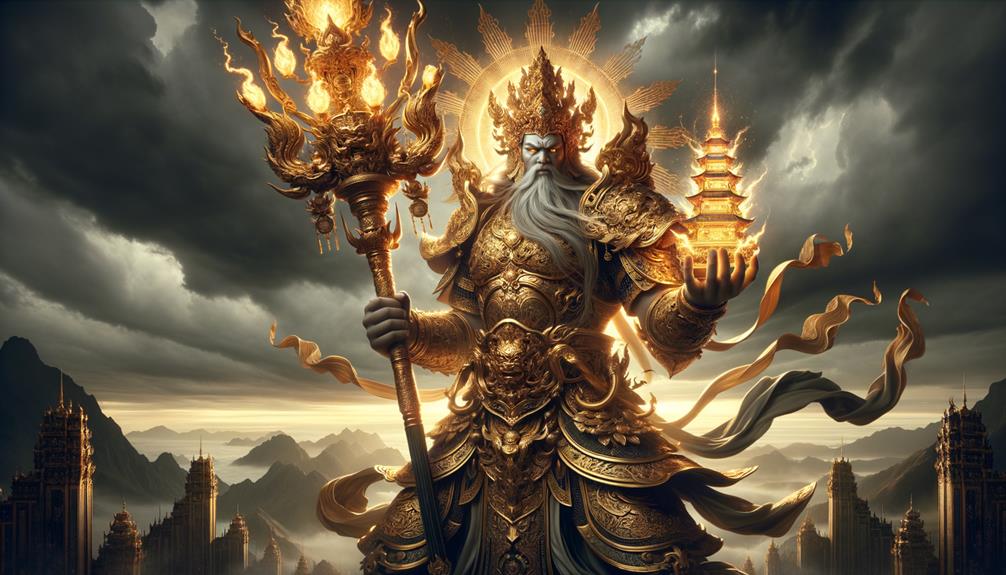
Accuracy note: Bishamonten is the Japanese form of the Buddhist guardian Vaiśravaṇa. He can be linked with warfare and protection, but he is not simply an indigenous Japanese war god.
Origins and History
Bishamon’s legend stretches back centuries, emerging from ancient Japanese mythology as a fearless guardian of Buddhism. Initially known as Vaisravana, he personified a warrior’s might and a protector’s kindness, shielding priests and missionaries during the 6th and 7th centuries’ turmoil.
As time passed, Bishamon‘s role evolved. By through evolving Buddhist traditions’s guidance, he became the God of Riches, symbolizing prosperity and abundance. Tales depict his remarkable abilities – summoning endless provisions, ensuring victory in battles, and blessing the devout with divine favor.
Tracing Bishamon’s transformation from a Buddhist protector to a deity of war and wealth showcases the fluid nature of myths, their ability to adapt and leave an indelible mark on cultural traditions.
Symbolism and Iconography

Bishamon’s legend evolved, with his imagery affirming his dual role guarding against harm while bringing prosperity. Adorned in ornate armor, he wields a spear and shield, embodying a warrior spirit. His miniature pagoda symbolizes his presence safeguarding sacred sites.
Bishamon stands atop defeated demons, representing his unwavering protection from malice. The color red often used depicts vitality and dynamism, while lotus flowers and Bodhi trees signify abundance and enlightenment. His seven precious jewels indicate Bishamon’s domain over wealth.
A triumphantly waving banner shows his ties to conquest and divine shelter. These elements form a rich tradition capturing Bishamon’s essence – a formidable yet benevolent guardian.
| Symbol | Meaning |
|---|---|
| Armor, Spear, Shield | Warrior spirit, protection |
| Miniature Pagoda | Sacred protection |
| Demons Underfoot | Warding off evil |
| Red, Lotus, Bodhi | Prosperity, enlightenment |
| Banner | Victory, divine protection |
Bishamon’s iconography richly narrates his multifaceted nature – protector and prosperity bringer.
Cultural Significance
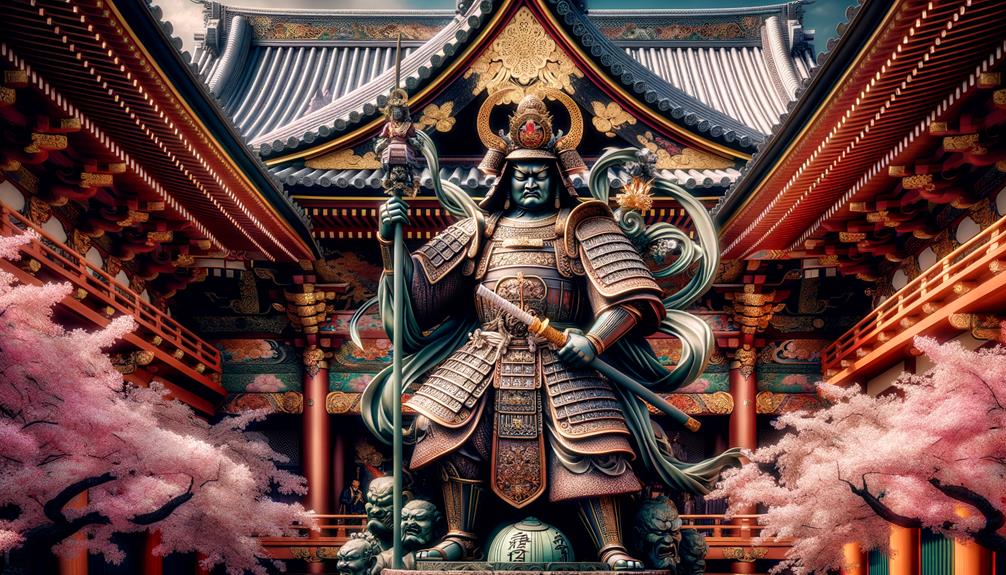
As history unfolds, Bishamon emerges as a powerful figure whose origins and symbols resonate through time. His armored depictions adorned with jewels reflect the guardian archetype. Festivals honoring Bishamon celebrate prosperity and courage, weaving these values into cultural memory.
Historical Context and Origins
Bishamon’s rise as a formidable protector of Buddhism in the 6th and 7th centuries offers a memorable glimpse into a divine warrior who didn’t just quell barbarians but symbolized spirituality’s triumph over chaos. His emergence as a powerful deity intertwines with the historical and cultural fabric of the era, where Gods shaped civilizations. Bishamon, the patron saint of priests, soldiers, doctors, and missionaries, personifies the archetypal hero overcoming darkness to bring light and fortune.
Consider these key facets to understand his historical context and origins:
- Divine Assistance: His miraculous abilities, like providing endless food like rice, proved invaluable during conflicts and famines.
- Battlefield Presence: He manifested in battles, ensuring victory for those invoking his name, solidifying his war god status.
- Temples and Worship: Temples dedicated to Bishamon arose on conquered territories, showcasing his divine favor and intervention in historical conflicts.
Canonized as the God of Riches by Buddhist tradition in , Bishamon’s enduring legacy continues symbolizing prosperity and spiritual triumph, echoing longstanding archetypal patterns of the hero ushering in abundance and order.
Symbolism in Art
In Japanese mythology’s rich tradition, artistic depictions of Bishamon reveal this divine warrior‘s important cultural significance, symbolizing protection, strength, and prosperity. One of seven lucky gods, his images often showcase resplendent armor, a spear, and a miniature pagoda, reflecting his role as a guardian and warrior deity against evil forces.
Bishamon’s armor and weaponry highlight his association with war and defense, underscoring his duty to protect the righteous. The rich gold and red hues frequently used capture his divine aura, symbolizing wealth and fortune. These colors demand attention, reinforcing his celestial status among the seven lucky gods.
Additionally, lotus flowers, treasures, and mythical creatures woven into his artistic portrayals add depth to his character, reinforcing his diverse powers and attributes. Together, these elements create a rich narrative where Bishamon stands as a mighty protector, bringer of prosperity, and embodiment of unwavering Japanese cultural strength.
Influence on Festivals
Bishamon festivals burst with energy, their traditions harkening back to ancient heroic tales and divine favor. These celebrations venerate Bishamon, one of Japan’s Seven Lucky Gods. Participants strip down and engage in rambunctious pushing contests, channeling the warrior spirit revered by Bishamon himself.
Three standout elements define these rituals:
- Undressing: Symbolizing purity and vulnerability, connecting participants intimately with the sacred.
- Pushing Contests: Collective tests of strength and unity, embodying the valor honored by Bishamon.
- Fortune’s Blessings: Enduring these trials is believed to usher in abundance and spiritual renewal.
More than just physical feats, these naked festivals represent transformative journeys akin to mythological quests. Participants face challenges paralleling legendary trials, emerging renewed and favored by the divine.
Secular versions persist today, underscoring the lasting cultural weight of Bishamon’s influence. The warrior god’s spirit endures, a example to Japan’s Seven Lucky Gods and their permeating traditions.
Bishamon in Buddhism and Hinduism
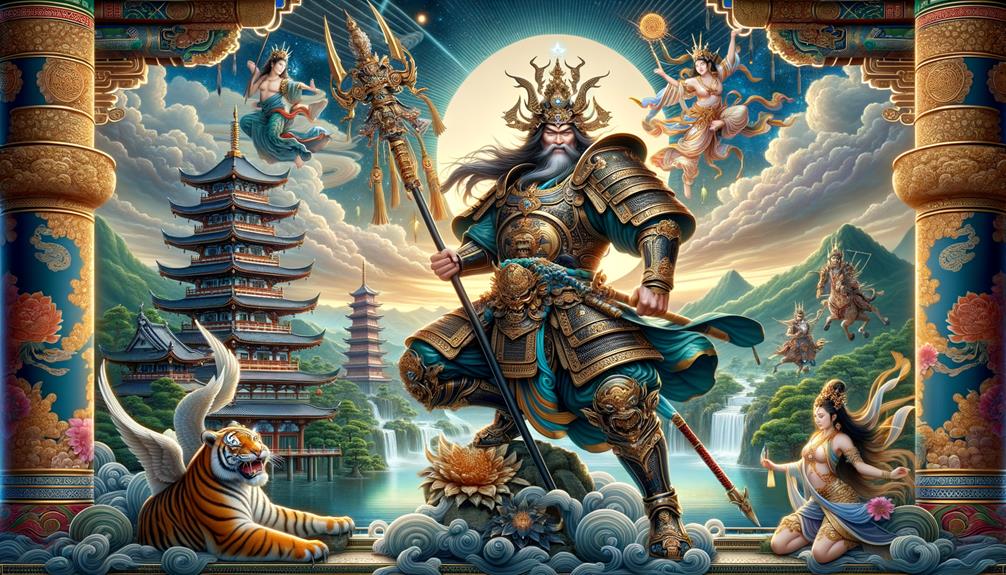
Within Buddhism, Bishamon’s role extends beyond material riches. He serves as a fierce guardian of the Buddha’s teachings, ensuring the eternal illumination of wisdom and enlightenment. Often depicted armored with seven precious jewels, his visage signifies dual roles as a deity of abundance and an impenetrable shield against malevolent forces.
Myths and Legends

Myths paint Bishamon as a mighty warrior deity who intervenes in battles, guarding the faithful. A god of wealth and combat, Bishamon’s influence spans legend and reality. His armor bears seven precious gems, representing prosperity and divine protection. Bishamon actively shapes destinies for those who seek his aid.
Consider these fabled deeds:
- Battlefield Ally: Bishamon’s powerful interventions aided victorious armies, ensuring triumph for devotees.
- Buddhism’s Sentinel: When persecution threatened the faith, Bishamon stood guard over monks and temples.
- Virtue’s Patron: Bishamon bestows fortitude on soldiers, doctors, and missionaries, ensuring success.
These legends reverberate through time, molding perspectives on struggles and victories. Bishamon’s myths guide the faithful on their heroic journeys, reminding them divine assistance awaits.
Modern-Day Worship

Modern worship practices give new meaning to Bishamon’s age-old role as a protector and god of fortune. City shrines act as havens where followers ask for his blessings of wealth and security, while online devotion expands his influence into virtual spaces. Through these evolving traditions, Bishamon’s essence as a guardian endures, continuing to inspire and safeguard.
Contemporary Ritual Practices
Contemporary worship practices maintain deep traditional roots while adapting to modern life. Here are three ways devotees connect with Bishamon today:
- Sacred Offerings: Pilgrims present rice, sake, and incense at Bishamon’s altar, hoping to gain protection, prosperity, and success in their endeavors.
- Martial Arts Blessings: Martial arts schools often seek blessings from Bishamon for strength and victory, incorporating sacred rituals before competitions.
- Annual Festivals: Celebrations dedicated to Bishamon continue to thrive, drawing large crowds who partake in ceremonial dances and prayers.
Each act of worship represents a personal journey, a quest for divine guidance. Through these rituals, worshippers connect with ancient archetypes, seeking Bishamon’s wisdom to overcome life’s challenges.
Urban Shrines Emergence
From ancient ritual roots to the throbbing pulse of cities like Tokyo and Kyoto, shrines dedicated to Bishamon offer a notable blend of tradition and modern life. As one of Japan’s revered Shichi Fukujin (Seven Gods of Good Fortune), Bishamon’s role as a god of fortune and warriors remains relevant with urban residents.
Within these urban sanctuaries, worshippers seek Bishamon’s blessings for success and protection, hoping his power will guide them through daily challenges. The shrines provide a spiritual respite amid the city’s bustle, where sacred customs merge with contemporary culture. Offerings might include modern trinkets alongside age-old symbols, reflecting devotion’s evolving nature.
Bishamon’s guidance in navigating urban complexities cannot be overstated. His presence reminds city-dwellers of the ever-present need for strength, wisdom, and good fortune. For many, these shrines are pivotal points on personal journeys, places to seek the divine favor of Japan’s renowned fortune gods.
Digital Devotion Trends
In today’s connected world, worshippers engage with the divine through digital channels, begining on virtual pilgrimages and participating in online rituals to seek Bishamon’s blessings. These modern practices mirror ancient spiritual journeys undertaken to honor deities.
- Immersive Sacred Site Tours: Devotees can virtually visit holy sites through interactive digital experiences, feeling the spiritual essence without physical travel.
- Real-time Prayer Apps: These apps facilitate instant connections, allowing prayers and offerings to reach Bishamon immediately, fostering a important sense of closeness.
- Online Spiritual Communities: Social media platforms serve as virtual shrines where communities gather, share teachings, and celebrate rituals collectively.
Sources and related reading
- Shoten Doji Oni Leader on MythologyVault
- Benzaiten Beauty Knowledge Goddess on MythologyVault
- Kokugakuin University: Encyclopedia of Shinto