The Ramakien is Thailand’s great Rama tradition: a creative Thai transformation of stories that also appear in the many South and Southeast Asian versions of the Ramayana. It is not a word-for-word copy of one Sanskrit poem. Thai poets, courts, painters, dancers, and puppeteers reshaped its characters and episodes for their own literary, political, Buddhist, and theatrical settings.
From Ramayana to Ramakien
The main conflict remains recognizable. Phra Ram, the Thai Rama, is exiled with Nang Sida and his brother Phra Lak. The ruler of Lanka, Thotsakan, abducts Nang Sida. Phra Ram forms an alliance with a monkey army led by Hanuman, crosses to Lanka, and defeats Thotsakan before returning to rule.
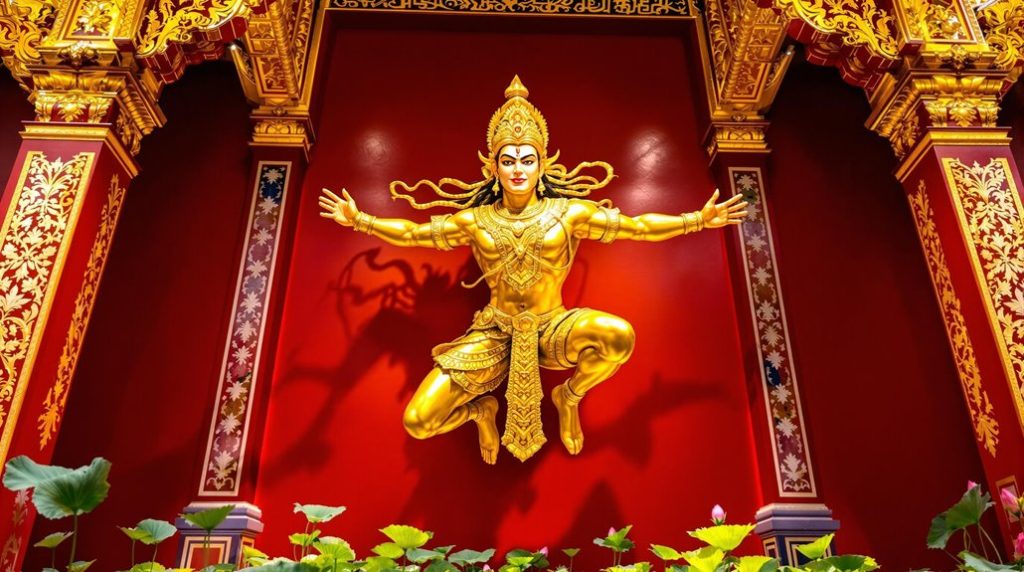
Names, characterization, geography, and individual adventures differ from Indian versions. The Thai Hanuman, for example, is not only a supremely loyal warrior; he is also a witty trickster and romantic adventurer. Thotsakan receives a richly developed court and family, while Thai landscapes, costumes, social ideals, and humor transform the story’s world.
Royal redactions and the loss of Ayutthaya
Rama stories circulated in the region long before the surviving Bangkok-era text. Much written and artistic heritage was lost when Ayutthaya fell in 1767. In the early Chakri period, King Rama I and court poets compiled and rewrote a major Ramakien version. King Rama II later shaped material for performance.
Calling the work a single book can therefore be misleading. The Ramakien is a textual tradition, but it is also a repertoire of episodes continually interpreted in painting, dance, shadow play, puppetry, and modern media.
Phra Ram, Hanuman, and moral complexity
Phra Ram can model disciplined kingship, duty, and public order, especially in royal interpretation. Hanuman exemplifies courage, strategic intelligence, and loyalty. Nang Sida’s ordeal foregrounds fidelity and injustice. Yet the epic should not be reduced to a list of simple morals. Characters make painful decisions, alliances shift, and the exercise of royal authority can itself be questioned.
Thai readings also operate within a predominantly Buddhist culture. Although the narrative retains Hindu deities and Phra Ram’s connection to Vishnu, performance and court interpretation have emphasized merit, righteous rule, self-command, and the consequences of desire.
Ramakien in Thai art
The best-known visual cycle surrounds Wat Phra Kaew, the Temple of the Emerald Buddha, in Bangkok. Its open-air galleries contain 178 mural panels narrating the epic. Their location around—rather than at the ritual center of—the Buddhist temple complex places the royal story in dialogue with kingship while preserving the sanctuary’s Buddhist focus.
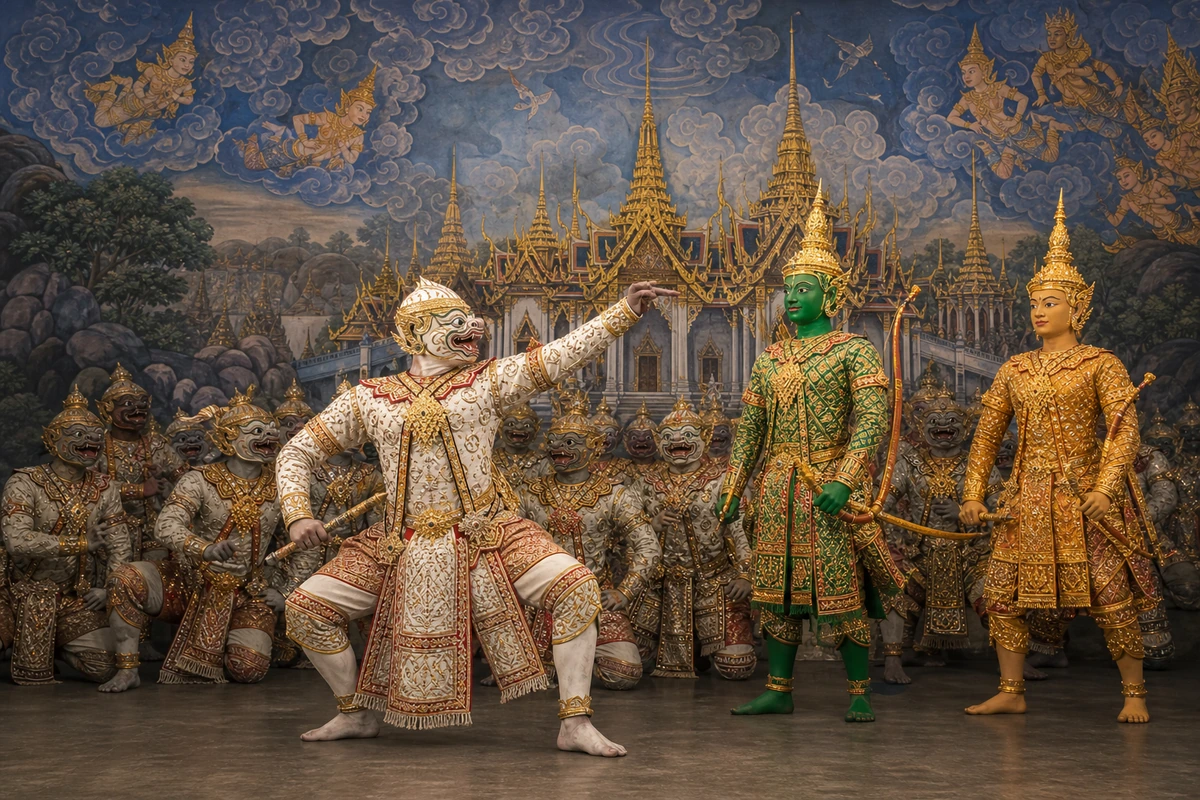
Khon, Thailand’s masked dance drama, draws its principal repertoire from the Ramakien. Roles are distinguished through masks, color, costume, movement vocabulary, narration, music, and sung poetry. Nang yai shadow theatre and several puppetry traditions also bring the story into performance.
A Thai work in a connected region
The Ramakien shows how stories travel without remaining unchanged. Its relationship to the Ramayana is essential, but so is its specifically Thai history. Describing it as merely “the Thai Ramayana” is a useful first orientation; understanding it requires seeing the independent literary and performance tradition that phrase can hide.