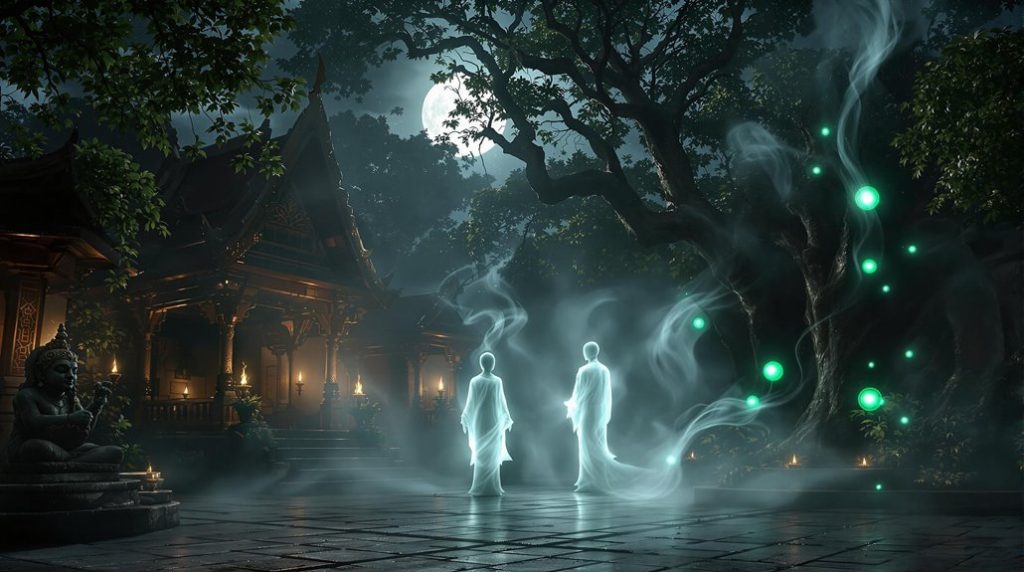
Thai beliefs surrounding phi cannot be reduced to the idea that ghosts simply come out at night. The Thai word phi (ผี) is an umbrella term for many kinds of spirits. Depending on the speaker and the tradition, it may refer to a dead person, a guardian of a home or community, a being connected with a tree or landscape, or a frightening figure in a cautionary tale. These ideas vary by region, family, generation, and personal belief, so no single account represents everyone in Thailand.
What Does Phi Mean?
Translating phi only as “ghost” can be misleading. Folklorist Phya Anuman Rajadhon described a wide field of Thai spirit concepts that included helpful guardians as well as dangerous or unhappy beings. A linguistic study published in MANUSYA: Journal of Humanities likewise found a complex folk taxonomy rather than one supernatural category. Working with informants in a Nonthaburi community, the researchers identified 49 categories distinguished by qualities such as character, gender, dwelling place, and relationship to people.
That research was a focused community study, not a catalogue of everything believed across Thailand. Its value lies in showing why phi should not be treated as a Thai equivalent of Japanese yōkai or as a synonym for a hostile apparition. Thai vocabulary and stories organize the spirit world in their own cultural settings.
Guardian Spirits and Sacred Places
Some phi are understood as guardians associated with land, homes, villages, ancestors, or local heroes. Field research on Thai and Tai communities describes these traditions as dynamic: beliefs may combine with one another, change as communities move, and coexist with Buddhist practice. In northern case studies, for example, scholars documented connections among territorial spirits, ancestral spirits, local identity, and Buddhist ritual.
Spirit houses are one visible expression of this relationship. A san phra phum is a shrine associated with the guardian of a place. Such shrines can stand beside houses, businesses, and public buildings, and people may present flowers, food, water, incense, or other offerings according to local and household custom. An architectural study of spirit houses in Bangkok’s Bang Rak district treats them as “ordinary urban heritage”: small sacred structures that persist while neighborhoods and buildings change. Their presence should not be used to claim that a location is haunted. They are better understood as evidence of living relationships among place, protection, memory, and ritual.
Frightening Spirits in Folklore
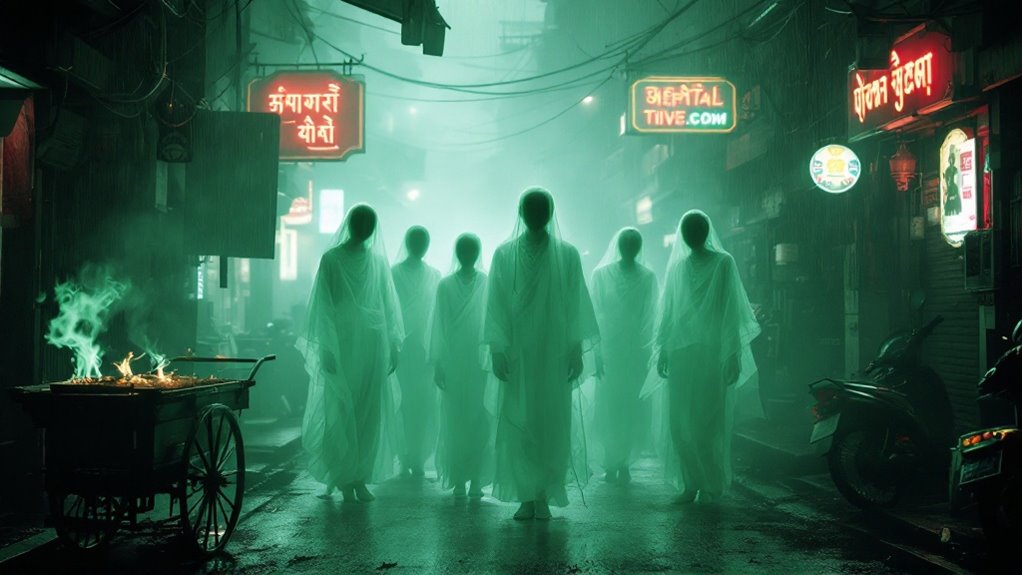
Thai folklore also includes spirits associated with fear, dangerous deaths, forests, trees, water, hunger, and other forms of misfortune. Named figures such as the flying krasue or tree-associated female spirits appear in lists of Thai spirit terms, while ideas about karma and rebirth shape some interpretations of restless or suffering beings. These are narrative and religious concepts, not proof that particular ruins, temples, or accident sites contain supernatural forces.
One of Thailand’s best-known ghost traditions is Mae Nak of Phra Khanong, usually told as the story of a woman whose love for her husband continues after death. There is no single fixed Mae Nak text. A Chulalongkorn University study examined 20 literary treatments produced across more than a century and found that writers repeatedly reconstructed the character to suit different genres and social concerns, including changing ideas about women and ghosts. Films, television, fiction, and performance continue that process. Mae Nak’s cultural importance therefore lies not only in the plot, but also in the many ways storytellers reinterpret her.
Phi Ta Khon: A Joyful Community Tradition
Phi Ta Khon is sometimes presented to outsiders as a “Thai ghost festival,” but that label misses its specific setting. The masked parade is part of the Bun Luang merit-making festival in Dan Sai, Loei Province, in northeastern Thailand. Participants wear brightly painted masks and patchwork costumes, dance, and join a public celebration. Accounts of its origins differ. One interpretation links the masked figures to the return of Prince Vessantara in a Buddhist Jataka story; others connect the tradition with local guardians and ancestors.
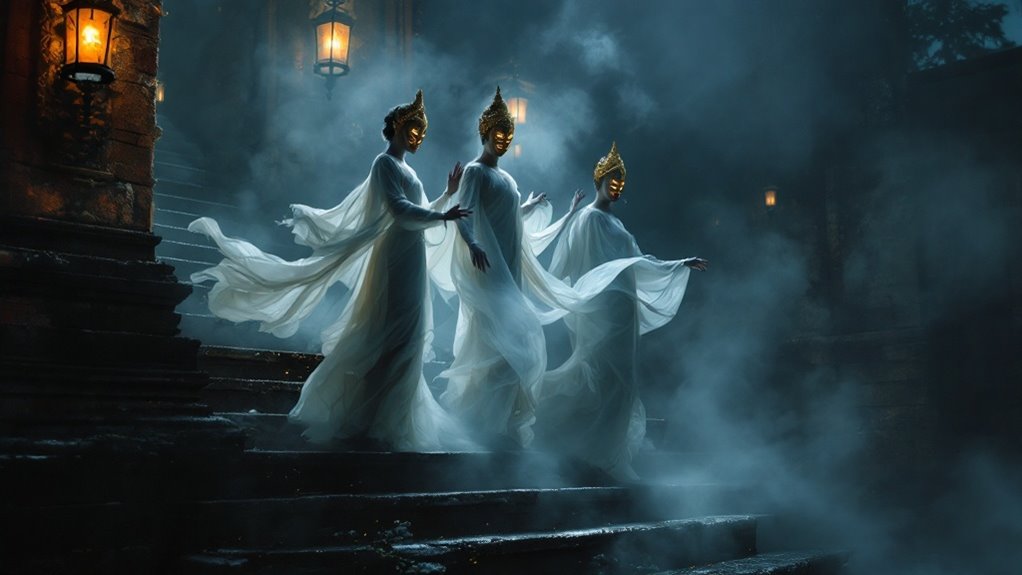
The uncertainty is meaningful. Phi Ta Khon brings local spirit traditions, Buddhist storytelling, merit-making, performance, and community identity together rather than representing a night when ghosts supposedly roam free. It is festive as well as sacred, and its masks are the work of living artists and participants—not evidence of a generalized national belief.
Reading Thai Spirit Stories Respectfully
Good accounts of Thai spirits identify where a story comes from, distinguish a recorded tradition from a tourism rumor, and acknowledge differences among communities. They also avoid treating belief as either scientific fact or primitive superstition. Temples in Ayutthaya and Bangkok have documented histories that deserve more than unsupported claims about curses or wandering ghosts. Thai spirit traditions are most illuminating when presented as folklore, ritual, art, memory, and changing cultural practice.
Sources and Further Reading
- Hengsuwan and Prasithrathsint, “A Folk Taxonomy of Terms for Ghosts and Spirits in Thai”, MANUSYA: Journal of Humanities
- Phya Anuman Rajadhon, “The ‘Phi’: Ghosts and Spirits in Thai Culture”, republished by the Thailand Foundation from the Journal of the Siam Society
- Siraporn Nathalang, “Persistence of Belief and Ritual Concerning Guardian Spirits in Current Thai-Tai Societies”, Journal of Thai Studies
- Ruangmun and Jhearmaneechotechai, “Ordinary Urban Heritage: Pattern and Transformation of Thai Spirit Houses”
- “Thai Housewarming Ceremony”, Thailand Foundation
- Wichaya Maneesee, “Representations of Mae Nak in Thai Literatures”, Chulalongkorn University
- “Phi Ta Khon: The Happy Ghost Parade”, Thailand Foundation