
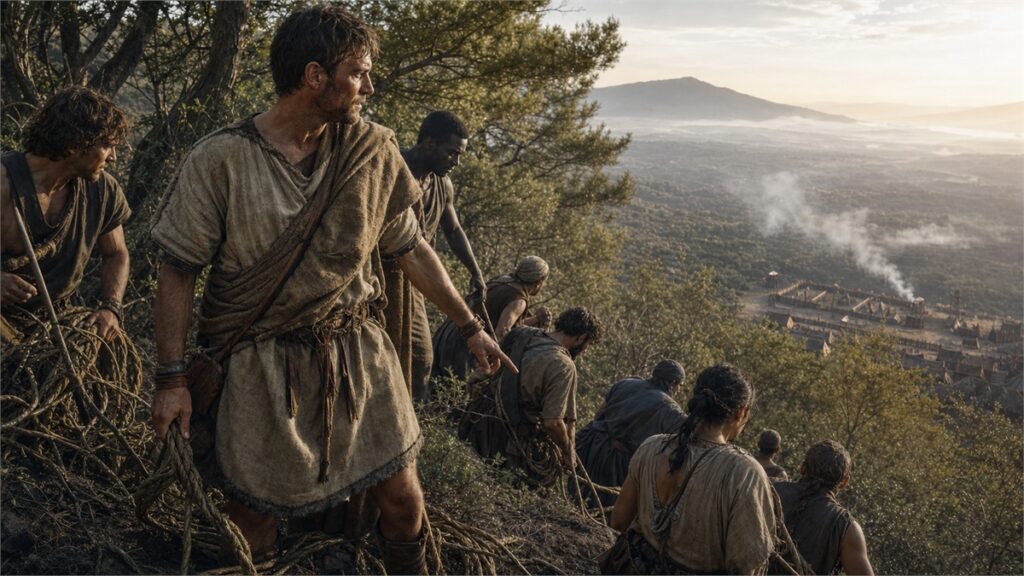
Spartacus was a Thracian gladiator who led a major slave revolt against the Roman Republic from 73 to 71 BCE. He is historical, but the surviving narratives were written by elite Greek and Roman authors and leave major gaps.
Spartacus in the surviving tradition
Spartacus escaped a gladiator school at Capua with a small group, including figures later named Crixus and Oenomaus. The rebels gathered enslaved people and rural workers, defeated several Roman forces, and moved across Italy. Their aims are uncertain; ancient authors disagree about routes and whether Spartacus planned to cross the Alps.
Texts, objects, and evidence
Rome eventually gave Marcus Licinius Crassus command. He rebuilt discipline, trapped rebel forces in southern Italy, and defeated them in a final battle in 71 BCE. Spartacus is said to have died fighting, but his body was not securely identified. Crassus crucified thousands of prisoners along the Appian Way, while Pompey killed fugitives moving north.
Key points
- Thracian origin: Ancient sources call Spartacus Thracian, but details of his early life and military service are uncertain.
- Pirates: A plan to cross to Sicily failed after Cilician pirates did not transport the rebels.
- No private diary: Speeches and motives assigned to Spartacus by ancient historians are literary reconstructions.
- Later symbol: Abolitionists, revolutionaries, nationalists, novelists, and filmmakers have made him serve very different political causes.
How to read the material
The revolt is documented, but modern stories fill gaps with romance and invented biography. Those additions should not be reported as ancient evidence.