
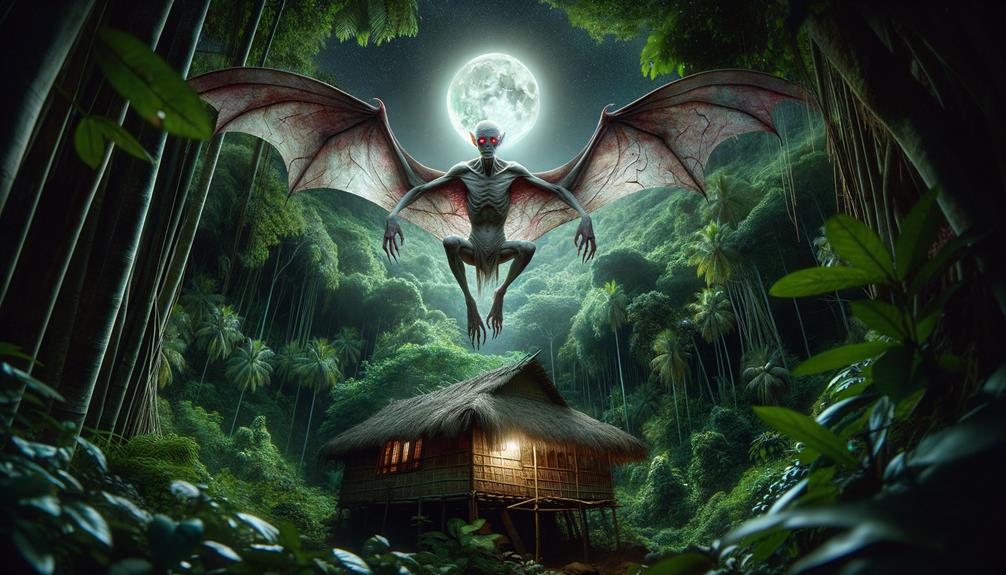
Aswang is a broad Filipino label for feared supernatural beings and people, not one creature with a fixed anatomy. Regional stories describe witches, corpse-eaters, shape-changers, and beings that prey on pregnant people or infants.
Aswang in the surviving tradition
Descriptions vary widely across the Philippine archipelago. Some aswang appear ordinary by day and separate or transform at night. The manananggal, often treated as a subtype in popular writing, leaves the lower body behind and flies with wings. Other accounts resemble witch, ghoul, or animal-shifter traditions. Local names should be used when known.
Texts, objects, and evidence
Spanish colonial dictionaries and clerical writing recorded aswang beliefs through a hostile religious lens. Twentieth-century folklore collections preserved stories but also reflected the methods and assumptions of their collectors. Film, comics, and television have since combined traits from distinct regions into a national horror icon.
Key points
- Detection: Stories mention unusual reflections, changes in the eye, sounds, or animal behavior, but the tests are folklore rather than safe real-world procedures.
- Protection: Garlic, salt, ash, religious objects, and stingray tails appear in different local accounts.
- Social setting: Aswang accusations can express fear around illness, pregnancy, outsiders, gender, or community conflict.
- Not all vampires: Blood-drinking is only one motif. The English label vampire-like is convenient but incomplete.
How to read the material
Filipino folklore is multilingual and regional. Treating every frightening being as an aswang erases names and distinctions that matter to the communities telling the stories.