
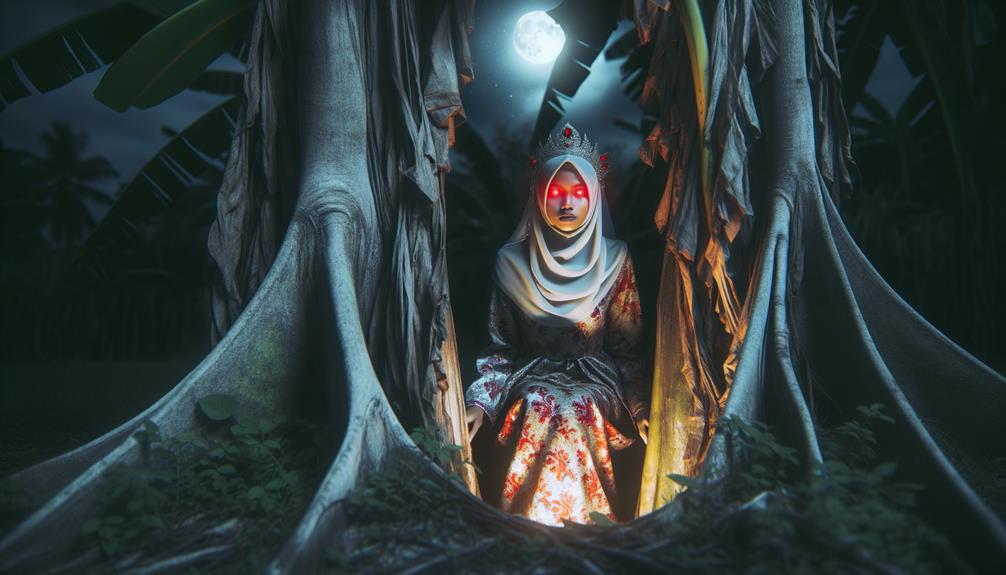
The pontianak is a female night spirit in Malay and Indonesian traditions, often connected with death during pregnancy or childbirth. Related names and stories include kuntilanak and langsuir, but usage differs by region.
Pontianak in the surviving tradition
Stories commonly describe a beautiful woman who reveals a corpse-like or predatory form. She may be associated with banana trees, strong floral scent, a baby’s cry, or a sharp change in sound. These signs belong to narrative tradition and vary between tellers. They are not reliable instructions for identifying a person or place.
Texts, objects, and evidence
Colonial-era works such as Walter William Skeat’s Malay Magic recorded local accounts through an outsider’s framework. Modern horror cinema in Malaysia, Indonesia, and Singapore has shaped the visual image of white dress, long hair, and airborne attack. The screen figure should not be projected unchanged into older village traditions.
Key points
- Origin: Death in childbirth is a frequent explanation, reflecting the historical danger of pregnancy and delivery.
- Names: Pontianak and kuntilanak can overlap in modern use, while langsuir may be treated as related or separate.
- Protection: Stories mention nails, needles, thorny plants, or religious recitation. These motifs differ and should not be offered as practical safety advice.
- Place name: The Indonesian city Pontianak has a foundation legend involving the spirits, but the city’s history should not be reduced to that tale.
How to read the material
Accounts circulate in Malay, Indonesian, and regional languages across several countries. One viral version cannot stand for all of them.