
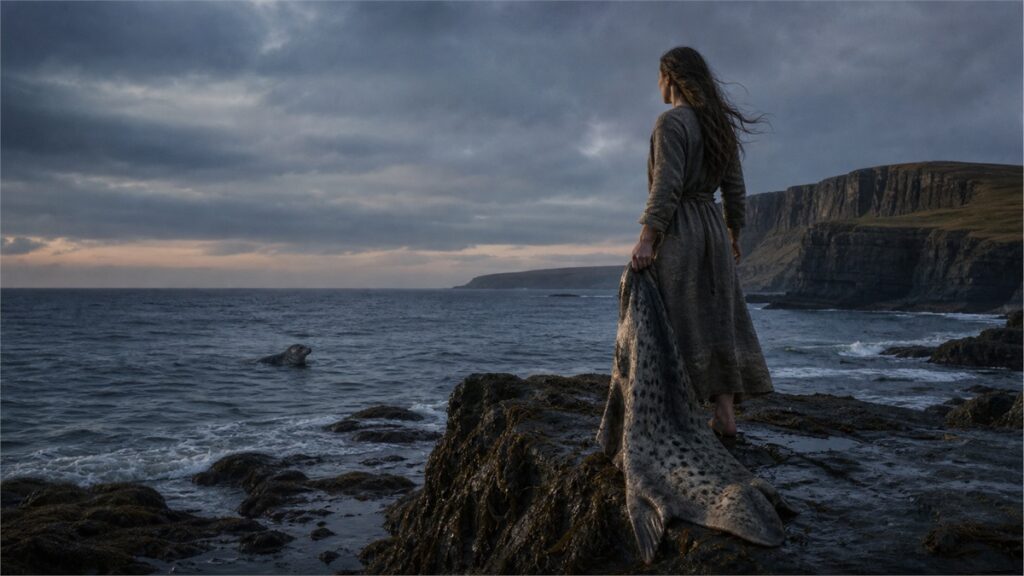
Selkies are seal people in the folklore of Orkney, Shetland, and parts of northern Scotland and Ireland. On land they can take human form by removing a seal skin. The hidden skin is the key to many marriage and escape stories.
Selkies in the surviving tradition
A common tale begins when a man finds a selkie woman dancing on shore and hides her skin. Unable to return to the sea, she marries him and has children. Years later she finds the skin, often with a child’s help, and immediately returns to the ocean. Some versions say she visits her children or remains tied to a seal husband offshore.
Texts, objects, and evidence
Male selkies appear as handsome visitors who form relationships with human women, especially those dissatisfied or lonely. Island collectors recorded many versions in communities whose lives depended on the sea and on seal hunting. The stories can be read through marriage, captivity, migration, animal kinship, and the danger of the shore, but no single interpretation proves an origin.
Key points
- Seal skin: Without the skin, the selkie cannot freely return to seal form.
- Consent: Modern romantic retellings often soften a plot that begins with theft and forced confinement.
- Geography: Orkney and Shetland are central. Calling every seal-shifter a generic Celtic fairy loses the northern island setting.
- Names: The word selkie comes from Scots forms for seal. Gaelic traditions may use different terms and story patterns.
How to read the material
Selkies differ from kelpies, mermaids, and finfolk even when later books combine the traditions. The recorded tale and the teller’s location deserve priority.