
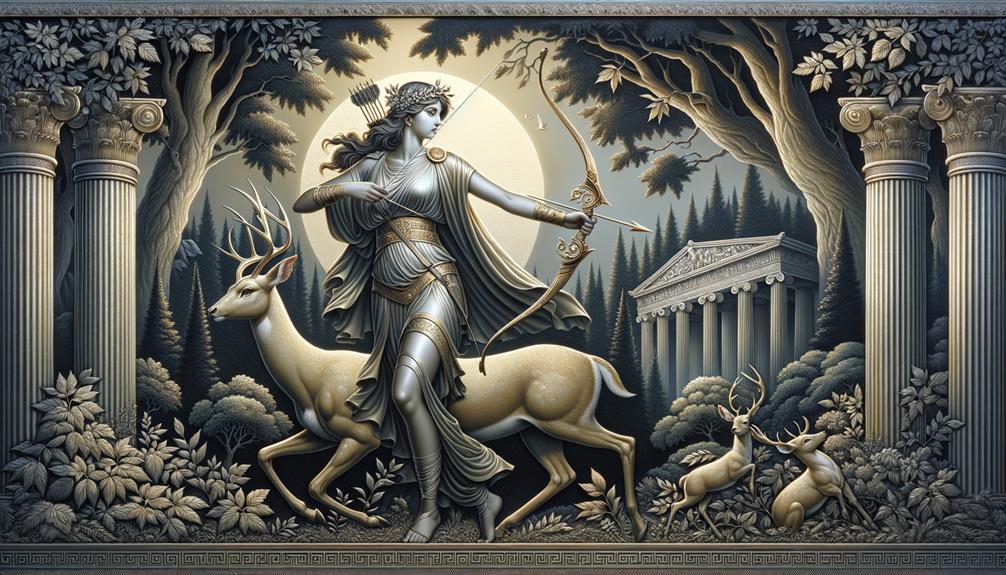
Artemis is an ancient Greek goddess of hunting, wild animals, young people, childbirth, and transitions into adulthood. She is commonly shown with a bow, but local cults gave her forms and concerns that cannot be reduced to hunting alone.
Artemis in the surviving tradition
Greek poetry calls Artemis the daughter of Zeus and Leto and the twin sister of Apollo. The Homeric Hymns picture her moving through mountains with a bow and joining music and dance among the gods. In myth she protects her independence and punishes violations of sacred limits. The stories of Actaeon, Callisto, and Niobe survive in several versions and do not form one consistent moral code.
Texts, objects, and evidence
Artemis received worship at many sites. At Brauron in Attica, rituals involved girls described as bears. At Ephesus, her great sanctuary and distinctive cult image differed sharply from the youthful huntress familiar from Attic vase painting. These regional forms belong to the same named goddess but reflect local history and ritual.
Key points
- Animals: Deer and bears are strongly linked with Artemis, while hunting dogs appear in art and story.
- Birth: Although a virgin goddess, she protects childbirth and the young. Ancient divine functions need not follow modern assumptions about family roles.
- Actaeon: Accounts differ on why he sees Artemis and how deliberate the offense is. His transformation and death mark the danger of crossing divine boundaries.
- Orion: Stories make Artemis his companion, killer, or target depending on the source. No single version is official.
How to read the material
Artemis is not simply a female version of a modern hunter archetype. Cult evidence shows concern with cities, girls, birth, disease, animals, and the controlled movement between social stages.