inseparable greek myth siblings

Castor Pollux Dioscuri Twins

Accuracy note: Ancient accounts disagree about the Dioscuri's parentage and about which twin was mortal. The best-known version makes Castor mortal and Polydeuces, called Pollux in Latin, a son of Zeus, but other genealogies exist.

In Greek mythology, the mortal Castor and immortal Pollux, the Dioscuri twins, represent the important bond between human and divine worlds. Their mother Leda conceived them with Zeus and King Tyndareus. This dichotomy of mortality and immortality shows the tension and harmony between the two states. The twins protected sailors and warriors, their starry transformation into the Gemini constellation symbolizing eternal sacrifice and guardianship. As youthful horsemen, their imagery captured unity and loyalty. Dive deeper into their heroic tales and celestial journeys – a rich mythos awaits exploration.

Birth and Parentage

Youtube video

In the ancient Greek mythos, the origins of the twins Castor and Pollux intertwine divine and mortal worlds. Their mother Leda conceived them after Zeus, disguised as a swan, seduced her. Pollux was the son of Zeus, a demigod, while Castor was born of Leda’s husband, King Tyndareus, wholly mortal. This duality embodied their unique natures, straddling the worlds of gods and men.

Some versions depict the twins hatching alongside their sisters Helen and Clytemnestra from eggs, underscoring their extraordinary birth. The swan-seduction symbolizes transformation and gods’ unpredictable influence on human lives. Castor and Pollux’s parentage sets the stage for their adventures, mirroring Greek mythology’s complex interplay of fate and destiny.

Roles in Mythology

exploring mythical characters significance

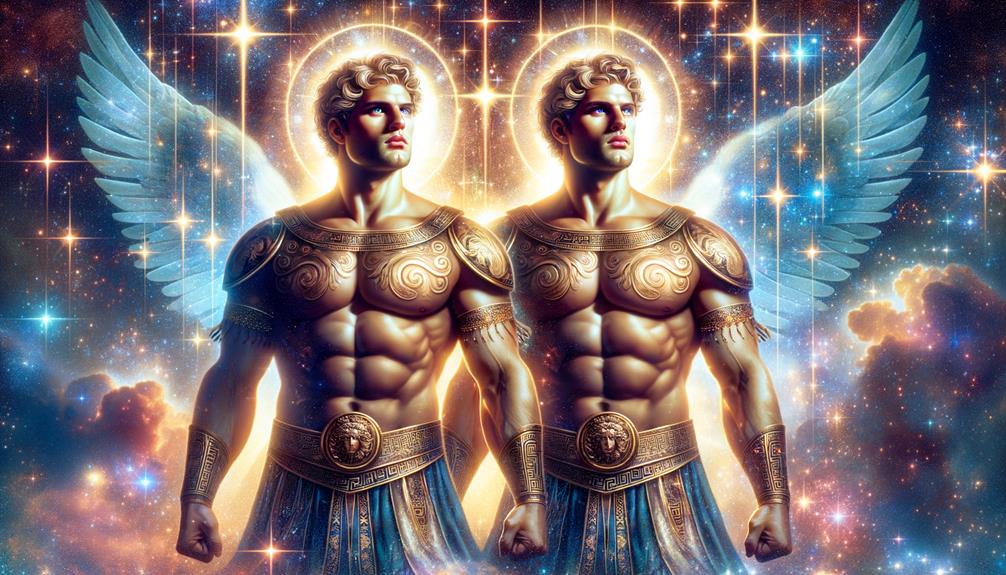
Castor and Pollux, the iconic twins of mythology, transcend their divine parentage, symbolizing an eternal bond and unwavering guardianship. One mortal, one immortal, their duality creates a memorable dynamic that shapes their heroic deeds, particularly aiding seafarers and warriors. As the stars of Gemini, their celestial transformation immortalizes their sacrifice, forever shining as beacons of protection.

Divine Parentage and Origins

Castor and Pollux’s origins – one mortal, one divine – highlight the important interplay between humanity and divinity found across mythologies. Their mother, Leda, gave birth to Castor as the son of King Tyndareus, while Pollux emerged as Zeus’s demigod son. This dichotomy embodies a longstanding archetype exploring both tension and harmony between mortality’s limitations and immortality’s transcendence.

Protector Roles in Stories

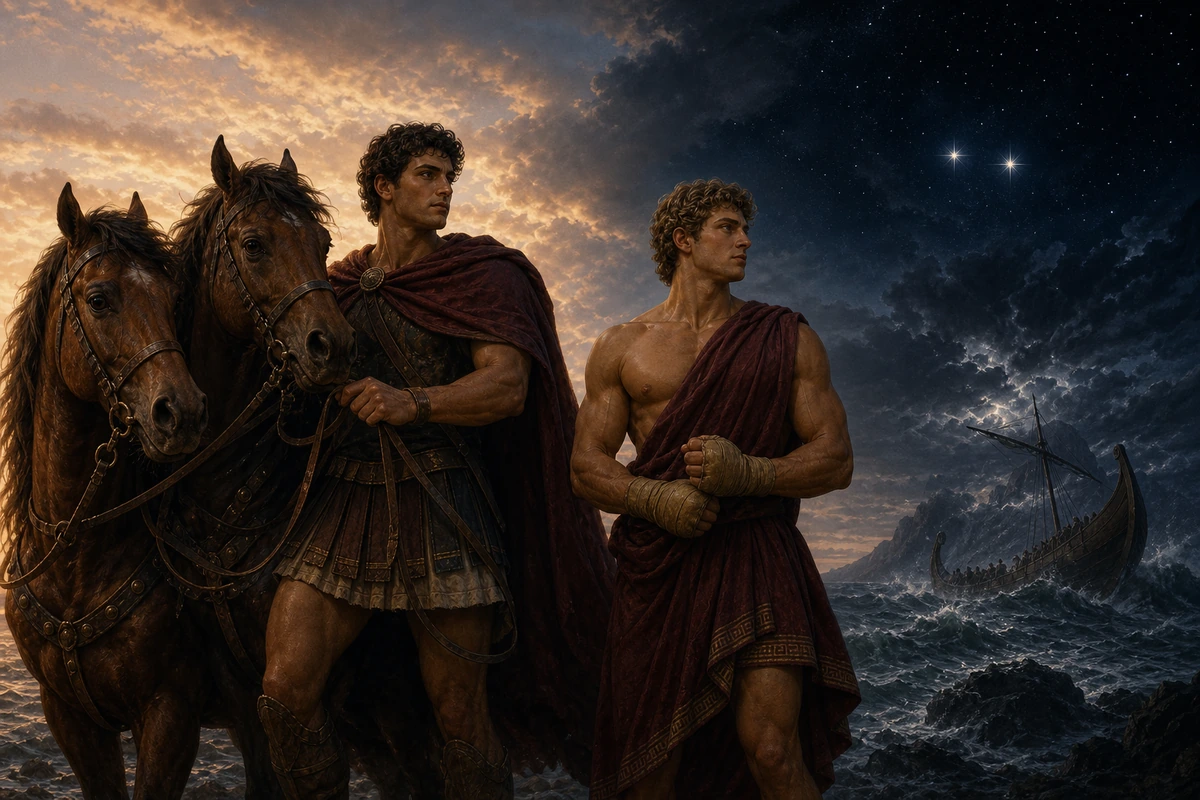
Castor and Pollux, celebrated as divine guardians, personify the archetype of protection through their courageous actions and steadfast support in difficult situations. As brothers bound by unwavering loyalty, their stories depict acts of valor and sacrifice. From rescuing sailors caught in turbulent seas to guiding warriors on the battlefield, their protective nature shines through.

In mythological tales, Castor and Pollux‘s roles often highlight the significance of brotherly bonds. When one faced danger, the other was nearby, ready to assist. This loyalty recurs as a central theme, emphasizing the strength derived from their unity. Their legendary interventions, such as calming storms to ensure safe voyages, underscore their patronage of travelers and seafarers.

The twins’ enduring legacy as protectors extends beyond mere folklore. Their presence in various rites and cults dedicated to safety and assistance attests to their importance in ancient times. Exploring the heroic journey of Castor and Pollux provides a important depiction of protective guardianship. Their stories celebrate the virtues of loyalty and sacrifice, exemplifying the longstanding archetype of the protective brother.

Iconography

rich history and symbolism

In the storied world of mythological imagery, the Dioscuri twins, Castor and Pollux, stand tall as archetypal youthful horsemen. Their spear-wielding forms and helmeted visages symbolize the heroic and divine duality coursing through their fabled lineage. These mythic brothers are often depicted clutching spears and donning helmets, their skull-caps a representation of their unbreakable bond. The Etruscans, who revered them as Kastur and Pultuce, crafted their likenesses on mirrored surfaces, highlighting their status as Sons of Tinia. This iconography not just showcases their martial prowess but also their celestial origins.

Curiously, the twins are frequently portrayed as fair-haired, large-eyed, and fair-skinned, embodying an idealized form of youthful energy and divine favor. Their depiction as twin horsemen remains relevant with the Indo-European tradition of heavenly twins, akin to the Vedic Ashvins, who were also brother-horsemen. This recurring motif of twin deities on horseback highlights their role as intermediaries between the divine and mortal worlds.

The consistent imagery surrounding Castor and Pollux across various cultures and artistic mediums serves to reinforce their archetypal significance. Their portrayal as heroic horsemen imbued with divine attributes captures the essence of their mythic journey, bridging the mortal and divine worlds.

Shrines and Rites

mystical ceremonies honor traditions

Castor and Pollux’s worship practices reveal their dual nature as mortals and gods. Their ancient rituals like the Theoxenia and Spartan oaths at their Therapne mountain shrine highlighted hospitality and sacred brotherhood themes. These sacred sites and rites celebrated their heroic exploits while emphasizing their roles as protectors and warriors revered in temples across Greece and Rome.

Ancient Worship Practices

The reverence for the twin brothers Castor and Pollux in Greek and Roman mythology mirrored people’s deep longing for unity, protection, and divine intervention. As valiant warriors, these heroes were worshipped not just for their might but for their unbreakable bond.

At Therapne, Spartans cemented their belief in the twins’ guardianship by swearing solemn oaths invoking their names. The Theoxenia feast invited Castor and Pollux’s presence, honoring their generous nature as deities. The symbolic dokana, two upright beams joined by others, reinforced the archetypal themes of their strength and togetherness.

Such rituals highlighted the brothers’ heroic journey and divine assistance. By venerating them, followers sought bravery, loyalty, and safety in war and travel. These ancient practices revealed a important desire to embody the gods’ virtues and connect with higher powers protecting humankind.

Sacred Sites Locations

Sacred sites honoring Castor and Pollux dotted ancient Greece and Rome, showcasing the important cultural impact of these divine twins. On Mount Therapne stood their herōn, a symbolic grave-shrine where mortal and divine worlds converged, influencing religious practices.

Temples in Athens and Rome embodied the reverence for these celestial heroes. Rituals like theoxenia, offering hospitality to divine guests, highlighted the twins’ role as protectors.

Spartans took oaths by Castor and Pollux, reflecting their importance in society. The dokana, with two upright beams, visually represented the Dioscuri’s enduring presence.

Through these sites and practices, the twins’ journey from mortal heroes to divine guardians became a lasting cultural symbol in Greece and Rome.

Roman Influence

roman empire s lasting impact

The Dioscuri twins, Castor and Pollux, deeply resonated with the Roman military and cultural identity. Their prominent temple in the Forum and the elaborate equestrian parade demonstrated Rome’s reverence for these warrior archetypes. According to legend, the Locrians attributed battlefield victories to the twins, while Romans believed their divine presence assisted in combat.

United in courage and valor, Castor and Pollux embodied the ideals Romans upheld in their soldiers and travelers. Their mythic journey, filled with heroic feats, aligned with the Roman psyche, fostering a sense of shared purpose. As protectors and patrons, the twins symbolized loyalty – a cherished virtue in Rome’s martial code.

Iconography depicting the Dioscuri proliferated across regions touched by Greco-Roman influence. Temples, statues, and coinage featured their visage, reinforcing their cultural significance. Though Christianity rose, the twins’ legacy endured, leaving an indelible mark on Roman society. Their celestial guardianship became an archetypal legend symbolizing the power of unity and bravery.

Cultural Legacy

preserving cultural heritage and history

Building on their esteemed status in Roman society, Castor and Pollux leave an influential cultural legacy beyond their mythological feats. These twins from Greek and Roman lore embody themes of protection, brotherhood, and enduring unity. Castor, mortal, and Pollux, immortal, showcase an unbreakable bond – even death couldn’t tear them apart. Their story culminates with Zeus granting them shared immortality, forever memorializing their brotherly love in the Gemini constellation.

Venerated as patron gods of sailors, athletes, and travelers, their protective influence guided those exploring uncharted territories. This guardian role aligns with their heroic journey, resonating with audiences seeking hope and solidarity. Their presence in art and literature often depicts moments of rescue and camaraderie, emphasizing their roles as saviors and loyal kin.

Sources and related reading

Scroll to Top