Accuracy note: Greek authors give several reasons for Tantalus's punishment, including revealing divine secrets, stealing divine food, and serving Pelops at a banquet. No single offense is consistent across every surviving account.
The Myth of Tantalus
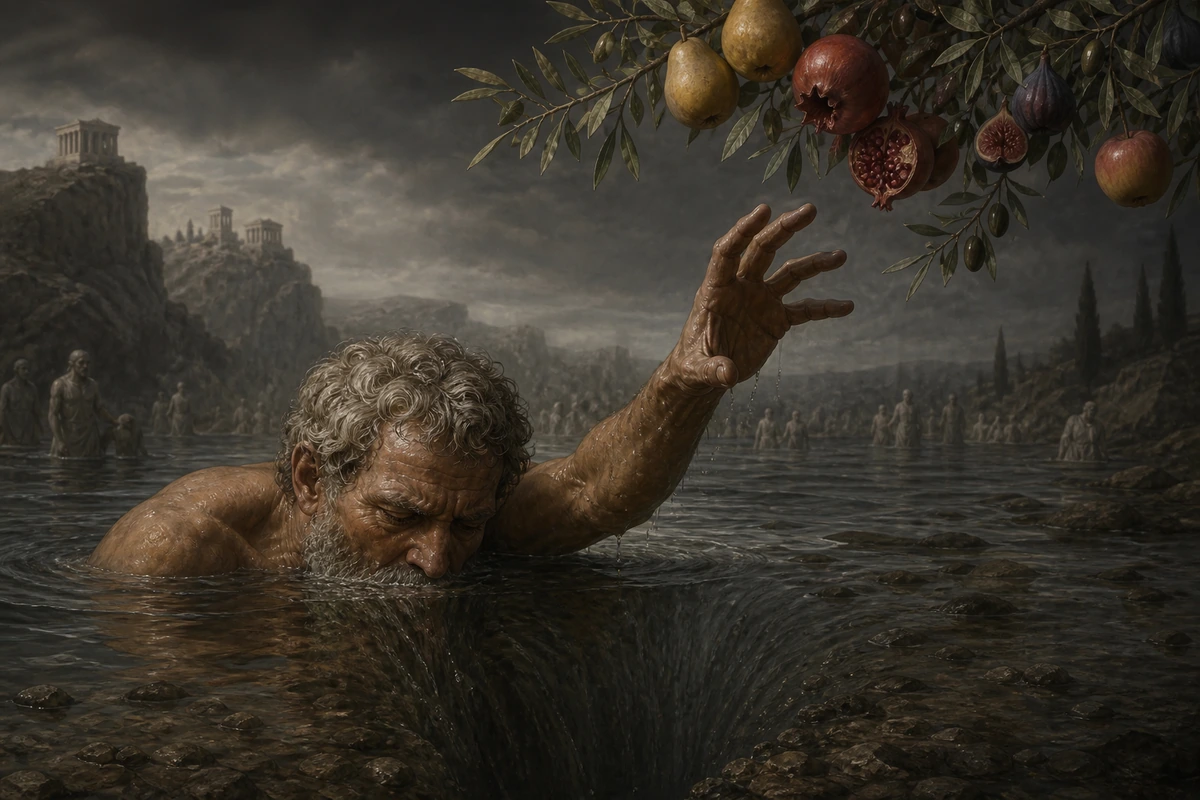
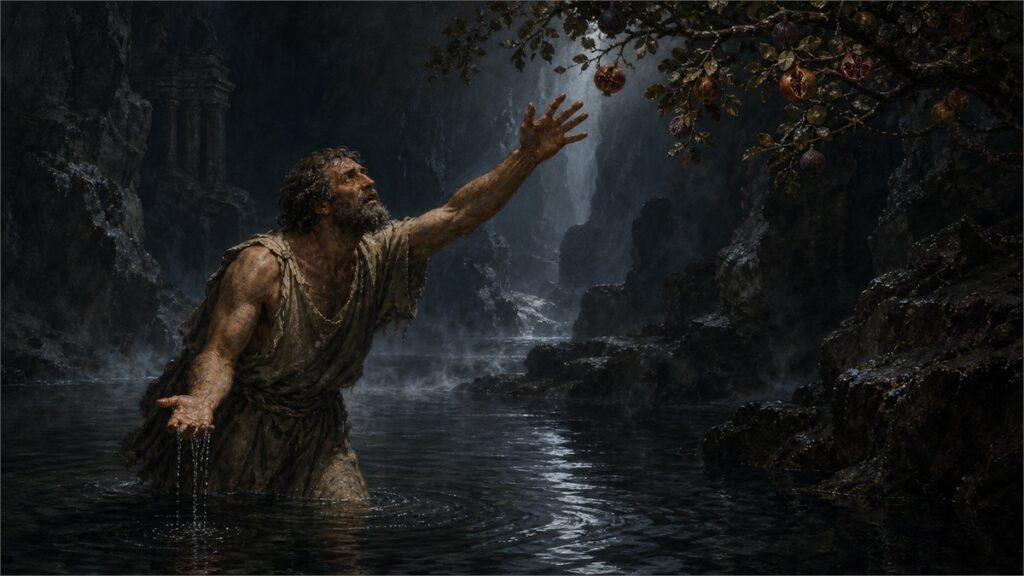
Tantalus, once a mortal beloved by the gods, suffers eternal agony in the Underworld as punishment for his betrayal. Trapped in Hades’ shadowy world, he stands in a receding pool of water that vanishes whenever he stoops to drink. Overhead, luscious fruit-laden branches sway just out of reach. This cruel fate, devised by the Greek gods themselves, symbolizes divine retribution’s potency.
Tantalus’ story vividly depicts a man forever denied life’s essentials, water and food, that he can never consume. His punishment serves as a stark reminder of greed and betrayal’s consequences. The gods, in their righteous fury, designed this endless torment as a cautionary tale for mortals.
Crimes Against the Gods
In mythological worlds, betrayal struck deep when Tantalus, a mere mortal, defiantly deceived the gods by serving them the flesh of his own son, Pelops. This brazen act wasn’t just a personal insult; it shattered sacred bonds between mortals and immortals. By murdering his child and attempting to implicate the divine in his atrocity, Tantalus challenged the gods’ supremacy.
Tantalus’ excessive arrogance blinded him to the inevitable consequences of his heinous crime. His punishment mirrored the severity of his offense. By serving Pelops, Tantalus desecrated life itself, inviting the gods’ wrath upon his lineage, the cursed House of Atreus.
In the symbolic world of myth, Tantalus’ tale warns: defying the gods courts eternal suffering. His story became a potent reminder of humanity’s delicate position in the cosmic order.
The Eternal Punishment

As the gods handed down their punishment, Tantalus faced a cruel eternity in the Underworld – a vivid reminder of his betrayal. Trapped in a pool, he was tormented by a maddening thirst. Whenever he bent to drink, the water slipped away, leaving him parched. Overhead, ripe fruit hung from branches just beyond his grasp. Each time he stretched out his hand, they drifted further, ensuring his hunger remained insatiable.
Tantalus’ torment wasn’t merely physical; it mirrored the emptiness of his deceitful acts. In life, he had tried to outwit the divine, but in death, he endured a cycle of temptation and denial. The unattainable food and drink surrounding him reflected the futility of his hubris, the suffering it brought.
Symbolism and Themes

Endless Unfulfilled Desires
Few tales depict the anguish of unfulfilled desires as poignantly as Tantalus’ eternal damnation. In Greek mythology, his torment symbolizes unending punishment where longing becomes a cycle of agony. Tantalus is forced to stand beneath a fruit tree, its branches hanging just beyond reach, while cool waters lap at his feet, always retreating when he bends to drink. This scene embodies the ache of perpetual yearning, wants left unsatisfied.
Tantalus’ ordeal illustrates the theme of inescapable temptation. Each attempt to satiate his hunger and thirst ends in denial, a metaphor for desires that remain unattainable. His plight serves as a warning against arrogance and defying the divine. By deceiving the gods, Tantalus doomed himself to an eternity of unfulfilled cravings.
This symbolic suffering extends beyond mere physical wants; it mirrors humanity’s insatiable nature and the torment thereof. Tantalus’ damnation in the Underworld cautions how greed, treachery, and betrayal invite lasting consequences that disrupt the cosmic balance. Ultimately, his fate shows the concept of divine retribution, where actions garner permanent repercussions.
Moral Consequences Explored
| Core Idea | Symbolism |
|---|---|
| Arrogance | Tantalus deceiving the gods |
| Divine Justice | Eternal punishment in Tartarus |
| Perpetual Dissatisfaction | Unattainable food and drink |
Human Suffering Depicted
Tantalus’s ordeal warns of arrogance’s repercussions and the wisdom of humility before divine powers. The looming rock exemplifies mortal fears weighing upon existence itself.
Examining Tantalus reveals important truths about the human condition:
- Insatiable Wants: The taunting food and drink represent society’s vain pursuit of satiety through material possessions.
- Relentless Temptation: His inability to indulge mirrors human vulnerability to enticements, no matter how self-destructive.
- Lingering Dread: That menacing boulder captures the undercurrent of anxiety pervading the lives of many.
This myth doesn’t merely assert divine judgment, but offers a poignant contemplation of the fundamental discontent plaguing humankind.
Tantalus in Art
Tantalus in art evokes a powerful image – a man eternally straining, grasping for the unattainable. From classical sculptures to Renaissance masterworks like those of Goltzius and Goya, his torment serves as a visceral reminder of hubris’s dire consequences. Even in contemporary pieces, Tantalus‘s figure remains relevant, embodying the longstanding clash between human ambition and divine retribution.
Classical Depictions of Tantalus
Classical artworks vividly depict his torment, emphasizing the eternal hunger and thirst that plagues him. This grim portrayal isn’t merely about Tantalus’ personal hubris but a broader warning against disrespecting the divine. The all-powerful gods ensure he remains trapped in a perpetual cycle of futile longing as a cautionary tale.
The longstanding symbolism woven into Tantalus’ artistic depictions offers important insights:
- Unreachable Desires: The fruit he can never grasp represents the anguish of eternal longing for what remains unattainable.
- Mortal Consequences: His endless struggle reflects the dire retribution awaiting those who arrogantly challenge the gods’ authority.
- Tragic Archetype: Tantalus embodies the archetypal tragic hero, forever consumed by a cycle of agonizing punishment.
These classical artistic interpretations impart enduring wisdom about the sacred equilibrium between mortal ambition and reverence for the divine.
Renaissance Artistic Interpretations
Renaissance artists poured their hearts into capturing the eternal agony of Tantalus, transforming his mythic punishment into a longstanding representation of insatiable desire. Through paintings, engravings, and sculptures, they gave life to his endless suffering, turning his story into a poignant visual reminder of longing that can never be satisfied.
Hendrik Goltzius and Francisco Goya stand out among the notable Romantic-era artists who depicted Tantalus’ plight. Their works often show him reaching desperately for fruit or water that perpetually eludes his grasp, symbolizing the eternal hunger and thirst he endures. These artistic portrayals ground mythic symbolism in the tangible world of human experience, serving as a stark reminder of the consequences of his actions.
| Artist | Medium | Representation |
|---|---|---|
| Hendrik Goltzius | Engraving | Reaching for fruit |
| Francisco Goya | Painting | Thirsting for water |
| Unknown Artist | Sculpture | Tantalus in chains |
| Raphael | Fresco | Desperate expression |
| Michelangelo | Sketch | Eternal hunger and thirst |
Modern Artistic Representations
Modern artists offer fresh perspectives on the myth of Tantalus, infusing his eternal suffering with vivid, contemporary narratives echoing age-old themes of insatiable desire and unending torment. Reimagining his constant hunger and thirst, these artistic representations make Tantalus a resonant symbol of everlasting punishment.
In the digital world and beyond, creatives depict Tantalus reaching for elusive fruits or water, underscoring the futility and despair ingrained in his plight. Many works examine into the psychological toll, reflecting modern anxieties around unattainable pursuits and existential angst.
Tantalus emerges as a cautionary figure, his story warning against unchecked ambition and disrespecting higher powers. These portrayals act as contemporary parables, compelling audiences to reflect inwardly on their desires and choices.
Through these multifaceted depictions, the Tantalus myth endures, echoing humanity’s perpetual struggle against insatiable wants and the important wisdom embedded in ancient narratives.
Legacy and Influence

As the son of Zeus facing eternal torment for his transgression, Tantalus crystallized the notion of divine retribution. The term "tantalizing" itself stems from his cursed craving for the unattainable. This visceral image has fueled countless creative works exploring humanity’s constant want.
Though framed as Greek tragedy, Tantalus’ journey aligns with the archetypal rise and fall of the flawed hero. His singular drive to defy the gods mirrors humanity’s perpetual clash between mortal ambition and cosmic order. Therein lies the myth’s lasting resonance – a parable of hubris and its inexorable consequences.
Sources and related reading
- Castor Pollux Dioscuri Twins on MythologyVault
- Iris Rainbow Messenger Goddess on MythologyVault
- The Metropolitan Museum of Art: Greek gods and religious practices