
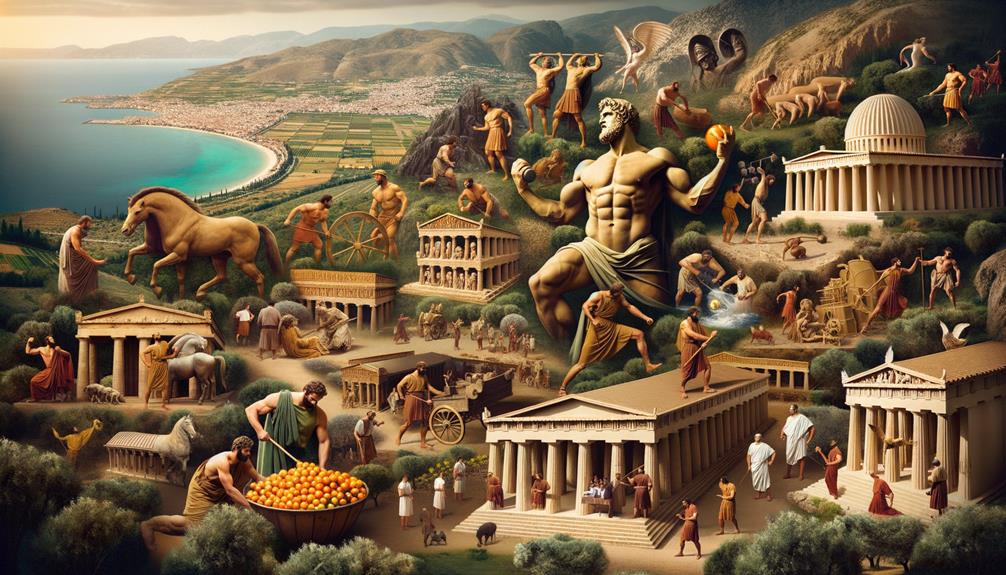
Heracles, called Hercules in Roman tradition, was ordered to serve King Eurystheus and complete a series of dangerous tasks. The familiar list of twelve labors comes from ancient accounts that differ in some details. The formal “hero’s journey” is modern by comparison. Joseph Campbell described that narrative pattern in the twentieth century, so applying it to Heracles is an interpretation rather than an ancient Greek explanation of the myth.
Ancient sources and the modern framework
No single ancient text supplies every detail now attached to Heracles. The myth survives in poetry, drama, art, and mythographic summaries written in different periods. The Library attributed to Apollodorus gives one influential sequence of events, while Euripides’ Heracles places the killing of Heracles’ family after his return from the underworld. These versions should not be forced into one seamless biography.
Campbell’s pattern can help readers compare recurring story structures, but its stages are not part of the Greek sources. There is no ancient episode in which Heracles explicitly refuses the labors because he fears the adventure. Describing such a refusal as part of the original story adds a modern plot point that the sources do not preserve.
Why Heracles served Eurystheus
Heracles first won fame at Thebes by helping defeat the Minyans. King Creon of Thebes then gave him his daughter Megara in marriage. Megara was not the daughter of the Minyan king Erginus.
In a widely known version, Hera drove Heracles mad and he killed his children. Ancient accounts disagree about whether Megara also died and about when the episode occurred. Seeking purification and direction, Heracles consulted the oracle at Delphi. He was commanded to serve Eurystheus, king of Tiryns or Mycenae, and to carry out the tasks assigned to him.
The labors therefore concern punishment, purification, and service under an inferior ruler. Later readers may see transformation in the sequence, but the tasks do not erase every violent or troubling part of Heracles’ character.
The twelve labors
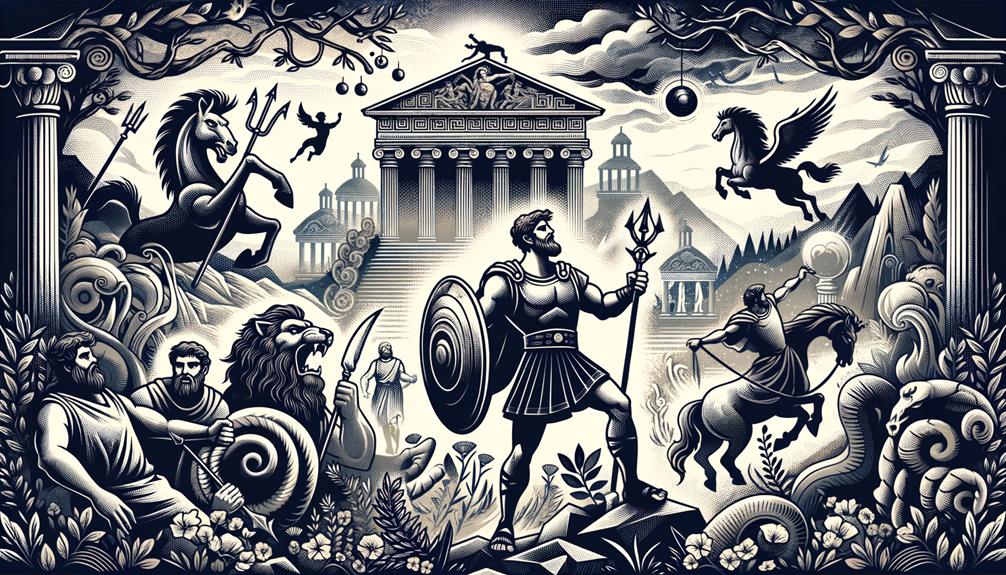
The standard list is:
- Kill the Nemean Lion.
- Destroy the Lernaean Hydra.
- Capture the Ceryneian Hind.
- Capture the Erymanthian Boar.
- Clean the stables of Augeas in one day.
- Drive away the Stymphalian Birds.
- Capture the Cretan Bull.
- Bring back the man-eating mares of Diomedes.
- Obtain the belt of Hippolyta, queen of the Amazons.
- Take the cattle of Geryon.
- Bring back the apples of the Hesperides.
- Bring Cerberus from the underworld and return him unharmed.
Eurystheus originally imposed ten tasks. In the account attributed to Apollodorus, he refused to count the Hydra because Iolaus helped Heracles, and he rejected the Augean stables because Heracles had sought payment. Two more tasks were added, producing the familiar total of twelve.
Helpers, opponents, and moral limits
Heracles did not act alone in every episode. Iolaus helped burn the Hydra’s neck stumps after its heads were cut off. Athena aided Heracles in several traditions, including the episode of the Stymphalian Birds. Atlas was central to one version of the quest for the Hesperides’ apples. These helpers complicate the image of a solitary hero succeeding through strength alone.
The stories also show that strength is not the only measure of success. Heracles diverts rivers to clean the Augean stables, negotiates or struggles with Atlas, and enters the underworld under conditions set by its rulers. At the same time, the myths contain coercion, killing, enslavement, and conflict with peoples whom Greek storytellers treated as outsiders. Calling every action virtuous would flatten the ancient material.
After the labors and the apotheosis of Heracles
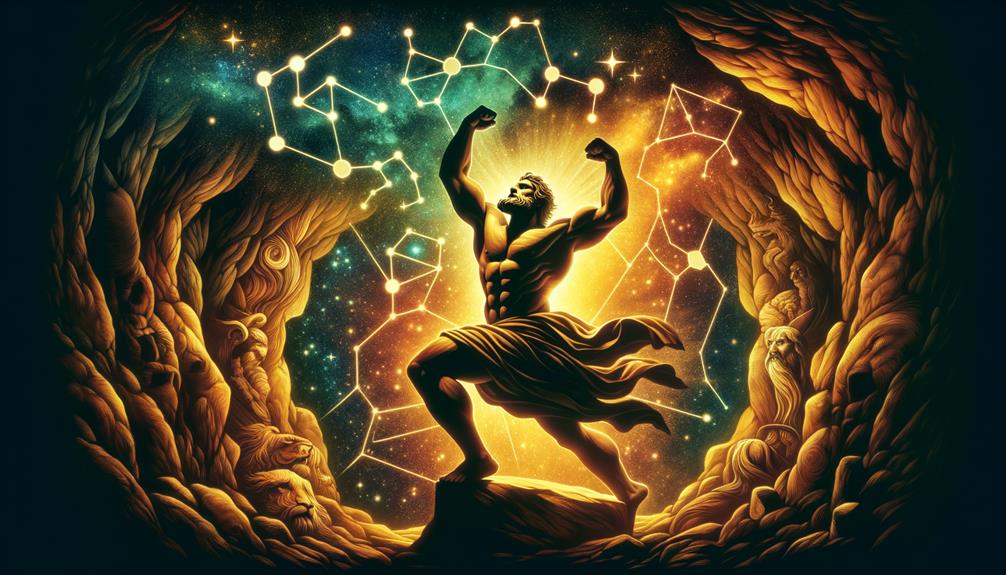
Heracles did not become immortal immediately after completing the labors. Other adventures and disasters followed. In one major tradition, his wife Deianira sent him a garment treated with what she believed was a love charm. The substance came from the centaur Nessus and caused unbearable suffering. Heracles ordered a funeral pyre to be built on Mount Oeta.
Greek tradition then separated his mortal and divine fates. His mortal part died, while his divine part was received on Olympus. There he was reconciled with Hera and married Hebe. This apotheosis is the closest point of comparison with the final transformation in a modern hero-cycle reading.
Modern adaptations change the plot freely. Disney’s Hercules, for example, is not a reliable guide to the relationships or sequence found in Greek and Roman sources.
Frequently asked questions
Were there always twelve labors?
No. One influential account begins with ten. Eurystheus disallows two and adds two replacements, bringing the accepted total to twelve.
Did Heracles complete every labor alone?
No. Iolaus, Athena, Atlas, and others assist him in different episodes. The rejection of the Hydra task specifically depends on Iolaus’s help in the account attributed to Apollodorus.
Was Megara the daughter of Erginus?
No. Megara was a daughter of Creon, king of Thebes. Heracles received her in marriage after defeating the Minyans associated with Erginus.
Do the labors follow Campbell’s hero’s journey?
They can be compared with Campbell’s modern framework, but the comparison is interpretive. Ancient authors did not organize the myth according to Campbell’s stages.